At a glance
Contemporary guidelines favour active strategies: education, graded exercise and criteria-based progression rather than prolonged rest or passive care alone. This page maps anatomy, common conditions, assessment tests, a typical exercise menu, phase progressions, precautions and recovery timelines used in educational summaries of care.
Weigh it for yourself
Mark each measure High, Any or Low for what you want. The fit number moves with every mark, and your marks follow you to the next page in this app.
| Measure | Neck | Post-Stroke | You want |
|---|---|---|---|
| Pain frequency | |||
| Recovery length | |||
| Exercise load | |||
| Clinician need | |||
| Self-care fit | |||
| Recurrence risk |
Mark at least one measure to see a fit number.
Scores are the atlas’s 0–100 teaching marks for each topic. They are not a diagnosis, a dose or a treatment choice.
Reading checklist
Tick a point once you could explain it in your own words. Ticks stay on this device.
0 of 4 points done
All points done. Next: Open the topic: Neck
Neck · tagline
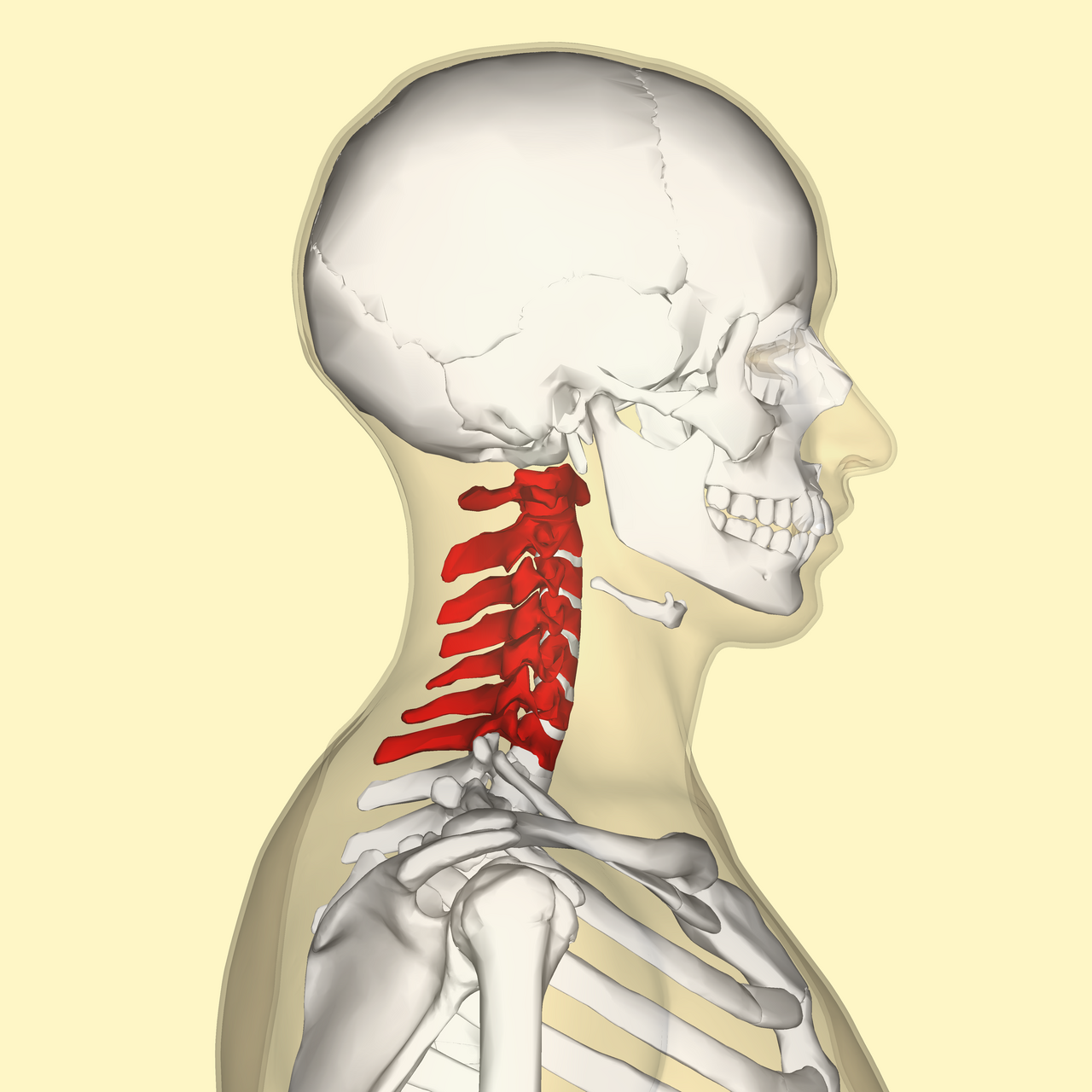
The seven cervical vertebrae and the soft tissues that carry the head — posture load, disc and facet pain, and graded mobility work. Neck rehab sits at the intersection of local tissue capacity and whole-person load — sleep, work posture, sport volume and fear of movement all change outcomes.
Neck · Contemporary guidelines favour active strategies: education, gra
Contemporary guidelines favour active strategies: education, graded exercise and criteria-based progression rather than prolonged rest or passive care alone. This page maps anatomy, common conditions, assessment tests, a typical exercise menu, phase progressions, precautions and recovery timelines used in educational summaries of care.
Neck · Is neck pain always a structural injury?
Not always. Sensitivity can rise with load spikes, sleep loss and stress even when imaging is unremarkable. Clinicians separate serious pathology from common nociplastic or mechanical patterns. Many soft-tissue presentations settle over weeks to a few months with graded loading; post-operative and neuro pathways often run longer and are criteria-based.
Neck · Should imaging come first?
Guidelines generally reserve early imaging for red flags or when results would change management — not for every first presentation of mechanical pain. Transient soreness after new loading is common; sharp, escalating, night-waking or neurological change is a reason to stop and reassess with a clinician.
This is education from the atlas. It does not diagnose and does not prescribe a dose. It does not replace the full topic page.
What is the next question after this?
Not always. Sensitivity can rise with load spikes, sleep loss and stress even when imaging is unremarkable. Clinicians separate serious pathology from common nociplastic or mechanical patterns. Many soft-tissue presentations settle over weeks to a few months with graded loading; post-operative and neuro pathways often run longer and are criteria-based.
Does this page rank people or nations?
This is education from the atlas. It does not diagnose and does not prescribe a dose. It does not replace the full topic page.
Where is the longer entry?
Guidelines generally reserve early imaging for red flags or when results would change management — not for every first presentation of mechanical pain. Transient soreness after new loading is common; sharp, escalating, night-waking or neurological change is a reason to stop and reassess with a clinician.