At a glance
This anti-movement approach — resisting unwanted flexion, extension, or rotation — is widely used in both rehabilitation and general strength training because it reflects how the core actually functions during daily and athletic activity.
Weigh it for yourself
Mark each measure High, Any or Low for what you want. The fit number moves with every mark, and your marks follow you to the next page in this app.
| Measure | Core | Lower Back | You want |
|---|---|---|---|
| Pain frequency | |||
| Recovery length | |||
| Exercise load | |||
| Clinician need | |||
| Self-care fit | |||
| Recurrence risk |
Mark at least one measure to see a fit number.
Scores are the atlas’s 0–100 teaching marks for each topic. They are not a diagnosis, a dose or a treatment choice.
Reading checklist
Tick a point once you could explain it in your own words. Ticks stay on this device.
0 of 4 points done
All points done. Next: Open the topic: Core
Core · Single-leg lowering test
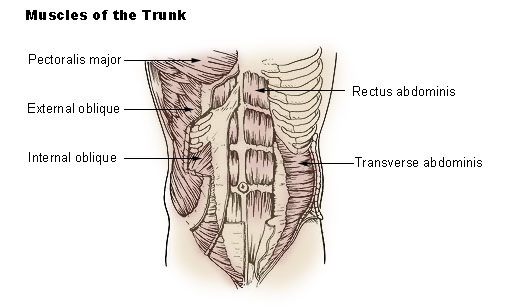
Slowly lowering one leg from a raised position while keeping the low back stable tests the ability of the deep core to control the pelvis under a changing lever arm. Core exercise programs generally begin with learning to activate the deep stabilizing muscles in isolation, then progress toward exercises that challenge the trunk to resist motion while the limbs move.
Core · This anti-movement approach — resisting unwanted flexion, extens
This anti-movement approach — resisting unwanted flexion, extension, or rotation — is widely used in both rehabilitation and general strength training because it reflects how the core actually functions during daily and athletic activity.
Core · Certain habits in core training are commonly discouraged because
Certain habits in core training are commonly discouraged because they load the spine without a clear stabilizing benefit, or because they mask poor movement quality with sheer repetition. These precautions reflect general, widely cited training principles rather than an individualized program, and persistent symptoms are best discussed with a qualified clinician.
Core · High-repetition sit-ups as the main strategy
Relying heavily on repeated spinal flexion exercises is generally discouraged in modern rehabilitation guidance, since it loads the lumbar discs without necessarily building functional stability. Training through leaking, heaviness, or pelvic pressure symptoms is discouraged, since these can indicate the pelvic floor needs targeted attention before higher-load core work.
This is education from the atlas. It does not diagnose and does not prescribe a dose. It does not replace the full topic page.
What is the next question after this?
Certain habits in core training are commonly discouraged because they load the spine without a clear stabilizing benefit, or because they mask poor movement quality with sheer repetition. These precautions reflect general, widely cited training principles rather than an individualized program, and persistent symptoms are best discussed with a qualified clinician.
Does this page rank people or nations?
This is education from the atlas. It does not diagnose and does not prescribe a dose. It does not replace the full topic page.
Where is the longer entry?
Relying heavily on repeated spinal flexion exercises is generally discouraged in modern rehabilitation guidance, since it loads the lumbar discs without necessarily building functional stability. Training through leaking, heaviness, or pelvic pressure symptoms is discouraged, since these can indicate the pelvic floor needs targeted attention before higher-load core work.