c. 3700 avant notre ère
Enduit de gypse
Jéricho et l'Égypte utilisaient du gypse brûlé.
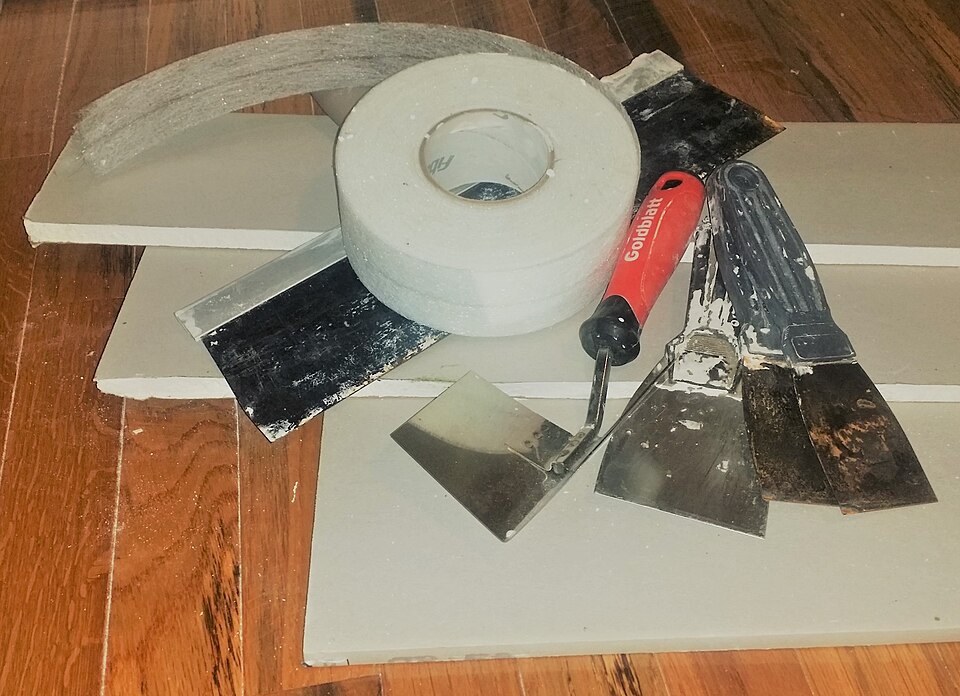
Plaque de plâtre · Panneaux de gypse dihydraté qui achètent du temps d’incendie en se calcinant.
Jalons dans l'ordre. C'est l'histoire, pas une grille hebdomadaire.
Plus la case est foncee, plus le score de cet indicateur est eleve.
MoinsPlus
Derniere relecture Sources et creditsCrédits médiasMéthodologie
Classe de réaction déclarée dans cet atlas : A2-s1,d0 typique ; noyau A1. Les assemblages nécessitent encore des tests de résistance.
Marque thermique 34/100 par rapport à l'atlas. Note de conductivité : ~0,17 W/m·K.
~700-1 000 kg/m³
Histoire d'origine : Sackett 1894 ; US Gypsum 1916 (États-Unis).
Marque de circularité 62/100 — éditoriale, spécifique à l'itinéraire.
calcine ~80–180 °C (déshydratation)
heat 54 · fire 92
Les plaques de plâtre ne sont pas arrivées sous forme de produit fini. Sackett 1894 ; US Gypsum 1916 aux États-Unis explique toujours qui le fabrique et dans quels tests il se déroule.
Dix points datés, cinq époques et trois jalons ci-dessous constituent la colonne vertébrale – et non une histoire industrielle complète.
Jéricho et l'Égypte utilisaient du gypse brûlé.
Panneaux de gypse à face en papier aux États-Unis.
US Gypsum marque le mur.
Vitesse sur lattes et plâtre.
Fibres de verre en âme pour assemblages coupe-feu.
12,5 mm comme module.
Planches vertes/bleues, toujours pas de qualité extérieure.
Types de cartes européennes (A, F, H, D…).
Plusieurs couches pour EI 60-120.
Boucle fermée à partir des chutes de chantier sur certains marchés.
Jéricho et l'Égypte utilisaient du gypse brûlé.
US Gypsum marque le mur.
Fibres de verre en âme pour assemblages coupe-feu.
Planches vertes/bleues, toujours pas de qualité extérieure.
Plusieurs couches pour EI 60-120.
Vitesse sur lattes et plâtre.
Planches vertes/bleues, toujours pas de qualité extérieure.
Boucle fermée à partir des chutes de chantier sur certains marchés.
Connaître cette chronologie, c'est comment lire un certificat d'usine sans considérer les plaques de plâtre comme intemporelles.
Méta-aramide DuPont : tenues pompiers, papier électrique, char sans goutte fondue.
Global 65 🧯Peintures qui gonflent en charbon isolant : un R sur l’acier sans plaques épaisses.
Global 58 🌡️Fibres réfractaires 1000–1400 °C : fours, joints, prudence respirable que l’AES tente d’alléger.
Global 62