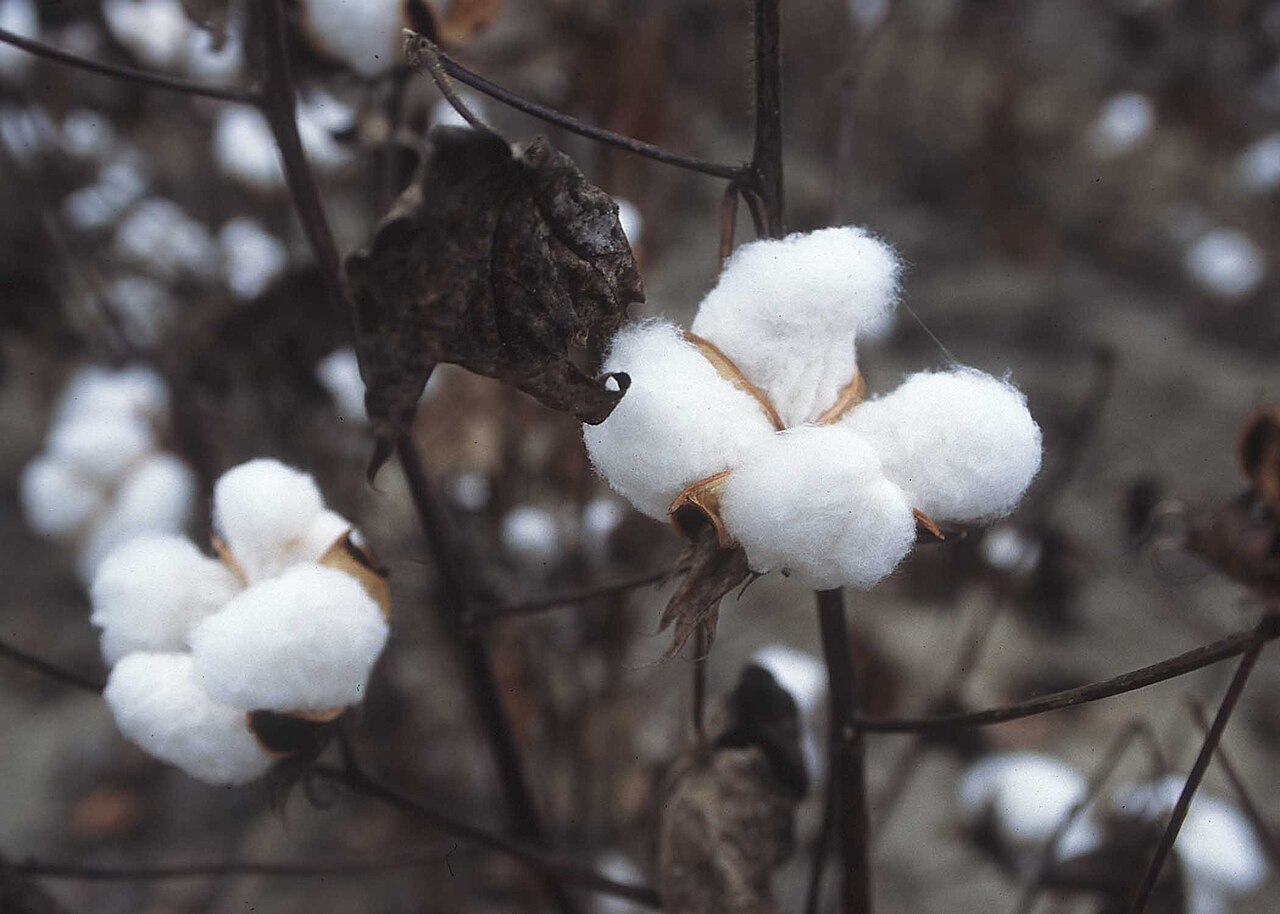
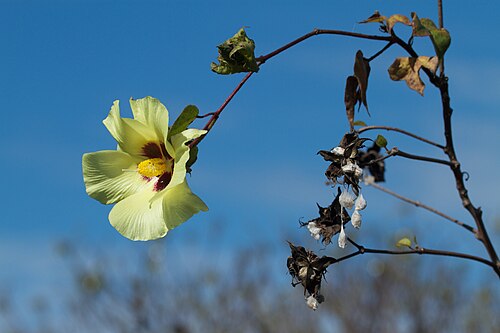
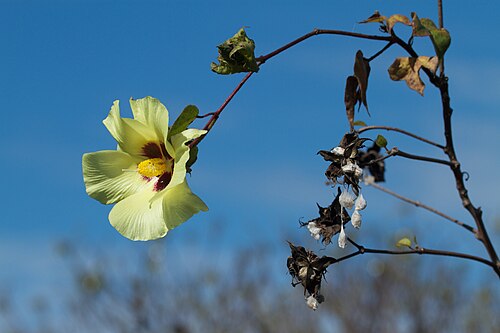
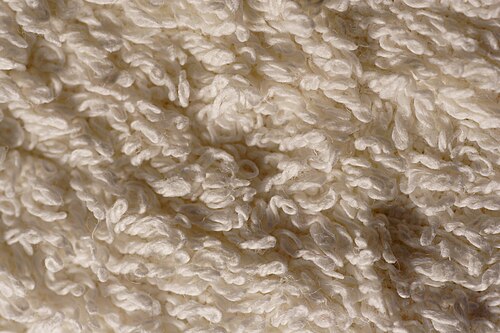
Cotton is one of 32 materials in this atlas, grouped under textiles: history, structure, measured properties, process routes, uses, safety and market — not a product catalogue.
Scores compare Cotton with the rest of the atlas on strength, heat, fire behaviour, insulation, workability and circularity. They are editorial, not certificates.
Seven chapters follow. Fire and insulation claims name test families (Euroclass, ASTM E84, ISO 5660, KS F) rather than inventing a single safety number.
Deep introduction
Deep dive: Cotton
Cotton (cellulose (C6H10O5)n) is a family of grades whose density ~1.54 g/cm³ fibre, heat band chars ~150 °C+, and fire letter combustible fibre (treatments vary).
What “the material” actually is
Cotton is sold as grades, not as a single substance. Chemistry cellulose (C6H10O5)n, density ~1.54 g/cm³ fibre, heat band chars ~150 °C+.
This atlas treats Cotton as a system: mill route, coatings, tests and the cavity it sits in.
Heat, fire and insulation
Conductivity note: low (textile still air). Insulation score 40/100 is relative to 32 entries — metals lose, VIPs and aerogels win.
Fire letter in editorial use: combustible fibre (treatments vary). Do not equate A1 with “safe in a blaze” or E with “illegal”. Assemblies decide.
How it is made and used
Origin: Indus / New World domestication; mill 18th c., India / Americas / Lancashire. The process chapter follows feedstock → conversion → forming → finish → install.
Uses span buildings to defence / safety. Pairings matter: polyester.
Market and circularity
Producers below are landmarks, not an endorsement ranking. Prices are bands, not live quotes.
Circularity mark 54/100. Ask which scrap, which certificate, which year.
Related atlas
Around Cotton
Related atlas entries, a short glossary, and three threads that keep Cotton honest.
See also
🎽PolyesterThe blend partner that dries faster and sheds microfibres.
🐑WoolProtein fibre with better inherent insulation when lofted.
🪢NylonThe stronger synthetic for hosiery and cords.
Decision walkthrough on Cotton: fire 22, insulation 40, and one fact already on file — not a code stamp.
Read the fire-performance mark — Fire on this hub is 22/100 — teaching comparison among atlas materials.
Read the insulation mark — Insulation is 40/100 — heat-flow story, not the same question as flame.
Sit one published fact beside them — Quick fact on file: Polymer: Cellulose.
Sustainability is not a fire skip — A high sustainability mark does not replace fire protection in a real assembly.
Not a building-code rating — Named tests, thickness and build-up still decide compliance — this page is literacy only.
On Cotton, fire 22 and insulation 40 answer different jobs; Polymer: Cellulose grounds one real detail.
Editorial atlas marks. Not a code certificate or product approval.
Thermal mark or safety fact first?
Second lab decision on Cotton: heat-resistance 28 beside published thermal fact Conductivity — literacy, not a code stamp.
Read the heat-resistance mark — Heat resistance on this hub is 28/100 — a thermal story, different from the fire/insulation pair.
Sit one thermal fact beside it — Properties chapter lists Conductivity among published thermal rows.
Heat resistance is not a fire skip — A high thermal mark does not replace named fire tests in a real assembly.
Still not a building-code rating — Thickness, build-up and named tests decide compliance — this page teaches axes only.
On Cotton, heat 28 and Conductivity are a second thermal/safety reading after fire vs insulation.
Editorial atlas marks. Not a code certificate or product approval.
Heat line to keep
A decision from printed marks. Not a building permit.
Frequently asked questions
Is Cotton non-combustible?
Declared reaction class in this atlas: combustible fibre (treatments vary). Assemblies still need resistance tests.
Does Cotton insulate?
Thermal mark 40/100 versus the atlas. Conductivity note: low (textile still air).
What is the density band?
~1.54 g/cm³ fibre
How is it made?
Origin story: Indus / New World domestication; mill 18th c. (India / Americas / Lancashire).
Can it be recycled?
Circularity mark 54/100 — editorial, route-specific.
Typical melting or failure heat?
chars ~150 °C+
What should it be paired with?
polyester: The blend partner that dries faster and sheds microfibres.
Where is it specified?
Buildings, transport, energy and consumer goods — see the uses chapter.
Is the fire-performance score a building-code rating?
No. It is an editorial 0–100 teaching mark among materials in this atlas. A real wall or garment needs a named product test, thickness and assembly. This page is not a lab stamp.
When should I read insulation instead of fire?
Use the insulation pick when the question is heat flow — lining, loft, or a cold-bridge — and the fire pick when the question is how the same material behaves in flame. Both numbers already sit on this hub; they answer different jobs.
Does a high sustainability score mean I can skip fire protection?
No. Sustainability here is a relative atlas mark (growth, reuse, embodied story). Bamboo and timber can still char like wood. Fire protection stays a separate specification.
Why is bamboo missing in some languages?
A language URL is published only when the seven chapters are real prose in that language. Bamboo exists in English, Korean, Japanese, Chinese and Spanish. French, German, Portuguese and Russian stay withheld — earlier machine drafts leaked English, so those URLs are not opened.
Icons
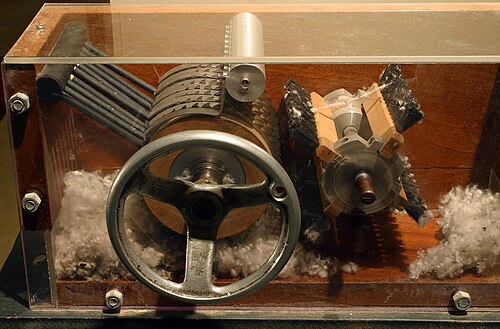
Eli Whitney gin
United States · 1793
Eli Whitney gin is a reference point in the public image of Cotton.
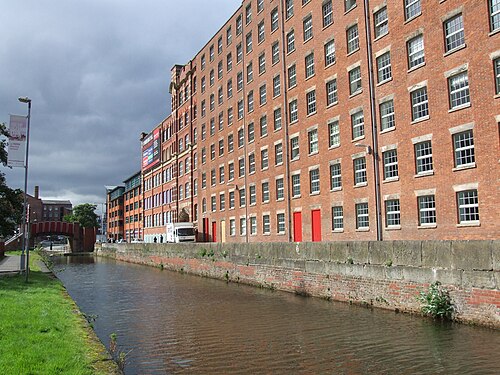
Manchester mills
United Kingdom · 19th c.
Manchester mills is a reference point in the public image of Cotton.
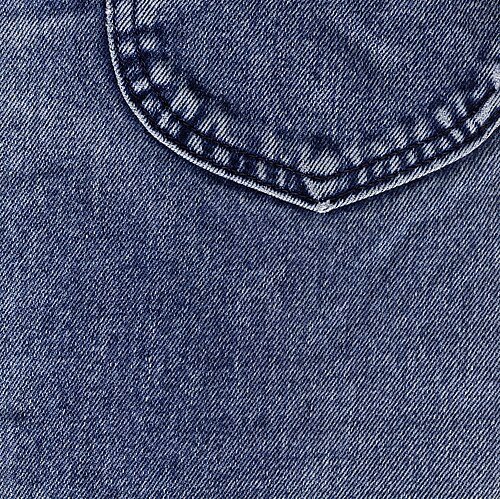
Levi’s denim
United States · 1873–
Levi’s denim is a reference point in the public image of Cotton.
Sea Island / Pima
US / Caribbean · 19th c.–
Sea Island / Pima is a reference point in the public image of Cotton.
Egyptian extra-long
Egypt · 19th c.–
Egyptian extra-long is a reference point in the public image of Cotton.
6
Charkha
India · Gandhi era
Charkha is a reference point in the public image of Cotton.
T-shirt jersey
Global · 20th c.
T-shirt jersey is a reference point in the public image of Cotton.
Terrycloth towel
Turkey / UK · 19th c.–
Terrycloth towel is a reference point in the public image of Cotton.
Toggle icons on and off — every bar rescales to the leader of your selection.