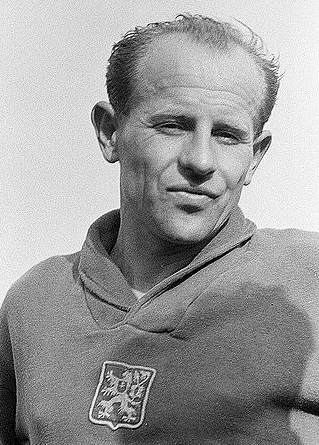
Emil Zatopek

Sergey Bubka
Stat by stat
Bars are scaled to the leader in this list.
The verdict
Dead even across the measured categories. Our all-time ranking places Emil Zatopek at #5 and Sergey Bubka at #6.
Head-to-head FAQ
Who leads more shared metrics?
How do the published ranks compare?
Are these live stats?
The case for Emil Zatopek
The Czech Locomotive ran with a grimacing, head-rolling style that looked agonised and proved unbeatable. His masterpiece came at the 1952 Helsinki Olympics, where he won the 5000m, the 10,000m and — entering his first ever marathon almost on a whim — the marathon too, a treble at a single Games that will almost certainly never be repeated. He won four Olympic golds and a silver in all, and set 18 world records at distances from 5000m to 30 kilometres. Zatopek pioneered brutal interval training, running hundreds of 400m repetitions in army boots, methods that underpin distance training to this day. He also embodied the sport's conscience, later demoted and punished for supporting the 1968 Prague Spring. For sheer range within distance running — track speed married to marathon endurance in the same fortnight — no one has ever matched his Helsinki fortnight.
The case for Sergey Bubka
Bubka owned the pole vault so completely that he made a business of the record book. He broke the world record 35 times — 17 outdoors and 18 indoors — famously raising it a centimetre at a time to collect appearance bonuses, and became the first human to clear both 6.00m (in 1985) and 6.10m. His outdoor record of 6.14m, set in 1994, stood for 26 years until Armand Duplantis surpassed it in 2020. He won six consecutive World Championship titles between 1983 and 1997, an unmatched run of global dominance. The paradox is his single Olympic gold, in Seoul 1988: freak weather, injury and one catastrophic no-height in Barcelona 1992 denied a vaulter who was, on any given day, untouchable. Judged on the event he transformed and the records he stockpiled, Bubka is the most dominant field-event athlete the sport has produced.