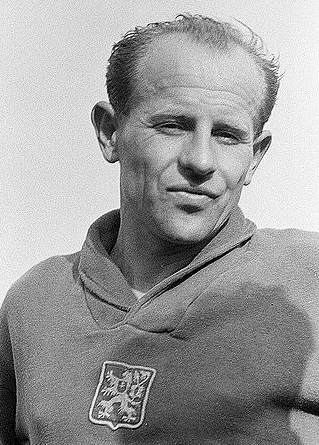
Emil Zatopek
Jackie Joyner-Kersee
Stat by stat
Bars are scaled to the leader in this list.
The verdict
Dead even across the measured categories. Our all-time ranking places Emil Zatopek at #5 and Jackie Joyner-Kersee at #8.
Head-to-head FAQ
Who leads more shared metrics?
How do the published ranks compare?
Are these live stats?
The case for Emil Zatopek
The Czech Locomotive ran with a grimacing, head-rolling style that looked agonised and proved unbeatable. His masterpiece came at the 1952 Helsinki Olympics, where he won the 5000m, the 10,000m and — entering his first ever marathon almost on a whim — the marathon too, a treble at a single Games that will almost certainly never be repeated. He won four Olympic golds and a silver in all, and set 18 world records at distances from 5000m to 30 kilometres. Zatopek pioneered brutal interval training, running hundreds of 400m repetitions in army boots, methods that underpin distance training to this day. He also embodied the sport's conscience, later demoted and punished for supporting the 1968 Prague Spring. For sheer range within distance running — track speed married to marathon endurance in the same fortnight — no one has ever matched his Helsinki fortnight.
The case for Jackie Joyner-Kersee
Widely called the greatest female athlete of the twentieth century, Joyner-Kersee dominated the most demanding event in the sport. Her heptathlon world record of 7,291 points, set at the 1988 Seoul Olympics, still stands nearly four decades later and remains one of the most durable marks in athletics. She won three Olympic golds — heptathlon in 1988 and 1992, long jump in 1988 — plus a silver and two bronzes across four Games, and added four World Championship titles. She was simultaneously a world-class long jumper, with a best of 7.49m that ranks among the finest ever, and a sub-13-second hurdler, a range of abilities almost no one else has combined. Battling asthma throughout her career, she set the standard for the multi-event athlete: fast enough to sprint, strong enough to throw, springy enough to jump, and tough enough to do all seven over two exhausting days.