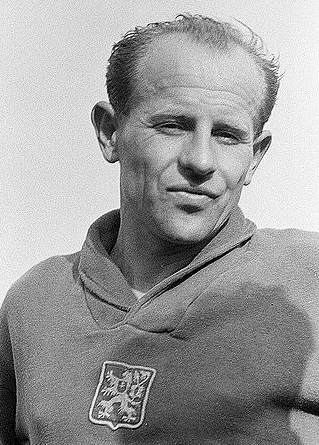
Emil Zatopek
Haile Gebrselassie
Stat by stat
Bars are scaled to the leader in this list.
The verdict
Dead even across the measured categories. Our all-time ranking places Emil Zatopek at #5 and Haile Gebrselassie at #9.
Head-to-head FAQ
Who leads more shared metrics?
How do the published ranks compare?
Are these live stats?
The case for Emil Zatopek
The Czech Locomotive ran with a grimacing, head-rolling style that looked agonised and proved unbeatable. His masterpiece came at the 1952 Helsinki Olympics, where he won the 5000m, the 10,000m and — entering his first ever marathon almost on a whim — the marathon too, a treble at a single Games that will almost certainly never be repeated. He won four Olympic golds and a silver in all, and set 18 world records at distances from 5000m to 30 kilometres. Zatopek pioneered brutal interval training, running hundreds of 400m repetitions in army boots, methods that underpin distance training to this day. He also embodied the sport's conscience, later demoted and punished for supporting the 1968 Prague Spring. For sheer range within distance running — track speed married to marathon endurance in the same fortnight — no one has ever matched his Helsinki fortnight.
The case for Haile Gebrselassie
For a decade Gebrselassie was distance running, and then he reinvented himself on the roads. On the track he won the Olympic 10,000m in 1996 and 2000 — the second in one of the greatest races ever, edging Paul Tergat by nine hundredths of a second — and took four consecutive world 10,000m titles from 1993 to 1999. Across his career he set 27 world records at distances from 2000m to the marathon, an astonishing spread of speed and endurance. Moving up to the marathon, he ran 2:03:59 in Berlin in 2008 to become the first man under 2:04. His duels with Tergat and his beaming, arms-pumping finishing sprint made him one of the sport's most beloved figures. Few athletes have owned both the 10,000m and the full marathon at world-record level; Gebrselassie owned everything in between too.