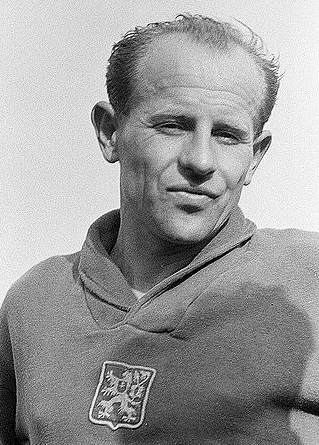
Emil Zatopek
Fanny Blankers-Koen
Stat by stat
Bars are scaled to the leader in this list.
The verdict
Emil Zatopek leads 1 of 2 categories. Our all-time ranking places Emil Zatopek at #5 and Fanny Blankers-Koen at #12.
Head-to-head FAQ
Who leads more shared metrics?
How do the published ranks compare?
Are these live stats?
The case for Emil Zatopek
The Czech Locomotive ran with a grimacing, head-rolling style that looked agonised and proved unbeatable. His masterpiece came at the 1952 Helsinki Olympics, where he won the 5000m, the 10,000m and — entering his first ever marathon almost on a whim — the marathon too, a treble at a single Games that will almost certainly never be repeated. He won four Olympic golds and a silver in all, and set 18 world records at distances from 5000m to 30 kilometres. Zatopek pioneered brutal interval training, running hundreds of 400m repetitions in army boots, methods that underpin distance training to this day. He also embodied the sport's conscience, later demoted and punished for supporting the 1968 Prague Spring. For sheer range within distance running — track speed married to marathon endurance in the same fortnight — no one has ever matched his Helsinki fortnight.
The case for Fanny Blankers-Koen
Voted the IAAF Female Athlete of the Twentieth Century, Blankers-Koen produced one of the greatest single Olympics of all time. At the 1948 London Games, a 30-year-old mother of two — mocked in the press as too old to compete — won four gold medals in the 100m, 200m, 80m hurdles and 4x100m relay, the most by any woman at a single Olympics. The tragedy is how much more she might have won: competition rules limited her to four events, yet she simultaneously held world records in the high jump and long jump, and at one point held world records in as many as six different disciplines at once. The Second World War erased what should have been her peak years, from age 22 to 28. That she returned afterward to dominate sprints, hurdles and jumps simultaneously marks her as perhaps the most versatile woman the sport has seen.