At a glance
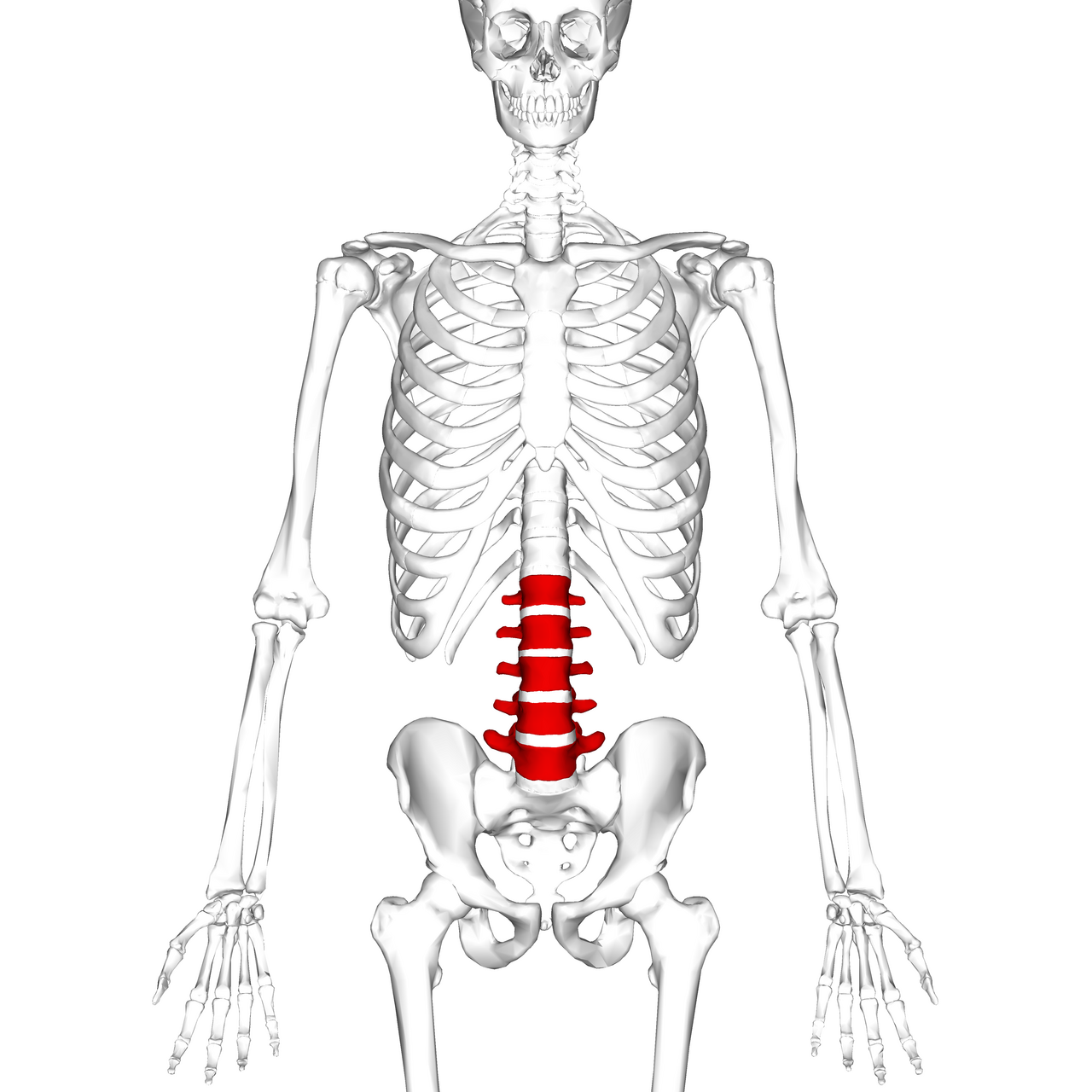
Thick fibrocartilage discs cushion each lumbar segment and allow bending and twisting; their outer fibers can tear under repeated or heavy loading, sometimes leading to herniation. Small, deep muscles spanning individual vertebral segments provide fine control and stability, and are frequently found to be inhibited or deconditioned in people with recurrent low back pain.
Weigh it for yourself
Mark each measure High, Any or Low for what you want. The fit number moves with every mark, and your marks follow you to the next page in this app.
| Measure | Lower Back | Post-Stroke | You want |
|---|---|---|---|
| Pain frequency | |||
| Recovery length | |||
| Exercise load | |||
| Clinician need | |||
| Self-care fit | |||
| Recurrence risk |
Mark at least one measure to see a fit number.
Scores are the atlas’s 0–100 teaching marks for each topic. They are not a diagnosis, a dose or a treatment choice.
Reading checklist
Tick a point once you could explain it in your own words. Ticks stay on this device.
0 of 4 points done
All points done. Next: Open the topic: Lower Back
Lower Back · closing 1
The lumbar spine's combination of load-bearing bone, shock-absorbing discs, and layered stabilizing muscles explains why low back pain can arise from many different tissues, and why treatment often addresses movement patterns and strength rather than a single structure.
Lower Back · Intervertebral discs
Thick fibrocartilage discs cushion each lumbar segment and allow bending and twisting; their outer fibers can tear under repeated or heavy loading, sometimes leading to herniation. Small, deep muscles spanning individual vertebral segments provide fine control and stability, and are frequently found to be inhibited or deconditioned in people with recurrent low back pain.
Lower Back · Sciatic nerve and lumbar nerve roots
Nerve roots exiting the lumbar spine combine to form the sciatic nerve, which supplies the back of the leg; compression of these roots produces the radiating pain known as sciatica. The overwhelming majority of low back pain cases are labeled non-specific, meaning symptoms cannot be reliably traced to one structural finding.
Lower Back · Severity and prevalence vary widely across these conditions, fro
Severity and prevalence vary widely across these conditions, from common mechanical strain to comparatively rare but serious presentations that require urgent care. While the vast majority of low back pain is self-limiting and mechanical, the rare but serious conditions on this list are why clinicians routinely screen for red-flag symptoms during evaluation.
This is education from the atlas. It does not diagnose and does not prescribe a dose. It does not replace the full topic page.
What is the next question after this?
Nerve roots exiting the lumbar spine combine to form the sciatic nerve, which supplies the back of the leg; compression of these roots produces the radiating pain known as sciatica. The overwhelming majority of low back pain cases are labeled non-specific, meaning symptoms cannot be reliably traced to one structural finding.
Does this page rank people or nations?
This is education from the atlas. It does not diagnose and does not prescribe a dose. It does not replace the full topic page.
Where is the longer entry?
Severity and prevalence vary widely across these conditions, from common mechanical strain to comparatively rare but serious presentations that require urgent care. While the vast majority of low back pain is self-limiting and mechanical, the rare but serious conditions on this list are why clinicians routinely screen for red-flag symptoms during evaluation.