At a glance
Trunk and hip strengthening is commonly recommended to support the lumbar spine, though research suggests general physical activity and load management play a comparably important role in prevention. Recurrence is common because contributing factors such as deconditioning, prolonged sitting, or heavy lifting mechanics often persist after the initial episode resolves.
Weigh it for yourself
Mark each measure High, Any or Low for what you want. The fit number moves with every mark, and your marks follow you to the next page in this app.
| Measure | Lower Back | Post-Stroke | You want |
|---|---|---|---|
| Pain frequency | |||
| Recovery length | |||
| Exercise load | |||
| Clinician need | |||
| Self-care fit | |||
| Recurrence risk |
Mark at least one measure to see a fit number.
Scores are the atlas’s 0–100 teaching marks for each topic. They are not a diagnosis, a dose or a treatment choice.
Reading checklist
Tick a point once you could explain it in your own words. Ticks stay on this device.
0 of 4 points done
All points done. Next: Open the topic: Lower Back
Lower Back · Does a disc herniation always require surgery?
Most disc herniations improve with conservative management such as exercise and time; surgery is typically reserved for cases with significant, persistent nerve compression or red-flag features. Sciatica describes pain radiating along the sciatic nerve path into the buttock and leg, usually caused by irritation of a lumbar nerve root rather than the sciatic nerve itself being diseased.
Lower Back · Can core exercises prevent low back pain?
Trunk and hip strengthening is commonly recommended to support the lumbar spine, though research suggests general physical activity and load management play a comparably important role in prevention. Recurrence is common because contributing factors such as deconditioning, prolonged sitting, or heavy lifting mechanics often persist after the initial episode resolves.
Lower Back · Is imaging needed for every case of back pain?
Guidelines generally reserve early imaging for cases with red-flag features or that fail to improve after a period of conservative care, since imaging findings often do not correlate well with pain. Spondylolisthesis is a forward slip of one vertebra relative to the one below it, which can be present without symptoms or can contribute to pain and nerve irritation depending on severity.
Lower Back · The lumbar spine's five vertebrae are the largest in the spinal
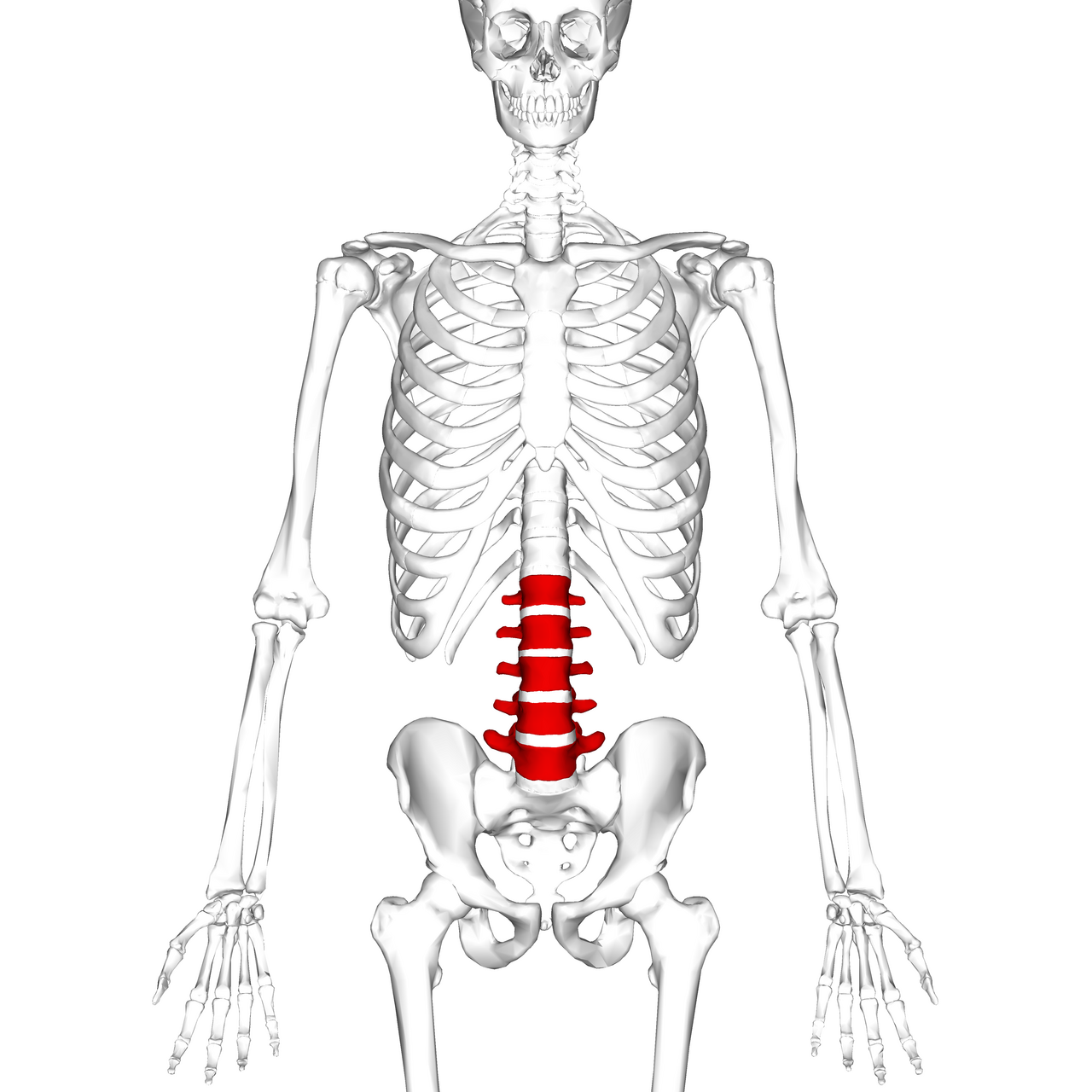
The lumbar spine's five vertebrae are the largest in the spinal column, built to bear substantial compressive load while still permitting bending, extension, and rotation. Thick intervertebral discs between each vertebra act as shock absorbers and allow controlled movement across the segment.
This is education from the atlas. It does not diagnose and does not prescribe a dose. It does not replace the full topic page.
What is the next question after this?
Guidelines generally reserve early imaging for cases with red-flag features or that fail to improve after a period of conservative care, since imaging findings often do not correlate well with pain. Spondylolisthesis is a forward slip of one vertebra relative to the one below it, which can be present without symptoms or can contribute to pain and nerve irritation depending on severity.
Does this page rank people or nations?
This is education from the atlas. It does not diagnose and does not prescribe a dose. It does not replace the full topic page.
Where is the longer entry?
The lumbar spine's five vertebrae are the largest in the spinal column, built to bear substantial compressive load while still permitting bending, extension, and rotation. Thick intervertebral discs between each vertebra act as shock absorbers and allow controlled movement across the segment.