Pre-1900
Folk practice
School Readiness guidance lived in proverb, religion, and midwifery before academic child study.
School Readiness · Self-regulation beats flashcards — school readiness combines executive function, language, and social entry more than early academic drilling.
Milestones in order. This is history, not a weekly activity grid.
Darker cells mean a higher score for this topic on that metric.
LessMore
Last reviewed Sources & creditsMedia creditsMethodology
Self-regulation beats flashcards — framed by executive function and social entry to school.
Evidence score 88/100 reflects published cohort, RCT, and meta-analytic work — gaps remain in cross-cultural replication.
Age range 4–6 years marks peak relevance; principles may extend but intensity varies by developmental stage.
Difficulty score 58/100 captures typical caregiver load — context, support, and temperament modify real experience.
Consensus score 78/100 — areas of agreement and live debate appear in the science section.
Urgency 65/100 reflects time-sensitivity; some topics tolerate gradual change, others need early action.
School Readiness history tracks shifting expert authority — from religious manuals through behaviourism to attachment and neuroscience frames.
Each era reinterpreted executive function and social entry to school through available science and cultural values about children, gender, and state responsibility.
School Readiness entered formal childcare discourse around 2017 as psychology, paediatrics, and education institutions professionalised family life.
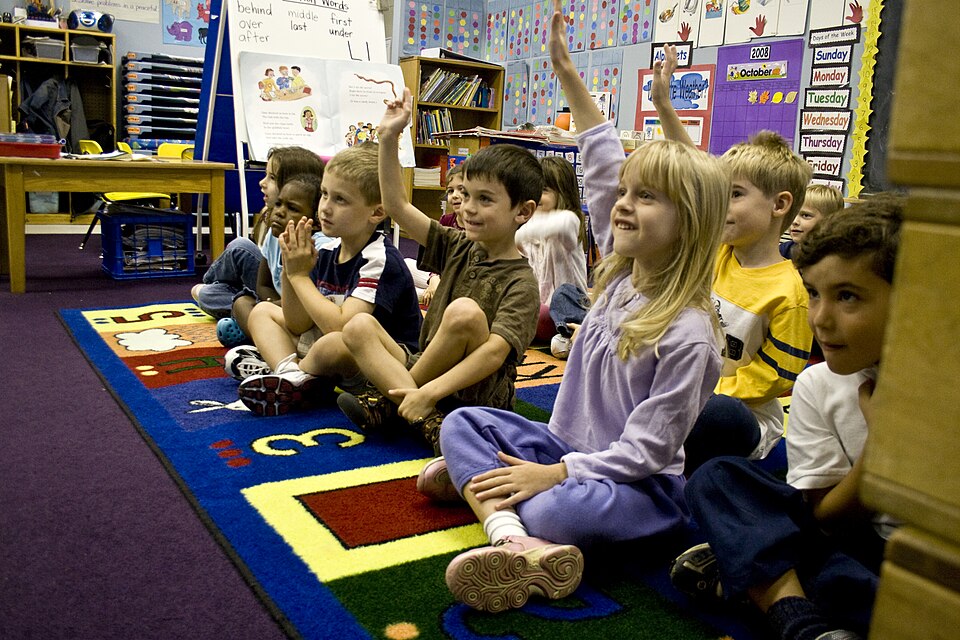
Districts used checklists that often confused maturity with opportunity.
US programmes tied health, nutrition, and pre-academic skills together.
Political “ready to learn” goals expanded public preschool rhetoric.
Frameworks added social-emotional and motor domains beside letters.
Delayed kindergarten entry research showed mixed academic trade-offs.
Evidence favoured guided play over drill for early literacy foundations.
Global targets tracked pre-primary participation as a readiness pathway.
Scholars flagged cultural and disability bias in “ready child” lists.
Virtual kindergarten exposed household resource gaps as readiness factors.
Advocates reframed readiness as schools ready for diverse children.
School Readiness guidance lived in proverb, religion, and midwifery before academic child study.
Universities and clinics began publishing age-stage norms and hygiene rules.
Bowlby, Ainsworth, and Baumrind reshaped how closeness and limits were discussed.
Neuroscience metaphors and international ECD programmes entered parenting culture.
Social media accelerates method wars; evidence reviews struggle to keep pace.
Approaches that faded, flipped or were replaced as evidence and culture moved on.
Harsh control models faded as executive function and social entry to school research linked warmth with better outcomes.
Parents expected to manage their own arousal while teaching children — not just enforce rules.
WHO and UNICEF standards interact with local kinship systems worldwide.
Today's school readiness discourse blends global WHO standards with local kinship practice and algorithmic parenting media.
Circadian development, night waking, and safe sleep environments — among the most researched and debated parenting topics globally.
Evidence 91 🍽️Breast, bottle, solids, and picky eating — Ellyn Satter's division of responsibility frames feeding as a relational not battlefield task.
Evidence 93 📱Screens displace sleep, movement, and conversation — WHO, AAP, and UNESCO guidance converges on limits under five with quality over quantity debates.
Evidence 82 🚧When limits meet resistance — discipline conflicts escalate when stress, inconsistency, or developmental mismatch go unaddressed.
Evidence 79 👯Competition for attention and resources — Judy Dunn's sibling research shows conflict is normative but manageable with fair attention and teaching repair.
Evidence 76