Pre-1950
Behaviourism era
Watson and Skinner-influenced advice emphasised strict schedules and minimal picking-up.
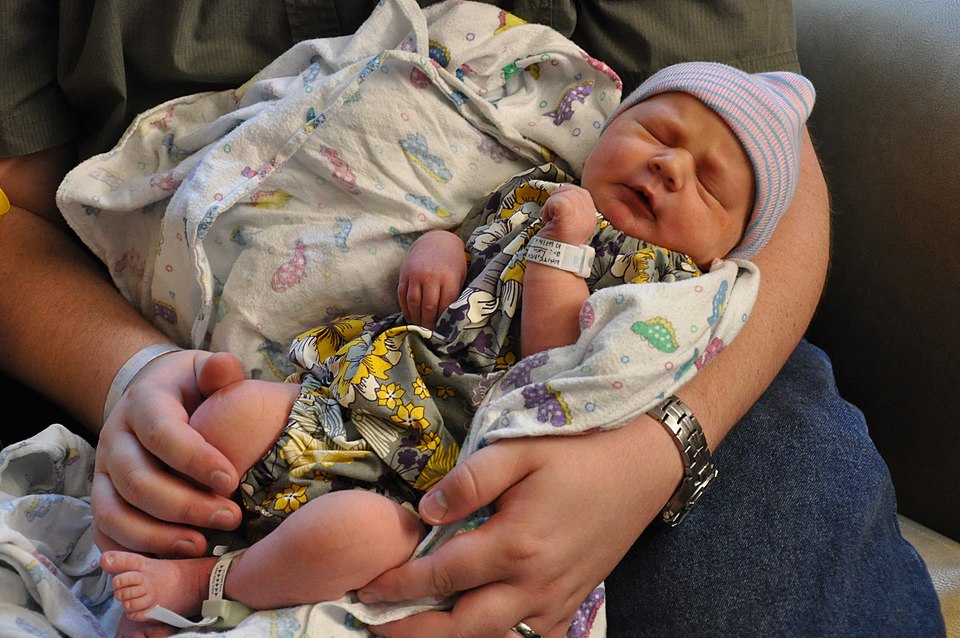
Infant · From one month to twelve months — motor milestones, first foods, attachment deepening, and emerging sleep patterns.
Milestones in order. This is history, not a weekly activity grid.
Darker cells mean a higher score for this topic on that metric.
LessMore
Last reviewed Sources & creditsMedia creditsMethodology
Many roll front-to-back between 4–6 months; wide normal range exists — tummy time supports development.
WHO and AAP recommend around six months when sitting with support and showing interest — not before four months.
Mild drooling and gum irritation yes; high fever usually has another cause and needs medical review.
Some sleep longer stretches by 6–9 months; many still wake for feeds or comfort — biologically normal.
Daily supervised tummy time builds neck and shoulder strength for crawling and reduces flat head spots.
Often peaks 8–10 months as attachment to primary caregivers solidifies — not shyness to "fix".
Infanthood became a distinct developmental stage as child psychology separated from generic "childhood" in the twentieth century.
From behaviourism's scheduled feeding to attachment parenting, advice oscillated between clock and cue.
Jean Piaget's sensorimotor observations and Mary Ainsworth's Strange Situation (1978) defined infant cognition and attachment as measurable science.
Jean Piaget published sensorimotor descriptions of infant object permanence development.
Benjamin Spock's Common Sense Book of Baby and Child Care reached millions of US parents.
Mary Ainsworth published attachment classification procedure at Johns Hopkins.
The Continuum Concept popularised constant carrying among Western readers.
SIDS research began linking prone sleeping to higher infant mortality.
WHO recommended six months exclusive breastfeeding where possible.
Gwen Dewar synthesised evidence-based infant sleep and development for parents online.
American Academy of Pediatrics aligned complementary feeding start near six months.
Infant social exposure limited during lockdowns — later studies tracked communication milestones.
Guidelines shifted toward early peanut/egg introduction after LEAP trial replication discussions.
Watson and Skinner-influenced advice emphasised strict schedules and minimal picking-up.

Bowlby-Ainsworth work and Spock's trust-your-instincts message reshaped middle-class infant care.
Baby Einstein, monitors, and gear markets exploded alongside dual-income households.
Websites and books translated developmental research for sleep, feeding, and play.
Social media and tracking apps intensified comparison culture around infant development.
Approaches that faded, flipped or were replaced as evidence and culture moved on.
Four-hour bottle intervals abandoned as lactation physiology and attachment data favoured responsiveness.
Rice cereal at weeks old gave way to six-month WHO-aligned introduction with texture progression.
Prone positioning for reflux reversed after SIDS campaigns proved supine safer population-wide.
Modern infant care integrates developmental milestones as guides — not deadlines — with safety regulation on sleep and nutrition.
The first 28 days after birth — physiology, bonding, feeding rhythms, and the shift from womb to world.
Evidence 88 🧸Walking, talking, and testing limits — the toddler years blend motor explosion, language bursts, and autonomy struggles.
Evidence 85 ✏️Imaginative play, peer entry, and executive function growth define the preschool years before formal schooling.
Evidence 82 📚Industry, friendships, and academic skill-building mark middle childhood between toddler chaos and adolescent identity work.
Evidence 78 🧑🎓Brain remodeling, identity formation, and increasing autonomy define adolescence — risk and capability both rise.
Evidence 80