Lesion–symptom mapping
Link focal damage to selective deficits.
Brenda Milner · Cognitive neuroscience pioneer — patient H.M., memory systems and the lasting lesson that lesions can dissociate what looks unified.
Reviewed 2026-08·Sources & research·Methodology·Media credits
Darker cells mean a higher score for this topic on that metric.
LessMore
Last reviewed Sources & creditsMedia creditsMethodology
Henry Molaison (1953 bilateral medial temporal surgery). He lost new episodic memory while retaining skills — the dissociation that remade memory science.
1957. The paper tied hippocampal removal to anterograde amnesia without collapsing language or IQ in the teaching summary.
H.M. improved at mirror-tracing across days without remembering the sessions — procedural skill without episodic recall.
No. History of published cognitive neuroscience. Not medical advice, diagnosis, or surgical counsel.
Montreal Neurological Institute — careful testing, frontal-lobe work, and mentorship alongside the H.M. archive.
Hippocampus (memory index) and frontal lobes (control). Use dual-view; do not invent a personal lesion map.
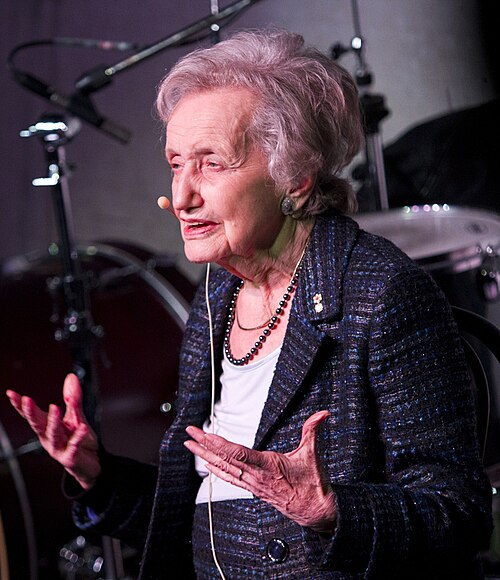
Methods in Milner’s tradition emphasise lesion–behaviour mapping, longitudinal testing and tasks designed to separate memory kinds.
Modern imaging and computational models extend — they do not erase — the dissociation logic.
Link focal damage to selective deficits.
Procedural probes that survive declarative loss.
Quantify anterograde declarative failure.
Strategy and generation beyond MTL amnesia.
Refine what surgery actually removed.
Track stability of dissociations over years.
Baseline and follow-up memory profiles.
Pair declarative and procedural probes.
Sample autobiographical gradient carefully.
Avoid single-case overgeneralisation.
H.M. is iconic; science needs converging cases.
Early maps lacked modern imaging resolution.
Naming and storytelling must respect persons.
Read primary papers before documentary simplifications.
The neuron doctrine — drawing the brain cell by cell.
Research 58 🗣️Speech production and the birth of modern localization.
Research 69 👂Comprehension aphasia and the language network idea.
Research 58 🗺️Cortical maps from the operating room — the sensory homunculus.
Research 85 👁️How visual cortex builds edges, columns and critical periods.
Research 58 🐌Learning as synaptic change — from Aplysia to human memory.
Research 93 ❤️Feeling, self and somatic markers in decision circuits.
Research 78 🎨Vision, art and how cortex separates colour, form and motion.
Research 74 🧪Nerve growth factor — discovering how neurons survive and wire.
Research 97 🗺️Place cells and the cognitive map inside the hippocampus.
Research 51