Grou é uma das vinte e quatro espécies deste atlas. Não é um catálogo: evolução, anatomia, comportamento, cultura, ícones, conservação e área formam um só sistema.
As pontuações comparam velocidade, inteligência, área, resiliência, impacto cultural e papel ecológico. São juízos editoriais relativos, não um ranking de laboratório.
Sete capítulos aprofundam: origens, corpo e sentidos, vida e comportamento, cultura, ícones, pressão de conservação e a área partilhada com as pessoas.
Introdução profunda
Mergulho: Grou
Grou não é um animal de postal. É um conjunto de populações, subespécies e regras humanas na família aves deste atlas.
Diversidade, corpos, cultura e áreas — mais uma lente desta região linguística.
Diversidade dentro do tipo
Os guias de campo comprimem muitas linhagens na palavra Grou. Subespécies, rotas e linhas cativas não partilham um só destino.
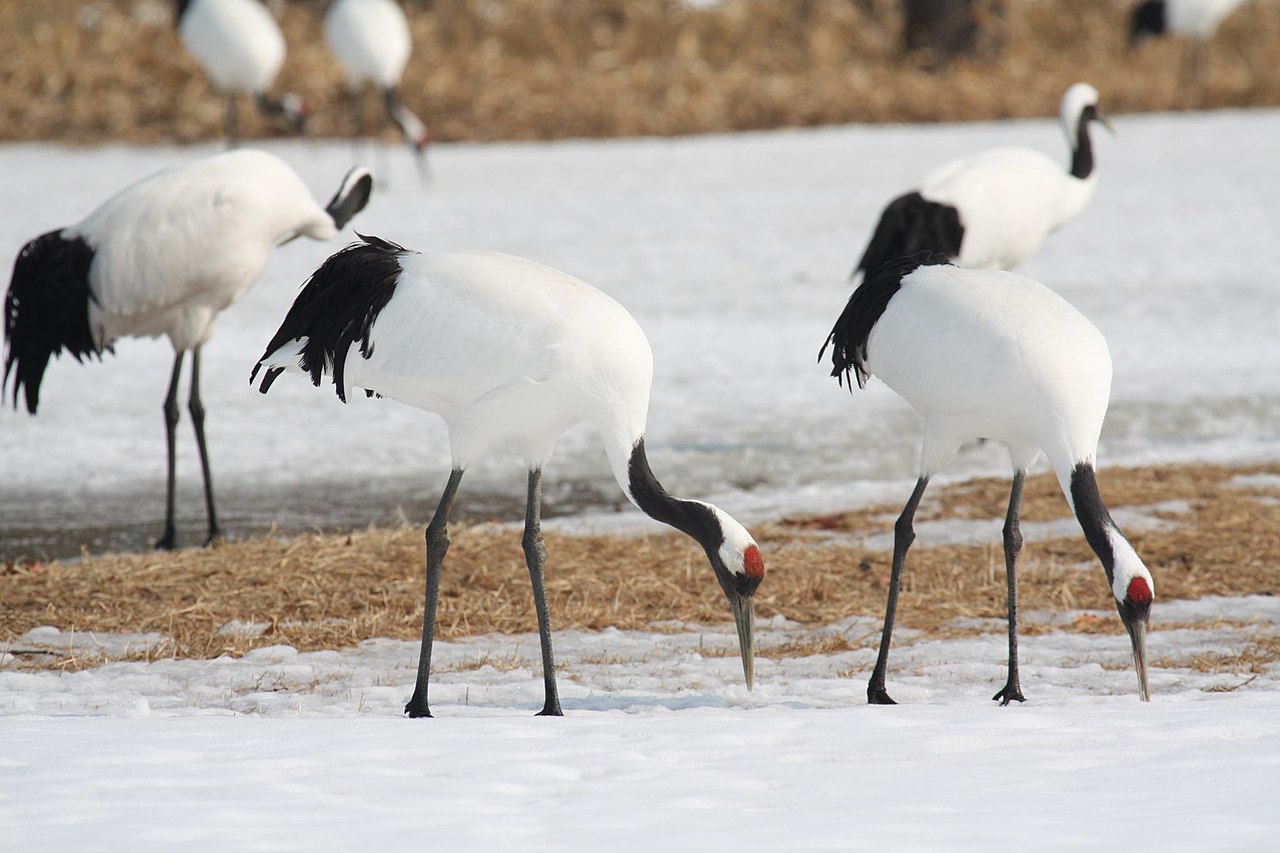
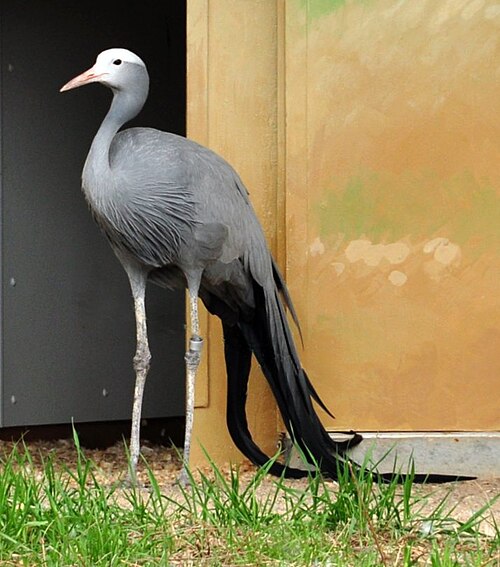
Este atlas escolhe um título da Wikipédia como imagem-herói e deixa o resto do grau visível para que um stock recuperado não lave uma prima Criticamente em perigo.
Life in the landscape
A long trachea coiled in the sternum gives the unison call its carry. The bill probes wetlands; the inner wing is built for a slow display stroke.
Omnivory in marshes -- plants, invertebrates, small vertebrates. Winter grain at Kushiro and Izumi is a human subsidy on that diet.
Cultura e significado
Cinema, lei, heráldica, zoos e relato local encontraram Grou. Esses retratos movem dinheiro; não são um censo de campo.
O capítulo de cultura data cartazes e leis para que um filme de 1975 ou um logótipo de 1961 não finjam ser a Lista Vermelha dos anos 2020.
Conservation and money
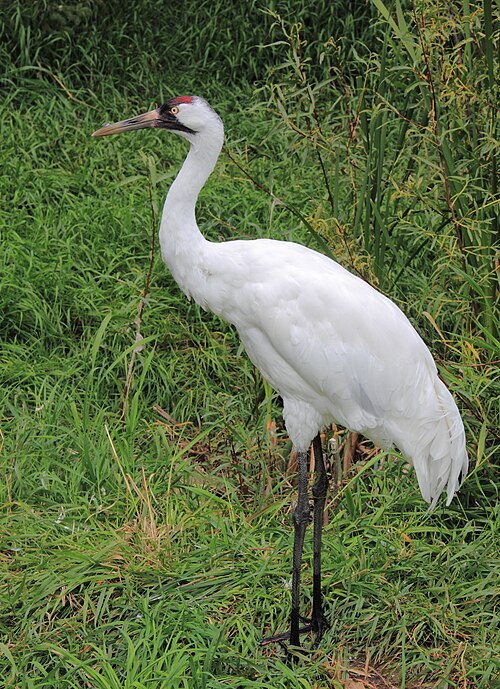
Red-crowned Grou is Endangered; whooping Grou remains one of the rarest North American recoveries.
Tourism, conflict payments, quotas and captive loans are dated economic bands in the market chapter -- not live prices and not a best-species prize.
Imersão em ciências da vida
Biologia a fundo: Grou
A biologia de Grou empilha estrutura, energia, sentidos e limites. As quatro secções usam os mesmos títulos do atlas para comparar sem um quadro de melhor espécie.
Anatomia, sentidos, comportamento e limites — mais a linguagem de campo desta região.
Structure
A long trachea coiled in the sternum gives the unison call its carry. The bill probes wetlands; the inner wing is built for a slow display stroke.
Load paths and tissues (not metals) are expanded in the anatomy chapter.
Energy and foraging
Omnivory in marshes -- plants, invertebrates, small vertebrates. Winter grain at Kushiro and Izumi is a human subsidy on that diet.
The how-it-works diagrams reduce that budget to a six-node loop.
Senses and control
Visual pair displays and far-carrying calls structure territories. Wetland depth and ice decide winter survival more than acuity.
Control here means the animal steering itself -- not a vehicle ECU.
Limits
A few winter basins and nesting marshes hold the Endangered type. Influenza and rice-paddy conversion are tighter than any sprint.
Resilience scores encode those limits relative to the other 23 types.
Four other atlas types, six terms, three threads and three local notes -- a map out of the Grou page without leaving the 24-id taxonomy.
Espécies relacionadas, termos, fios adjacentes e notas regionais para este idioma.
Ver também
🦩FlamingoAnother tall colonial wader used as civic imagery.
🎏KoiEast Asian garden neighbour -- carp ponds beside Grou screens.
🐼Panda-giganteEast Asian flagship whose recovery is a state project.
🦅ÁguiaNational-emblem bird on a different hunting geometry.
Termos-chave
Tancho
Japanese name for Grus japonensis -- red crown, white body.
Unison call
Paired duet that advertises a territory with the dance.
Izumi
Kagoshima wintering ground that can hold most of the island flock.
Whooping Grou
Grus americana -- 21 birds in 1941; a parallel recovery.
ICF
International Grou Foundation (Baraboo, 1973) -- George Archibald.
Costume rearing
Whooping-Grou chicks raised by puppet to avoid imprinting.
Habitat and movement
Where the Grou breeds and feeds is the first constraint. Single lakes, islands and forests appear again in the history timeline.
Range scores in this atlas mark how widely that movement runs -- albatross and blue whale high, koi and panda low -- not a quality ranking.
Research and law
Named projects (Project Tiger, ACAP, ICCAT, Amboseli) are the English-language bureaucracy of the type.
Listings and downlists are dated events in the timeline, not eternal essences.
Culture and price
Film, auction and logo years are filed under culture and market so they cannot masquerade as demography.
The icons chapter keeps eight real Wikipedia titles so a later language pack can attach the same faces.
Notas de campo visuais
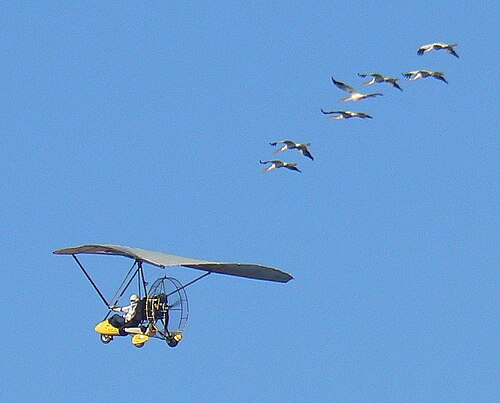
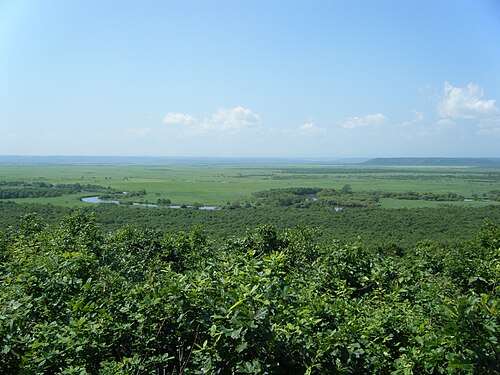
Fotos licenciadas desta espécie — heróis, eras e ícones numa parede.
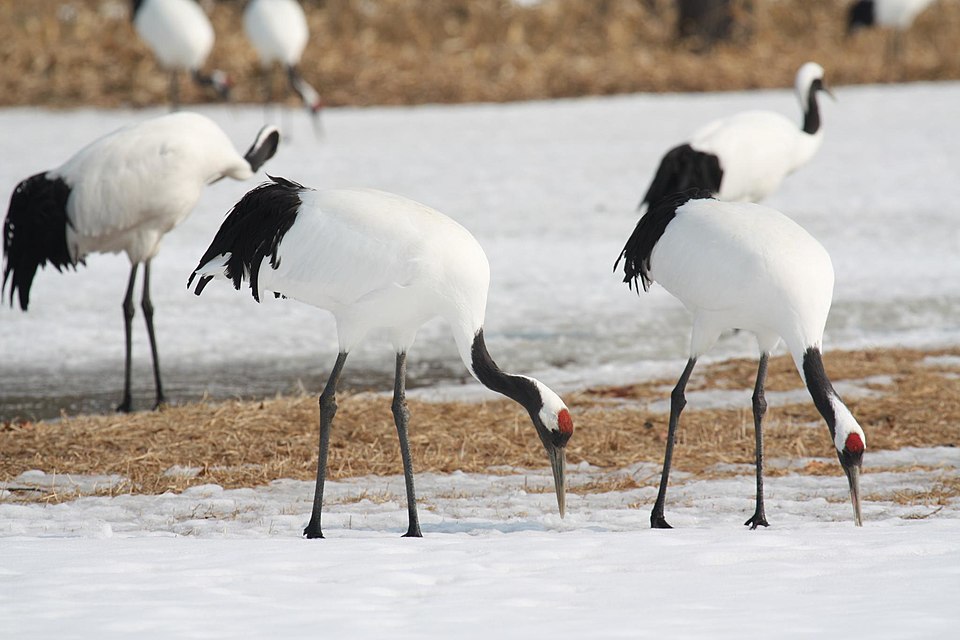
Alastair Rae from London, United KingdomAlastair Rae from London, United KingdomAlastair Rae from London, United KingdomSasataRod from Livonia, MichiganTim Rossアラツク欅 (Keyaki)Driedprawns at en.wikipedia
O perfil
Velocidade59
Inteligência56
Área68
Resiliência36
Impacto cultural55
Papel ecológico46
Fixar anatomia contra comportamento
Escolha um sistema anatômico e um facto de operação já nesta página da espécie. Um par de leitura — não um quadro de vencedores.
Ajuda de navegação deste atlas. A biologia de campo e a lei local decidem qualquer encontro real. Sem feed ao vivo.