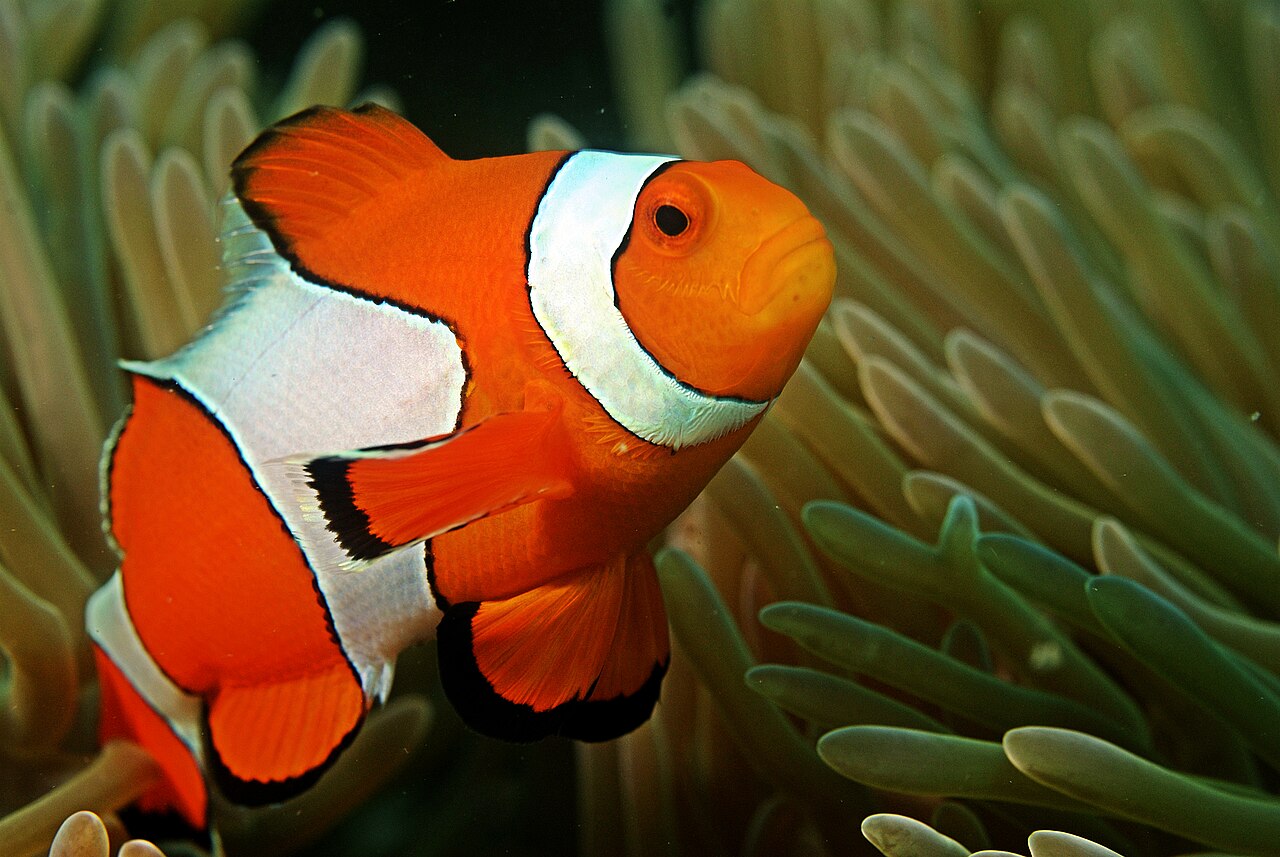
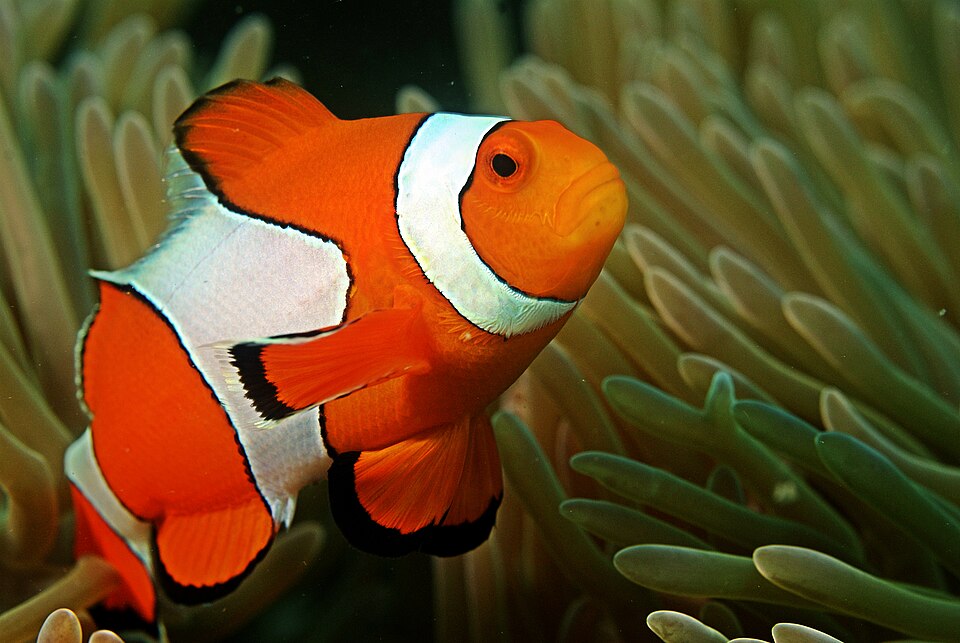
Peixe-palhaço é uma das vinte e quatro espécies deste atlas. Não é um catálogo: evolução, anatomia, comportamento, cultura, ícones, conservação e área formam um só sistema.
As pontuações comparam velocidade, inteligência, área, resiliência, impacto cultural e papel ecológico. São juízos editoriais relativos, não um ranking de laboratório.
Sete capítulos aprofundam: origens, corpo e sentidos, vida e comportamento, cultura, ícones, pressão de conservação e a área partilhada com as pessoas.
Introdução profunda
Mergulho: Peixe-palhaço
Peixe-palhaço não é um animal de postal. É um conjunto de populações, subespécies e regras humanas na família peixes deste atlas.
Diversidade, corpos, cultura e áreas — mais uma lente desta região linguística.
Diversidade dentro do tipo
Os guias de campo comprimem muitas linhagens na palavra Peixe-palhaço. Subespécies, rotas e linhas cativas não partilham um só destino.
Este atlas escolhe um título da Wikipédia como imagem-herói e deixa o resto do grau visível para que um stock recuperado não lave uma prima Criticamente em perigo.
Life in the landscape
A small pomacentrid with a mucus coat and a body plan for hovering in tentacles. The swim bladder and pectorals are built for a tiny territory, not a gyre.
Algae, zooplankton and anemone scraps inside a few cubic metres. The expensive trick is immunity, not speed.
Cultura e significado
Cinema, lei, heráldica, zoos e relato local encontraram Peixe-palhaço. Esses retratos movem dinheiro; não são um censo de campo.
O capítulo de cultura data cartazes e leis para que um filme de 1975 ou um logótipo de 1961 não finjam ser a Lista Vermelha dos anos 2020.
Conservation and money
Ocellaris is not the most threatened reef fish; binding risks are anemone bleaching, aquarium take and the Nemo effect.
Tourism, conflict payments, quotas and captive loans are dated economic bands in the market chapter -- not live prices and not a best-species prize.
Imersão em ciências da vida
Biologia a fundo: Peixe-palhaço
A biologia de Peixe-palhaço empilha estrutura, energia, sentidos e limites. As quatro secções usam os mesmos títulos do atlas para comparar sem um quadro de melhor espécie.
Anatomia, sentidos, comportamento e limites — mais a linguagem de campo desta região.
Structure
A small pomacentrid with a mucus coat and a body plan for hovering in tentacles. The swim bladder and pectorals are built for a tiny territory, not a gyre.
Load paths and tissues (not metals) are expanded in the anatomy chapter.
Energy and foraging
Algae, zooplankton and anemone scraps inside a few cubic metres. The expensive trick is immunity, not speed.
The how-it-works diagrams reduce that budget to a six-node loop.
Senses and control
Chemical cues from the host and social rank by size. Vision is tuned to a bright, shallow reef, not to open water.
Control here means the animal steering itself -- not a vehicle ECU.
Limits
No anemone, no species behaviour. Heat and trade both remove the house or the household.
Resilience scores encode those limits relative to the other 23 types.