At a glance
Battle of Waterloo · taglineThe 18 June 1815 allied victory that ended the Hundred Days and Napoleon's…
Battle of Waterloo · About 40,000-50,000 men were killed or wounded in a day of artilAbout 40,000-50,000 men were killed or wounded in a day of artillery,…
Battle of Waterloo · The battle closed the Napoleonic Wars in the English schoolroom The battle closed the Napoleonic Wars in the English schoolroom more than…
Battle of Waterloo · paras 1Elba, the 7th Coalition, and Napoleon's strike into Belgium to smash…
About 40,000-50,000 men were killed or wounded in a day of artillery, cavalry, and infantry -- a Napoleonic butcher's bill, not a twentieth-century one. Hougoumont, La Haye Sainte, and the misjudged midday start (mud, or waiting for the ground to dry) structure every English account.
Battle of Waterloo · tagline
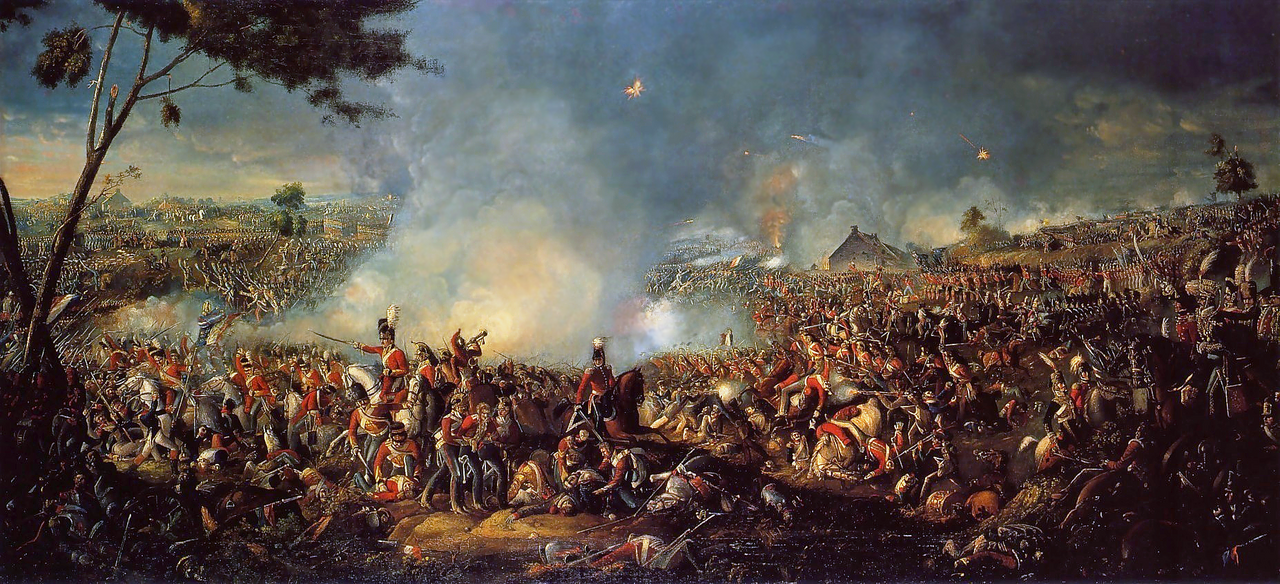
The 18 June 1815 allied victory that ended the Hundred Days and Napoleon's return -- Wellington, Blucher, and a muddy ridge. Waterloo was fought on 18 June 1815 on a shallow ridge south of Brussels, after Napoleon's escape from Elba and the 16 June battles at Ligny and Quatre Bras. Wellington's Anglo-Allied army held the ridge; Blucher's Prussians arrived in the afternoon on the French right.
Battle of Waterloo · About 40,000-50,000 men were killed or wounded in a day of artil
About 40,000-50,000 men were killed or wounded in a day of artillery, cavalry, and infantry -- a Napoleonic butcher's bill, not a twentieth-century one. Hougoumont, La Haye Sainte, and the misjudged midday start (mud, or waiting for the ground to dry) structure every English account.
Battle of Waterloo · The battle closed the Napoleonic Wars in the English schoolroom
The battle closed the Napoleonic Wars in the English schoolroom more than Leipzig had. Belgian tourism, British "nearest-run thing" prose, and Prussian insistence on being in the picture are the memory war that never ended. For this atlas it is the low-scale, high-memory end of an era -- and a rhyme with later "one-day" myths (Midway, Tsushima) that should not be equated.
Battle of Waterloo · paras 1
Elba, the 7th Coalition, and Napoleon's strike into Belgium to smash Wellington and Blucher apart. Ligny hurt the Prussians; it did not destroy them. Hougoumont soaked men. D'Erlon's attack failed. Ney's cavalry charged squares without enough horse artillery. The Imperial Guard's late attack broke.
This explains a campaign, battle, or weapon in context. It is not a league of nations. It does not replace the full topic page.
Questions
- What is the next question after this?
- The battle closed the Napoleonic Wars in the English schoolroom more than Leipzig had. Belgian tourism, British "nearest-run thing" prose, and Prussian insistence on being in the picture are the memory war that never ended. For this atlas it is the low-scale, high-memory end of an era -- and a rhyme with later "one-day" myths (Midway, Tsushima) that should not be equated.
- Does this page rank people or nations?
- This explains a campaign, battle, or weapon in context. It is not a league of nations. It does not replace the full topic page.
- Where is the longer entry?
- Elba, the 7th Coalition, and Napoleon's strike into Belgium to smash Wellington and Blucher apart. Ligny hurt the Prussians; it did not destroy them. Hougoumont soaked men. D'Erlon's attack failed. Ney's cavalry charged squares without enough horse artillery. The Imperial Guard's late attack broke.
Next question: World War I · Open the topic: Battle of Waterloo
Why is "a single assassination headline" the wrong stop when reading the August mobilization in 1914? · Why is "a paper count of tanks" the wrong stop when reading the campaign in France in 1940? · Why is "the landing nickname alone" the wrong stop when reading the Inchon landing in 1950? · Why is "a body-count column" the wrong stop when reading the Tet offensive in 1968? · Why is "the battle nickname alone" the wrong stop when reading Austerlitz in 1805? · Why is "one casualty total" the wrong stop when reading Gettysburg in 1863? · 50 campaign reading notes