At a glance
Intercontinental ballistic missile · taglineFrom the V-2 and the R-7 to SALT and New START -- a history of the ICBM as a…
Intercontinental ballistic missile · On 21 August 1957 the Soviet R-7 flew as the first inOn 21 August 1957 the Soviet R-7 flew as the first intercontinental ballistic…
Intercontinental ballistic missile · TechShift in this atlas is near the ceiling: the ICBMTechShift in this atlas is near the ceiling: the ICBM recast deterrence,…
Intercontinental ballistic missile · paras 1Peenemunde, Mittelbau-Dora slave labour, and the 1945 scramble for teams and…
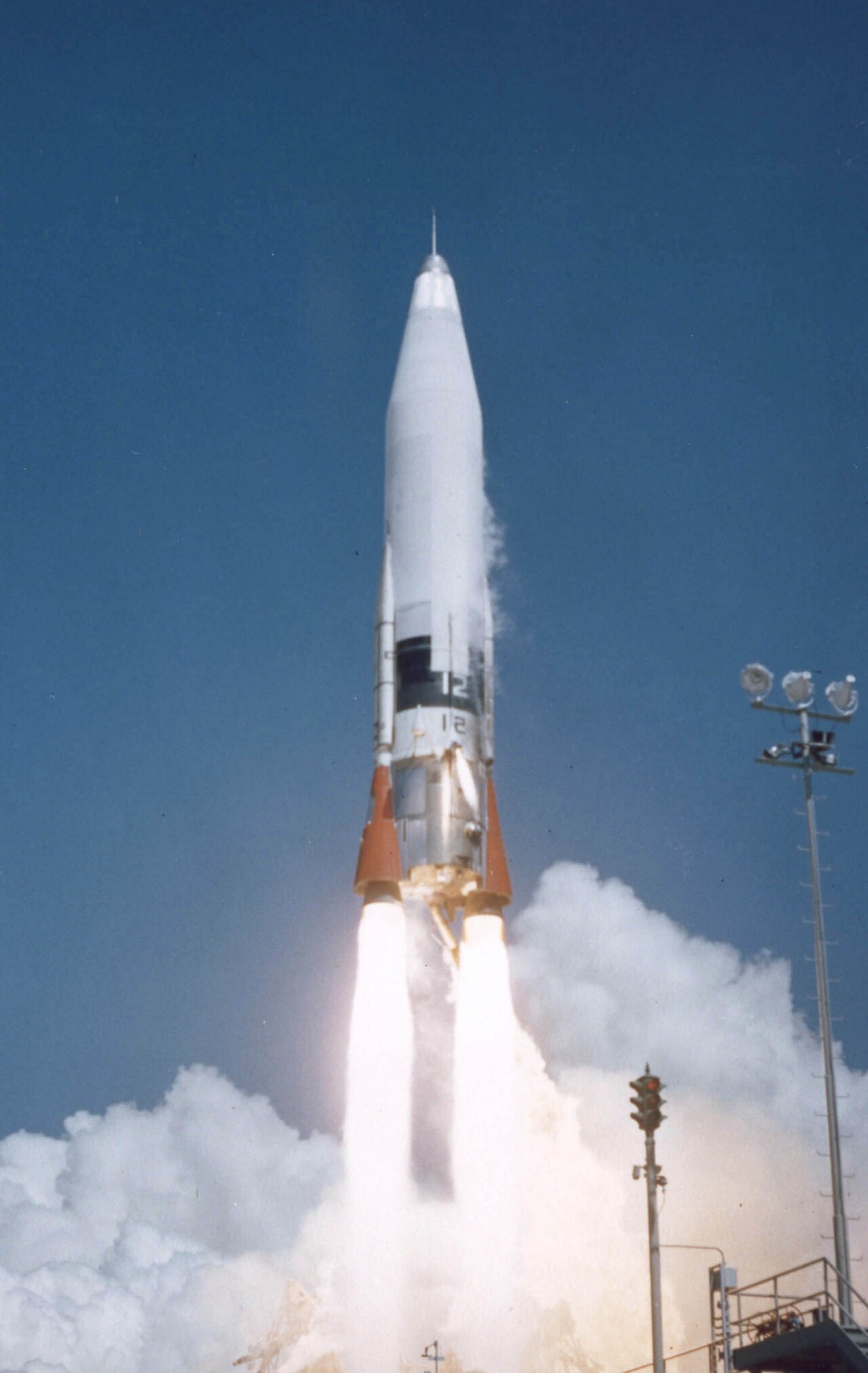
On 21 August 1957 the Soviet R-7 flew as the first intercontinental ballistic missile. Sputnik followed on 4 October. The United States answered with Atlas (operational 1959), Titan, and then the solid-fuel Minuteman (1962) that made silo fields a civic landscape in the Great Plains. Submarine-launched ballistic missiles (Polaris, 1960) hid the same idea at sea.
Intercontinental ballistic missile · tagline
From the V-2 and the R-7 to SALT and New START -- a history of the ICBM as a political object, not a launch manual. The intercontinental ballistic missile is a Cold War political object with a Second World War grandfather. Germany's V-2 (first combat use 8 September 1944 against Paris; London from 8 September as well in the British memory) proved a liquid-fuel rocket could carry a warhead across a country.
Intercontinental ballistic missile · On 21 August 1957 the Soviet R-7 flew as the first in
On 21 August 1957 the Soviet R-7 flew as the first intercontinental ballistic missile. Sputnik followed on 4 October. The United States answered with Atlas (operational 1959), Titan, and then the solid-fuel Minuteman (1962) that made silo fields a civic landscape in the Great Plains. Submarine-launched ballistic missiles (Polaris, 1960) hid the same idea at sea.
Intercontinental ballistic missile · TechShift in this atlas is near the ceiling: the ICBM
TechShift in this atlas is near the ceiling: the ICBM recast deterrence, civil defence, and the meaning of "surprise." Intensity is moderate because the type's main career was non-use. Cultural memory is Dr.
Intercontinental ballistic missile · paras 1
Peenemunde, Mittelbau-Dora slave labour, and the 1945 scramble for teams and drawings are the unethical start. Korolev's R-7 was a missile that could also throw a satellite -- politics in a first stage. No propulsion or re-entry cookbook belongs here. The sentence is: a 1944 city-attack rocket became a 1957 intercontinental type.
This explains a campaign, battle, or weapon in context. It is not a league of nations. It does not replace the full topic page.
Questions
- What is the next question after this?
- TechShift in this atlas is near the ceiling: the ICBM recast deterrence, civil defence, and the meaning of "surprise." Intensity is moderate because the type's main career was non-use. Cultural memory is Dr.
- Does this page rank people or nations?
- This explains a campaign, battle, or weapon in context. It is not a league of nations. It does not replace the full topic page.
- Where is the longer entry?
- Peenemunde, Mittelbau-Dora slave labour, and the 1945 scramble for teams and drawings are the unethical start. Korolev's R-7 was a missile that could also throw a satellite -- politics in a first stage. No propulsion or re-entry cookbook belongs here. The sentence is: a 1944 city-attack rocket became a 1957 intercontinental type.
Next question: Battle of Inchon · Open the topic: Intercontinental ballistic missile
Why is "a single assassination headline" the wrong stop when reading the August mobilization in 1914? · Why is "a paper count of tanks" the wrong stop when reading the campaign in France in 1940? · Why is "the landing nickname alone" the wrong stop when reading the Inchon landing in 1950? · Why is "a body-count column" the wrong stop when reading the Tet offensive in 1968? · Why is "the battle nickname alone" the wrong stop when reading Austerlitz in 1805? · Why is "one casualty total" the wrong stop when reading Gettysburg in 1863? · 50 campaign reading notes