Tigre est l’une des vingt-quatre espèces de cet atlas. Ce n’est pas un catalogue : évolution, anatomie, comportement, culture, icônes, conservation et aire forment un seul système.
Les scores comparent vitesse, intelligence, aire, résilience, impact culturel et rôle écologique. Ce sont des jugements éditoriaux relatifs, pas un classement de laboratoire.
Sept chapitres creusent : origines, corps et sens, vie et comportement, culture, icônes, pression de conservation et l’aire partagée avec les gens.
Introduction profonde
Plongée : Tigre
Tigre n’est pas un animal de carte postale. C’est un ensemble de populations, de sous-espèces et de règles humaines dans la famille faune de cet atlas.
Diversité, corps, culture et aires — plus une lentille de cette région linguistique.
Diversité dans le type
Les guides de terrain plient beaucoup de lignées dans le mot Tigre. Sous-espèces, voies et lignées captives ne partagent pas un seul destin.
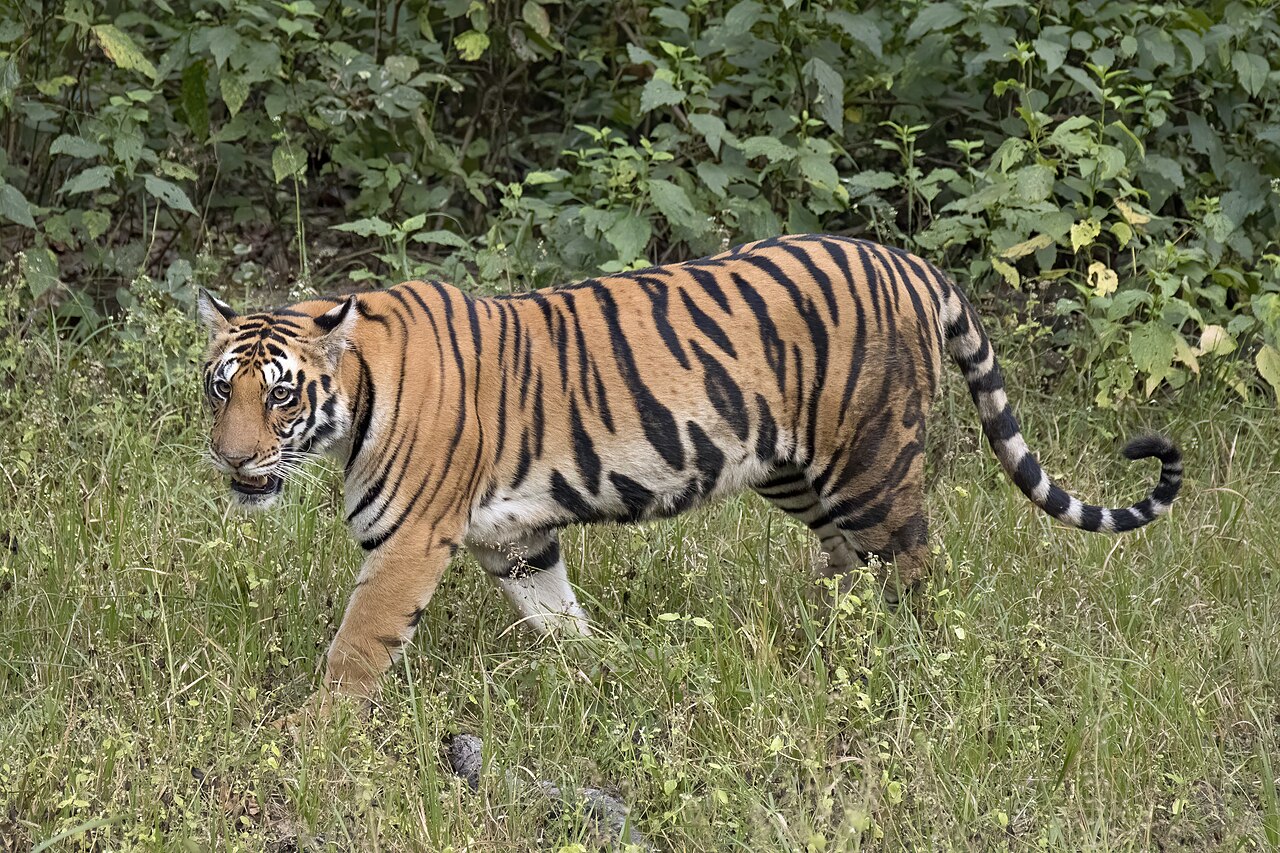
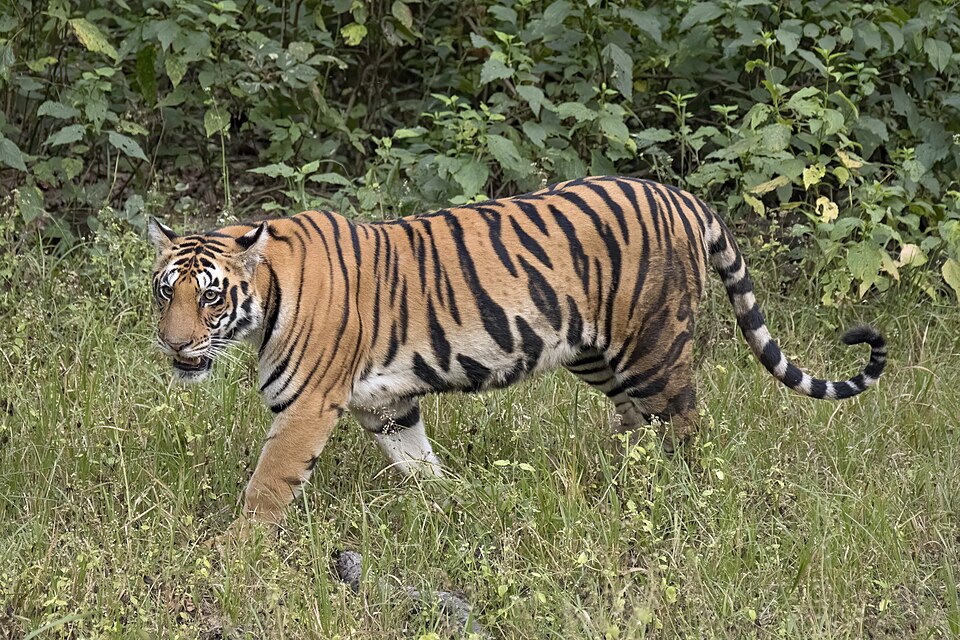
Cet atlas choisit un titre Wikipédia comme image héro et garde le reste du grade visible pour qu’un stock rétabli ne blanchisse pas une cousine En danger critique.
Life in the landscape
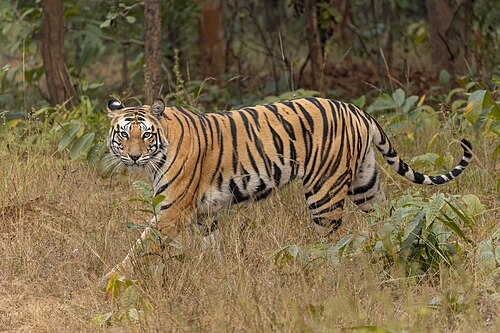
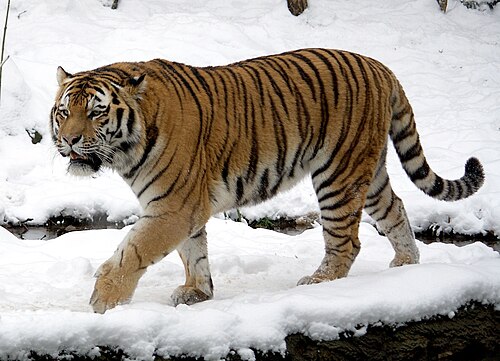
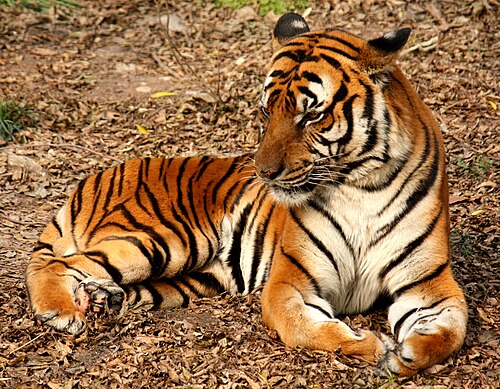
A solitary pantherine with a long body, striped disruptive coat and forelimbs built to wrestle large ungulates. Canines and a killing bite to the neck or throat finish what the ambush starts.
Sit-and-ambush on chital, sambar, wild pig and, in the Amur, deer and boar. A large kill funds days; livestock is the conflict calorie.
Culture et sens
Film, droit, héraldique, zoos et récit local ont rencontré Tigre. Ces portraits bougent l’argent ; ce n’est pas un recensement de terrain.
Le chapitre culture date affiches et lois pour qu’un film de 1975 ou un logo de 1961 ne se fassent pas passer pour la Liste rouge des années 2020.
Conservation and money
Endangered. Wild numbers rose in India after Project Tigre (1973) and Tx2 pledges (2010); Southeast Asian and South China lineages did not share that graph.
Tourism, conflict payments, quotas and captive loans are dated economic bands in the market chapter -- not live prices and not a best-species prize.
Plongée sciences de la vie
Biologie en profondeur : Tigre
La biologie de Tigre empile structure, énergie, sens et limites. Les quatre sections reprennent les titres de l’atlas pour comparer sans cadre de meilleure espèce.
Anatomie, sens, comportement et limites — plus le langage de terrain de cette région.
Structure
A solitary pantherine with a long body, striped disruptive coat and forelimbs built to wrestle large ungulates. Canines and a killing bite to the neck or throat finish what the ambush starts.
Load paths and tissues (not metals) are expanded in the anatomy chapter.
Energy and foraging
Sit-and-ambush on chital, sambar, wild pig and, in the Amur, deer and boar. A large kill funds days; livestock is the conflict calorie.
The how-it-works diagrams reduce that budget to a six-node loop.
Senses and control
Night vision and hearing in closed forest. Stripes break outline more than they advertise.
Control here means the animal steering itself -- not a vehicle ECU.
Limits
A few thousand animals, shrinking SE Asian forest, and a prey base that snares erase. High cultural impact does not raise resilience.
Resilience scores encode those limits relative to the other 23 types.
Une unité d’espèce qui partage anatomie et cycle de vie centraux, à travers sous-espèces et populations.
Recommandez-vous le commerce ou la détention d’animaux sauvages ?
Non. Tool-Lifes /animals est un atlas éducatif et n’encourage ni vente ni braconnage.
Les scores sont-ils officiels ?
Non. Ce sont des notes éditoriales relatives (0–100) entre les vingt-quatre espèces du site.
D’où viennent les photos ?
Elles viennent de Wikimedia Commons via le titre Wikipédia du maître anglais, licence enregistrée.
Pourquoi le système métrique ?
Le défaut est métrique. Unités locales et notes culturelles sont dans les chapitres culture et aire.
Quelle différence avec Wikipédia ?
Sept chapitres à profondeur fixe, scores de comparaison et laboratoires entre espèces, conçus pour parcourir.
Toutes les langues ont-elles toutes les espèces ?
Une espèce n’est publiée dans une langue que si elle est entièrement traduite. Pas de repli anglais.
Peut-on comparer deux espèces ?
Utilisez le tableau du pilier Comparer ou les pages VS.
Epingler l anatomie du tigre contre son comportement
Comment lire l anatomie du tigre contre le comportement sur cette page ?
Epinglez un systeme anatomique deja liste, par exemple soutien et tegument (corps d embuscade raye et morsure mortelle au cou ou a la gorge) ou appareil alimentaire (s asseoir et embusquer chital, sambar, sanglier), contre un principe de fonctionnement comme Energie entre, travail sort ou Information avant le mouvement. La paire est une aide de lecture, pas un tableau de vainqueurs.
Cet atlas classe-t-il les tigres face aux lions ou a d autres especes ?
Non. Les scores sont des marques editoriales relatives sur 24 types : vitesse 69, intelligence 76, aire 37, resilience 14, impact culturel 94, role ecologique 82. Ce n est ni un classement de la meilleure espece ni une course en direct.
Le chiffre de resilience est-il un flux IUCN en direct ?
Non. La resilience 14/100 est une bande pedagogique deja au dossier : En danger ; les effectifs indiens ont monte apres Project Tiger (1973) et les engagements Tx2 (2010), tandis que les lignees d Asie du Sud-Est et de Chine du Sud n ont pas partage ce graphe. Il n y a pas de consultation Red List en direct sur cette page.
Pourquoi epingler la vision nocturne avec le pelage raye ?
Le chapitre anatomie dit que la vision nocturne et l ouie travaillent en foret fermee, et que les rayures cassent le contour plus qu elles n affichent. Le principe de comportement qui correspond est Information avant le mouvement. Epingler ces deux enseigne l embuscade deja au dossier; ce n est pas une nouvelle mesure de terrain.
Puis-je restaurer la derniere paire anatomie-comportement ?
Oui, sur cet appareil seulement. Changez une epingle pour rouvrir la meme paire. La biologie de terrain et le droit local decident encore de toute rencontre reelle. La page ne classe pas les especes et ne rafraichit pas un statut IUCN en direct.
Lire la conservation sans classement d'espèces
Sur Tigre, épingle Support and integument et Energy in, work out; la résilience est une lecture d'atlas, pas un flux IUCN live.
Épingler un système anatomique — Commencer par Support and integument au chapitre anatomie.
Épingler un principe comportemental — L'associer à Energy in, work out — aide de lecture, pas podium.
Conservation comme littératie — Résilience et mention IUCN sont des notes publiées.
Les scores ne classent pas les espèces — Six marques relatives entre 24 types.
Support and integument + Energy in, work out sur Tigre : structure avant le gros titre.
Marques éditoriales. Pas conseil médical ni IUCN live.
Deuxieme axe : resilience et role ecologique
Sur Tigre, lire la conservation comme deux marques publiees — resilience 14 et role ecologique 82 — pas un podium ni un flux IUCN live.
Lire la marque de resilience — Resilience 14/100 — litteratie relative entre 24 types.
Lire la marque de role ecologique — Role ecologique 82/100 — autre axe que la force apparente.
Sans classer les especes — Deux axes expliquent des arbitrages ; pas de meilleur animal.
Toujours pas une liste rouge live — Toute mention IUCN reste une note publiee.
Resilience 14 et role 82 sur Tigre : deuxieme lecture conservation — pas de podium.
Marques editoriales. Pas conseil medical ni IUCN live.
Rôle, pas un vainqueur
Littératie de conservation. Pas un appel IUCN en direct.
Intégrer ce classement
Collez ce code sur votre blog ou site — le classement reste à jour.
Copié !
Espèces proches
Voisins les plus proches sur les six axes — vitesse, intelligence, aire, résilience, culture et rôle écologique.