At a glance
Mongol conquests · taglineThirteenth-century conquests that built the largest contiguous land empire…
Mongol conquests · Deaths are among the least certain in this atlas: published schoDeaths are among the least certain in this atlas: published scholarly ranges…
Mongol conquests · The same empire that destroyed cities also ran relay posts (yam)The same empire that destroyed cities also ran relay posts (yam), protected…
Mongol conquests · paras 1Chinggis's early wars were against steppe rivals, then Western Xia and Jin.…
Deaths are among the least certain in this atlas: published scholarly ranges often sit around 20-40 million across the thirteenth century, with some older figures higher and many local studies lower. Siege massacres (Baghdad 1258, Zhongdu, Nishapur in the chronicles) sit beside famine and displacement. Treat every total as a band, not a census.
Mongol conquests · tagline
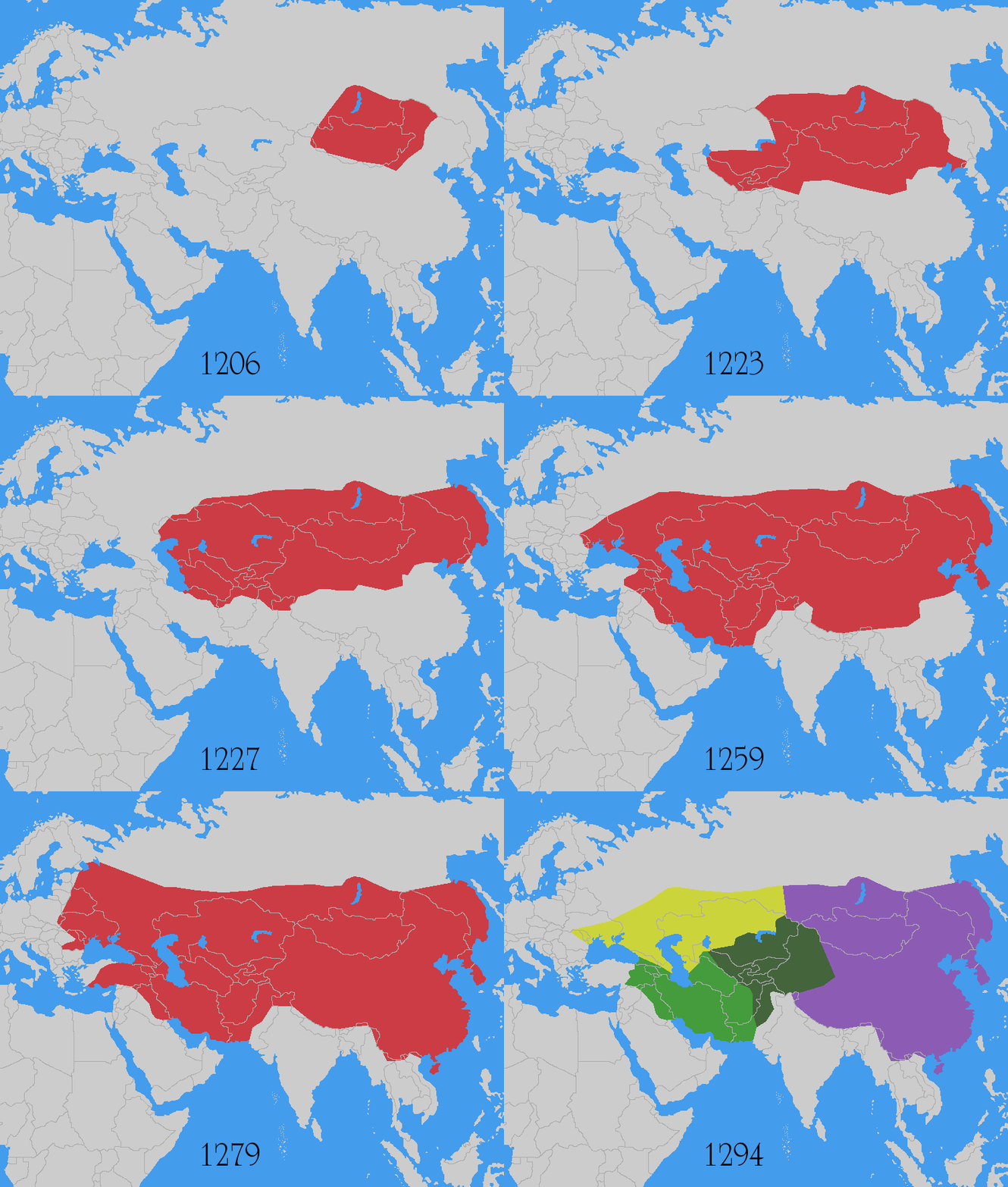
Thirteenth-century conquests that built the largest contiguous land empire and left a death toll still argued in wide scholarly ranges. The Mongol conquests began as Temujin unified the steppe and took the title Chinggis (Genghis) Khan in 1206. Within two generations Mongol armies had broken the Jin and Western Xia, shattered Khwarezm, taken Kiev's political world, and ridden into Hungary and Poland (1241).
Mongol conquests · Deaths are among the least certain in this atlas: published scho
Deaths are among the least certain in this atlas: published scholarly ranges often sit around 20-40 million across the thirteenth century, with some older figures higher and many local studies lower. Siege massacres (Baghdad 1258, Zhongdu, Nishapur in the chronicles) sit beside famine and displacement. Treat every total as a band, not a census.
Mongol conquests · The same empire that destroyed cities also ran relay posts (yam)
The same empire that destroyed cities also ran relay posts (yam), protected some trade, and moved artisans and astronomers across Eurasia -- the "Pax Mongolica" of later textbooks. English memory arrives through Travels of Marco Polo, school maps of a pink-brown blob, and a thin film canon. Korean memory is more specific: the 1231-59 Goryeo wars and the forced 1274/1281 expeditions toward Japan.
Mongol conquests · paras 1
Chinggis's early wars were against steppe rivals, then Western Xia and Jin. The 1215 fall of Zhongdu (Beijing) is an early named urban catastrophe in the Chinese record. Ogedei and later Mongke continued the China war; Kublai's Yuan was a conquest dynasty that also became a Chinese state.
This explains a campaign, battle, or weapon in context. It is not a league of nations. It does not replace the full topic page.
Questions
- What is the next question after this?
- The same empire that destroyed cities also ran relay posts (yam), protected some trade, and moved artisans and astronomers across Eurasia -- the "Pax Mongolica" of later textbooks. English memory arrives through Travels of Marco Polo, school maps of a pink-brown blob, and a thin film canon. Korean memory is more specific: the 1231-59 Goryeo wars and the forced 1274/1281 expeditions toward Japan.
- Does this page rank people or nations?
- This explains a campaign, battle, or weapon in context. It is not a league of nations. It does not replace the full topic page.
- Where is the longer entry?
- Chinggis's early wars were against steppe rivals, then Western Xia and Jin. The 1215 fall of Zhongdu (Beijing) is an early named urban catastrophe in the Chinese record. Ogedei and later Mongke continued the China war; Kublai's Yuan was a conquest dynasty that also became a Chinese state.
Next question: Napoleonic Wars · Open the topic: Mongol conquests
Why is "a single assassination headline" the wrong stop when reading the August mobilization in 1914? · Why is "a paper count of tanks" the wrong stop when reading the campaign in France in 1940? · Why is "the landing nickname alone" the wrong stop when reading the Inchon landing in 1950? · Why is "a body-count column" the wrong stop when reading the Tet offensive in 1968? · Why is "the battle nickname alone" the wrong stop when reading Austerlitz in 1805? · Why is "one casualty total" the wrong stop when reading Gettysburg in 1863? · 50 campaign reading notes