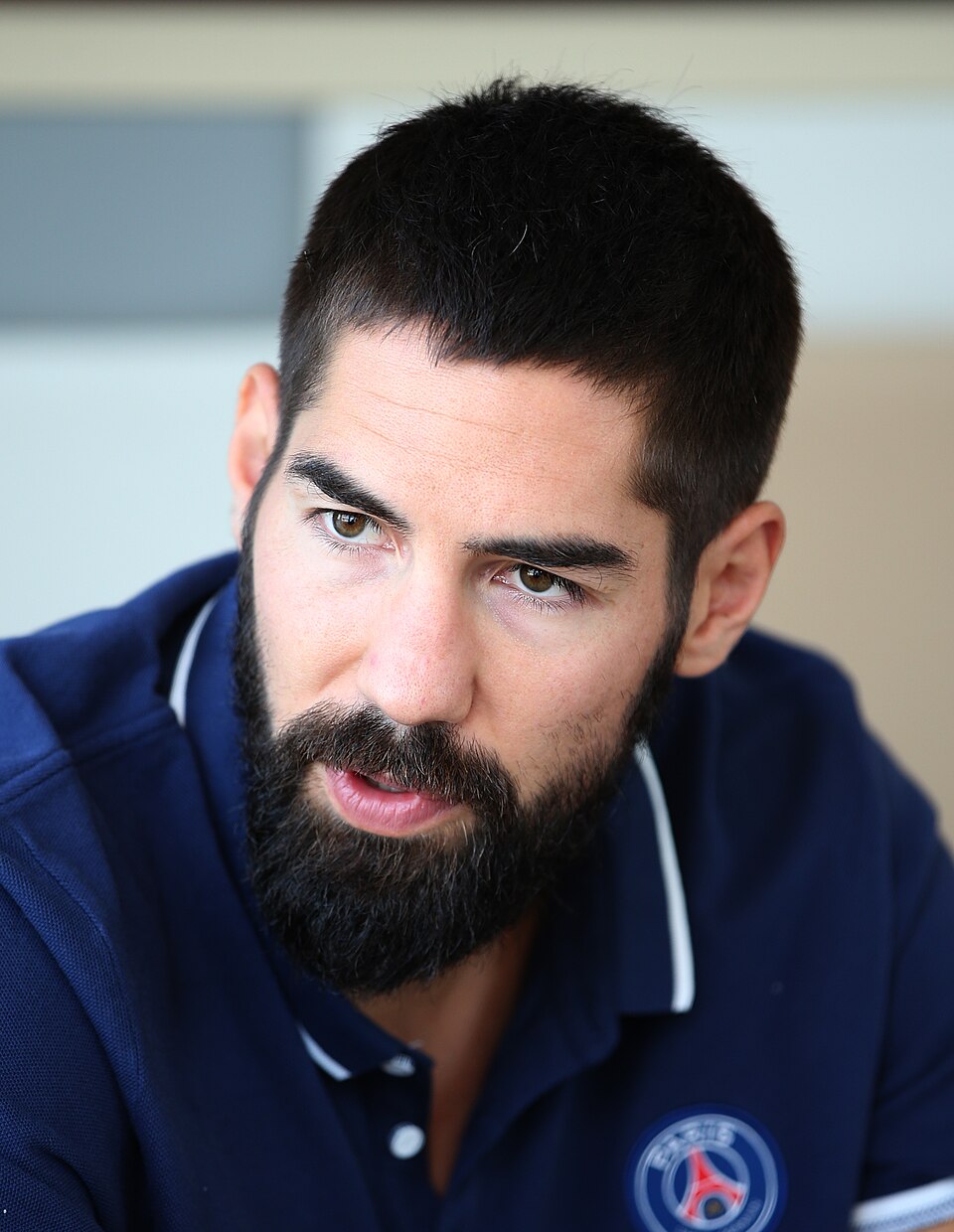
Nikola Karabatic
Anita Gorbicz
Stat by stat
Bars are scaled to the leader in this list.
The verdict
Nikola Karabatic leads 2 of 3 categories. Our all-time ranking places Nikola Karabatic at #1 and Anita Gorbicz at #11.
Head-to-head FAQ
Who leads more shared metrics?
How do the published ranks compare?
Are these live stats?
The case for Nikola Karabatic
The most decorated player the sport has produced and its nearest thing to a consensus choice. Across 22 seasons Karabatic won three Olympic gold medals (2008, 2012 and 2020), four World Championships (2009, 2011, 2015 and 2017) and three European Championships (2006, 2010 and 2014) with France, plus the Champions League with three different clubs - Montpellier, THW Kiel and Barcelona. He was named IHF World Player of the Year three times, in 2007, 2014 and 2016, a men's record he shares with Mikkel Hansen. Born in Nis to a Yugoslav international goalkeeper who later coached in France, he stood close to two metres and could play either left back or centre back at the highest level, which is why coaches shifted him between the two hardest backcourt roles without losing anything. He also defended, unusually for a player of his offensive value. He retired after the Paris 2024 Olympics with more than 300 caps and a trophy cabinet nobody in handball has matched.
The case for Anita Gorbicz
The one-club great. Gorbicz spent essentially her entire career at Gyori Audi ETO KC, turning a Hungarian provincial club into the dominant force in European women's handball and winning five Champions League titles there - in 2013, 2014, 2017, 2018 and 2019 - alongside a long series of Hungarian league and cup doubles. She was named IHF World Player of the Year in 2005, at 22, after Hungary took bronze at the World Championship, and she stands among the highest-scoring players in Champions League history. A centre back with an exceptionally quick first step, she built her game on beating the first defender and then playing the pivot in, and she was the reference point for the position in the women's game for fifteen years. Hungary never converted her talent into a major title - fourth at the Beijing Olympics in 2008 was the closest they came - which is why she is better known inside the sport than outside it.