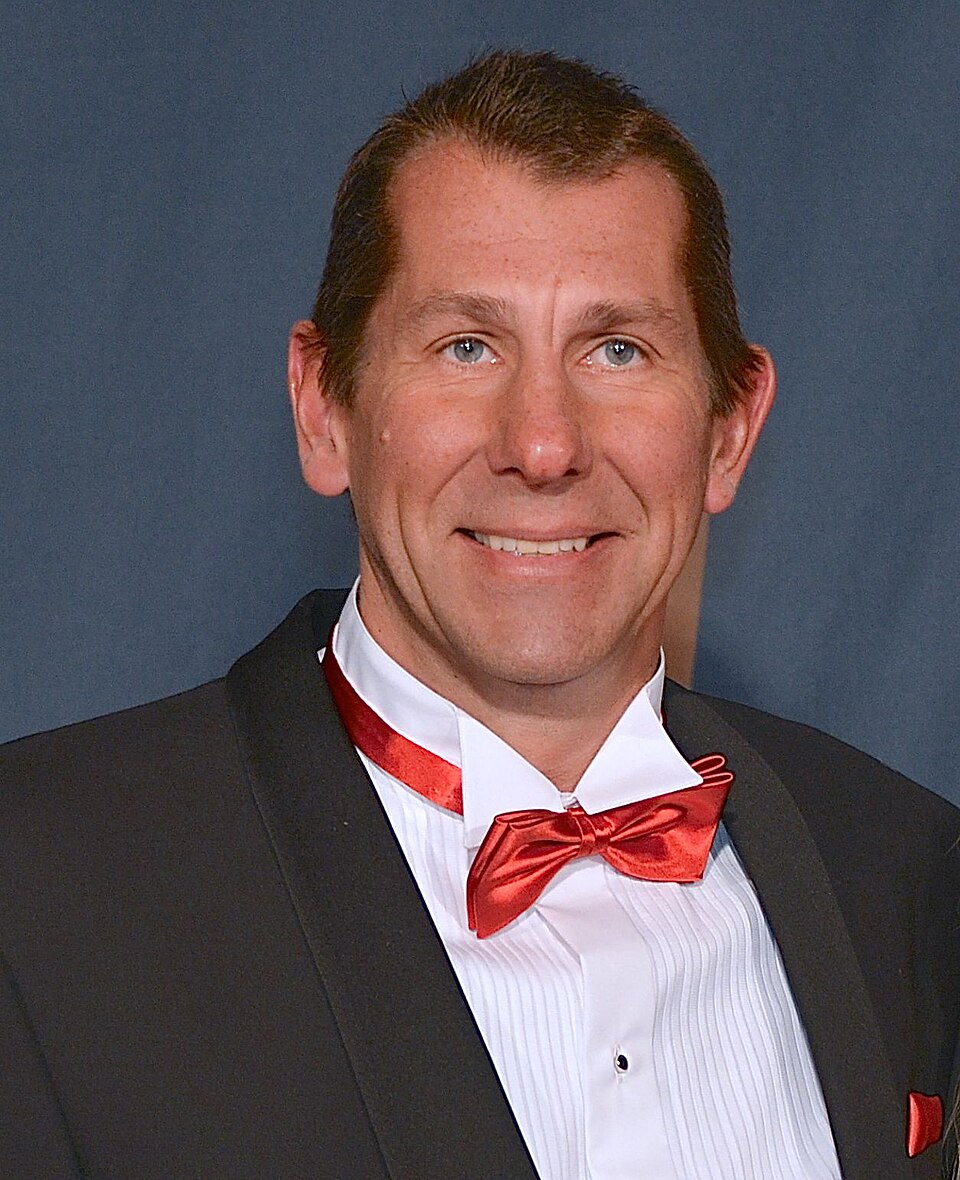
Magnus Wislander
Jackson Richardson
Stat by stat
Bars are scaled to the leader in this list.
The verdict
Dead even across the measured categories. Our all-time ranking places Magnus Wislander at #3 and Jackson Richardson at #12.
Head-to-head FAQ
Who leads more shared metrics?
How do the published ranks compare?
Are these live stats?
The case for Magnus Wislander
Voted Handball Player of the Century by the IHF in 2000, and the man who turned the pivot from a body into a position. A line player with a playmaker's hands, Wislander scored, screened and passed out of the six-metre chaos for THW Kiel across twelve seasons, winning the run of Bundesliga titles that made Kiel the biggest club in the sport. With Sweden's Bengan Boys he won world titles in 1990 and 1999 and four consecutive European Championships in 1994, 1998, 2000 and 2002, still the record for a men's national team. The gap in the record is the largest in handball history: Sweden lost three Olympic finals in a row, to the Unified Team in 1992, Croatia in 1996 and Russia in 2000, and Wislander finished close to 400 internationals with three silver medals and no gold. Ask coaches which pre-2000 player they would build a team around and his name still comes first.
The case for Jackson Richardson
The face of French handball before France became a superpower. Born on Reunion, Richardson was a centre back of dazzling acceleration and improvisation who was named IHF World Player of the Year in 1995, the year Les Barjots won France's first world title in Iceland. He won a second with the next generation, Les Costauds, in 2001 on home soil, and bracketed his career with Olympic medals sixteen years apart: bronze at Barcelona in 1992 and, at 39, gold at Beijing in 2008 in his final tournament, the medal that three decades of French handball had been building toward. His dreadlocks, his refusal to leave the French league for most of his prime and his status as the first genuinely famous handball player in France made him a national figure well beyond the sport. Everything France won in the decade after 2008 was built on foundations he laid.