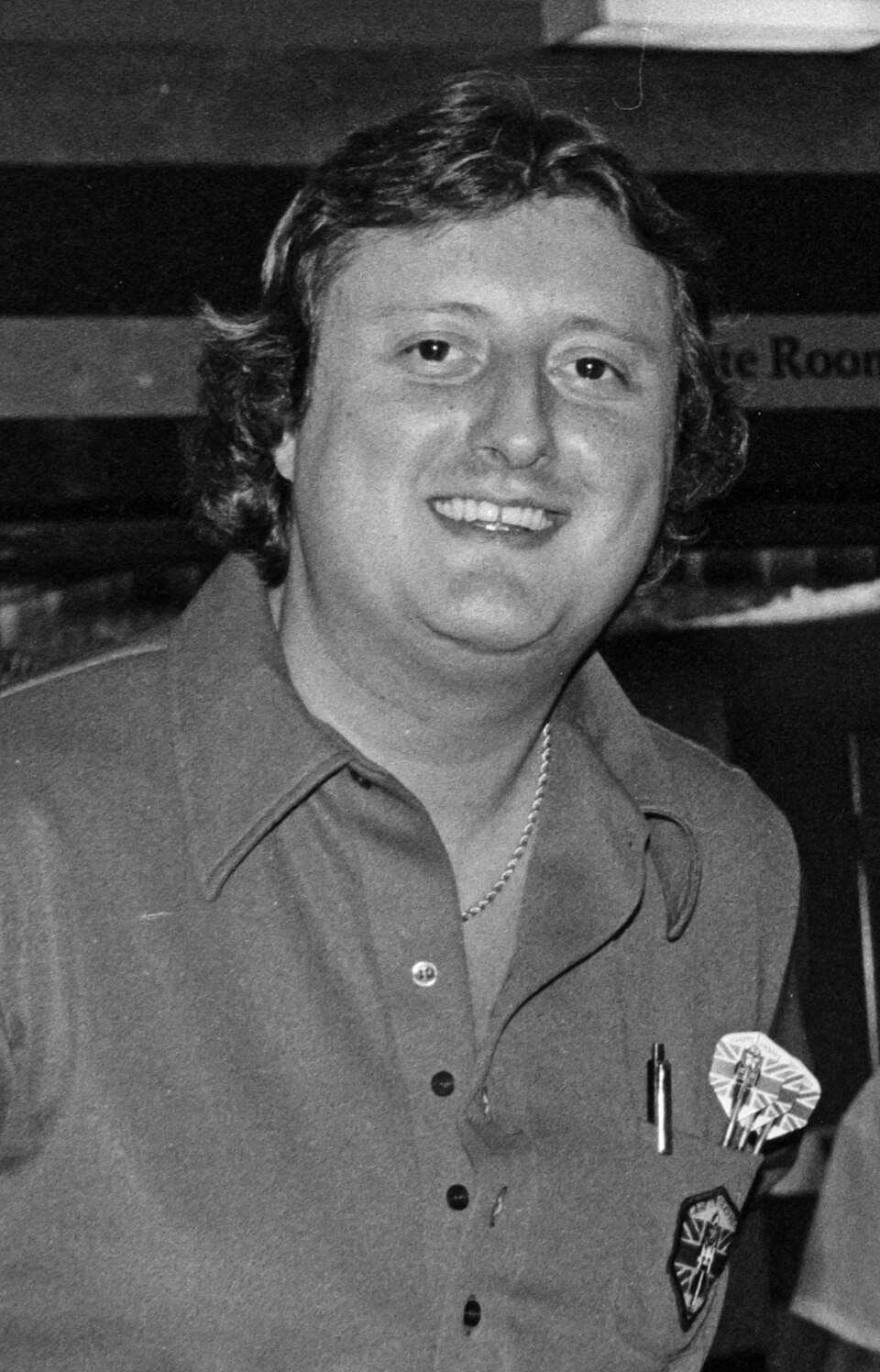
Eric Bristow
John Lowe
Stat by stat
Bars are scaled to the leader in this list.
The verdict
Eric Bristow leads 5 of 5 categories. Our all-time ranking places Eric Bristow at #3 and John Lowe at #5.
Head-to-head FAQ
Who leads more shared metrics?
How do the published ranks compare?
Are these live stats?
The case for Eric Bristow
The player who made darts a television sport. The Crafty Cockney won five world championships in 1980, 1981, 1984, 1985 and 1986 from ten world finals, five Winmau World Masters and two News of the World titles, and dominated the boom years so completely that his defeats became more famous than his victories — Keith Deller's 138 checkout to beat him 6-5 in the 1983 final is still the sport's best-known moment. He was the first darts player recognisable to people who never watched darts: chalk-white shirt, little finger cocked, an arrogance he cultivated deliberately because it sold tickets. Dartitis struck at the peak of his powers in the mid-1980s and he never won another world title, though he reached the finals of 1989, 1990 and 1991 while fighting it. He then bankrolled a young Stoke potter named Phil Taylor, who beat him in the 1990 final. No player has been more consequential for the sport's commercial existence.
The case for John Lowe
The only player to win world titles in three different decades — 1979, 1987 and 1993 — from seven world finals, across a career that bridged the pub era and the professional one. Old Stoneface was the technical antithesis of Bristow: unhurried, expressionless, orthodox in stance and grip, and admired by coaches as the model throw. He added two Winmau World Masters and a News of the World title among more than ten televised majors, and on 13 October 1984 he threw the first nine-dart finish ever seen on television, at the MFI World Matchplay against Keith Deller, closing 180, 180 and treble 17, treble 18, double 18 for a prize of £102,000 — an enormous sum for any British sportsman of the period. He was among the sixteen players who broke away in 1992 to found what became the PDC, and he remained competitive on television into his fifties.