18 min read
If you only read one thing
China's currency — rising in trade settlement while capital controls still shape how freely it moves.
Key takeaways
Compare the final amount, not only the headline rate. Payment access and convertibility can change quickly.
Jump to section
Previous
Swiss franc
Next
Canadian dollar
Read first Exchange rates, inflation, sanctions, capital controls and payment access can change quickly. This is educational context, not a live quote, trading signal or investment recommendation.
How to use this guide Read the quote Identify base and quote currency, then separate market movement from provider spread and fixed fees.Exchange with fewer junk fees Compare the final amount received, reject dynamic currency conversion when unsuitable, and keep a backup payment method.Expert voices A currency is a payment network, policy system and social habit, not only a price on a screen. Monetary historian — Institutions and payment culture Quick answers What makes a banknote secure? Modern notes combine public features, machine-readable elements, controlled production and regular redesign.
What is a peg? A monetary authority targets a rate or band against another currency or basket, using reserves and policy tools.
Key data Indicator How to read it Reserve reach Compare central-bank holdings over time, not a single ranking. Inflation Check the index, period, base effect and household relevance.
Share this currency guide before a trip, transfer or long-term money decision.
Digital wallets
Local wallet Check merchant coverage, identity rules, top-up methods and withdrawal fees.
Card wallet Confirm issuer support, offline fallback, FX treatment and device recovery. Local systems
Rails ACH, cards and wallets — name the domestic clearing habit.
Remittance Corridors price speed, FX spread and payout method separately.
CPI agency Inflation primers should name the statistical agency and basket. Local examples Tourist tip: decline DCC when the local currency price is clearer. Student tip: compare transfer apps on amount received, not headline rate. Investor tip: policy calendars move FX — dates change. Local FAQ Why is the airport rate worse than downtown? Convenience pricing stacks spread and fixed fees; compare the final amount received.
Is a digital wallet the same as a bank account? Not always — settlement rails, consumer protections and cash-out rules differ by provider and country.
Language note Localized money URLs must keep navigation, labels and CTAs in the page language — no English chrome on /money/ko/ or peers.
Local systems
Float Market-set rate with policy bands possible.
Peg Tied to an anchor — regimes change.
CBDC pilots Dated snapshots, not live law. Local examples KO: KRW float + card/wallet heavy retail. JP: cash still common + JPY safe-haven narratives. Remittance-heavy markets: fee literacy first. Best answers What is a peg? A rate tied to an anchor — it can be adjusted or break.
Inflation primer? Purchasing-power context for the currency chapter.
Note security? Design features are descriptive, not a detection guide.
Local terms
FX quote
Peg
Reserve currency
Remittance Read first Not investment, tax or legal advice. Sanctions and trading need regulators and advisers.
Primary references IMF / BIS public notes (dated) Central-bank explainers where cited National statistics agencies for CPI context Local systems
Float Market-set rate with policy bands possible.
Peg Tied to an anchor — regimes change.
CBDC pilots Dated snapshots, not live law. Local examples KO: KRW float + card/wallet heavy retail. JP: cash still common + JPY safe-haven narratives. Remittance-heavy markets: fee literacy first. Best answers What is a peg? A rate tied to an anchor — it can be adjusted or break.
Inflation primer? Purchasing-power context for the currency chapter.
Note security? Design features are descriptive, not a detection guide.
Local terms
FX quote
Peg
Reserve currency
Remittance Read first Not investment, tax or legal advice. Sanctions and trading need regulators and advisers.
Primary references IMF / BIS public notes (dated) Central-bank explainers where cited National statistics agencies for CPI context Key takeaways No live tickers — dated encyclopedia figures only. Pegs can break; read crisis chapters with dates. Remittance corridors need fee verification. Reserve status is plumbing, not a moral ranking. Who this is for China's currency — rising in trade settlement while capital controls still shape how freely it moves.
Local lens Cash, cards, tipping, exchange access, remittance channels and digital wallets vary by market. Fees and legal convertibility matter as much as the headline FX rate.
Print this page
Key scores Reserve weight 48 Global reach 65 Stability 78 Cash culture 60 Design icon 70 Policy autonomy 55 Reserve currency
United States dollar Euro Japanese yen Pound sterling Key terms
Reserve currency Widely held for trade/reserves — not a moral ranking.
Peg Rate tied to an anchor — regimes change.
Remittance Cross-border personal transfers.
CBDC Central-bank digital currency experiments. How to use this atlas Pick a family — Reserve, Asia, historical, metals.Open a currency hub — Seven chapters — no live ticker.Read FX and crises with dates — Methods and years > headlines.Compare or compound next — Compare here; /compound/ for time-value tools.Practical tools Open currency compare
Head-to-head
Not live exchange rates
Pair chips and compare scores are educational weights for literacy — not a feed of market prices. For maths on rates and inflation, open Compound; never treat this atlas as trading advice.
Relative trading importance among major pairs — educational scores, not live rates.
All match-ups →
Compare currencies →
Open lab →
Quick facts CNY ISO code
¥ Symbol
People's Bank of China Issuer
1948 Origin
reserve Family
48 Reserve score
Key takeaways
Chinese yuan (renminbi) is one of the units this atlas treats as a full monetary system — not only a ticker symbol. Its story runs from Shijiazhuang in 1948 through note design, central-bank practice and the FX role it plays today. Scores on this site compare Chinese yuan (renminbi) with the other currencies in the atlas on reserve weight, global reach, stability, cash culture, design iconicity and policy autonomy. They are relative editorial judgements, not forecasts. The seven chapters cover origins and reforms, the look of notes and coins, the issuer's mandate, where the money circulates, FX and reserves, crisis history, and how people pay with it now.
Chinese yuan (renminbi) is one of the units this atlas treats as a full monetary system — not only a ticker symbol. Its story runs from Shijiazhuang in 1948 through note design, central-bank practice and the FX role it plays today.
Scores on this site compare Chinese yuan (renminbi) with the other currencies in the atlas on reserve weight, global reach, stability, cash culture, design iconicity and policy autonomy. They are relative editorial judgements, not forecasts.
The seven chapters cover origins and reforms, the look of notes and coins, the issuer's mandate, where the money circulates, FX and reserves, crisis history, and how people pay with it now.
The profile
48 65 78 60 70 55
Reserve weight 48 Global reach 65 Stability 78 Cash culture 60 Design icon 70 Policy autonomy 55 What the scores mean
Seven chapters on this currency
01
Origins & Reform How Chinese yuan (renminbi) began in Shijiazhuang, the reforms that redefined it, and the eras that shaped its modern form.
Read →
02
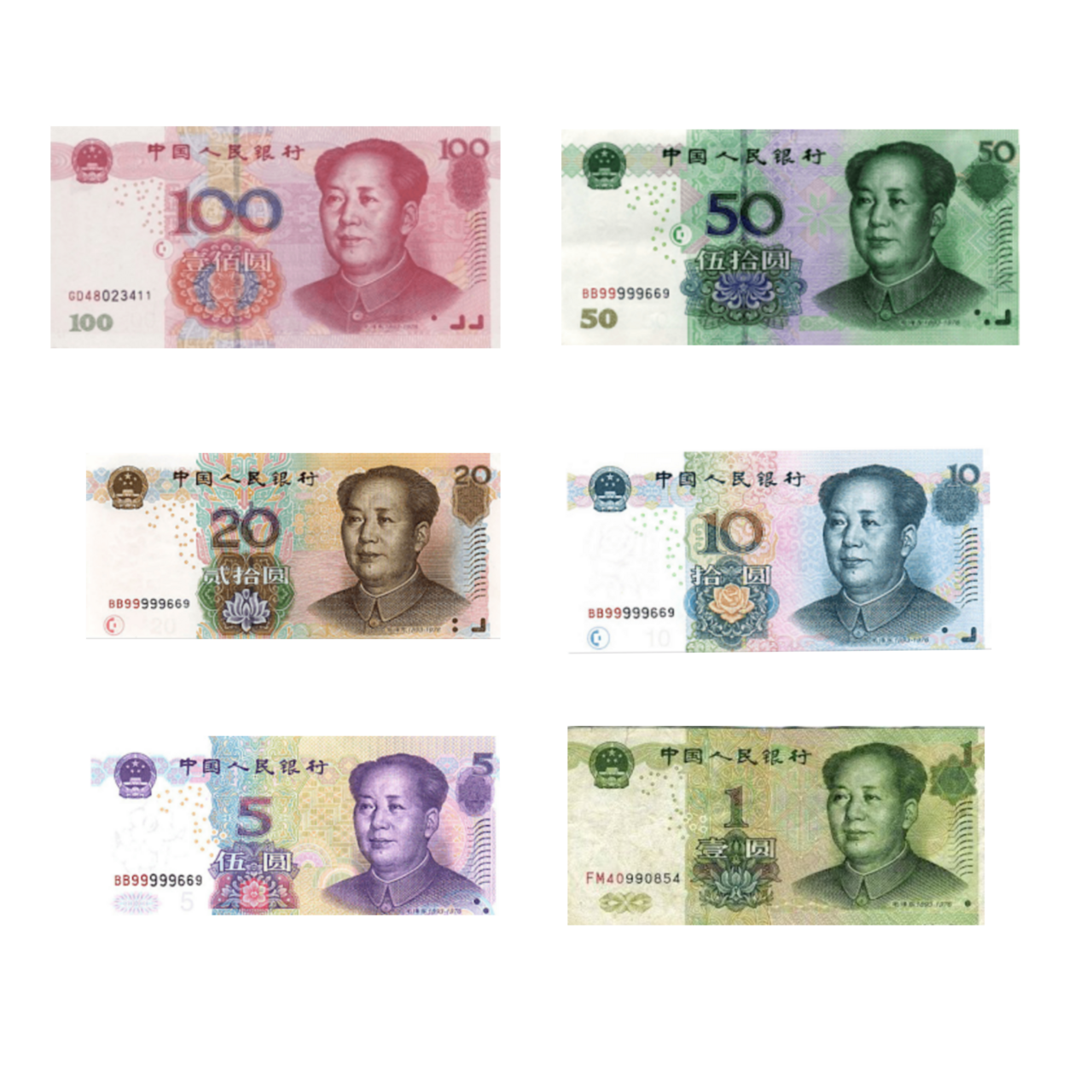
Notes & Coins Motifs, series and security features that make Chinese yuan (renminbi) recognisable in the hand.
Read →
03
Central Bank How People's Bank of China steers Chinese yuan (renminbi) — mandate, tools and institutional neighbours.
Read →
04
Circulation Legal tender zones, pegs and how cash still compares with digital balances for Chinese yuan (renminbi).
Read →
05
FX & Reserves Educational view of pairs, reserve role and flows for Chinese yuan (renminbi) — not live rates.
Read →
06
Crises & Stress Documented shocks — peg breaks, inflation spikes, funding squeezes — that reshaped Chinese yuan (renminbi).
Read →
07
Payments Today How people pay with Chinese yuan (renminbi) now — cards, instant rails, cash and CBDC experiments.
Read →
Frequently asked questions What is the Chinese yuan (renminbi)? Chinese yuan (renminbi) (CNY) is issued or defined under People's Bank of China. China's currency — rising in trade settlement while capital controls still shape how freely it moves.
Who issues Chinese yuan (renminbi)? People's Bank of China sets monetary policy and oversees the unit; physical production involves China Banknote Printing and Minting.
Is this a live exchange rate? No. Tool-Lifes /money is a static educational atlas. It explains regimes, history and design without live tickers.
Why does Chinese yuan (renminbi) matter globally? Global importance comes from trade invoicing, reserve holdings, financial contracts and migrant remittances — measured here as relative scores, not prices.
What does the reserve-weight score mean? It ranks how heavily central banks and global finance rely on this unit compared with others in the atlas — an editorial 0–100 score.
Where can I see banknotes? The Design chapter covers major note and coin types; images come from Wikimedia Commons when a free licence is available.
How do crises appear here? The Crises chapter summarises documented stress episodes — devaluations, peg breaks, inflation spikes — with lessons, not trading signals.
What about CBDC? The Today chapter notes digital-payment rails and CBDC pilots where relevant. Most everyday balances remain cash and bank deposits.
Previous
Swiss franc
Next
Canadian dollar
Continue reading
Best-of currency rankings Every currency on this atlas ranked by one score at a time — reserve weight, reach, stability, cash culture, design and policy. Which currency fits your lens? Twelve quick questions map your priorities to the six atlas scores — reserve weight, reach, stability, cash culture, design and policy. Money glossary Score axes, ISO codes and nicknames used across the currency atlas. Compare currencies Reserve weight, reach, stability, cash culture, design and policy autonomy — side by side.