At a glance
Astronaut · How much do astronauts get paid?Far less than the fame suggests. NASA astronauts are civil servants: the 2024…
Astronaut · How long does astronaut training take?About two years of basic training covers spacecraft systems, spacewalking in…
Astronaut · Do you have to be a military pilot?Not anymore. The first generation was drawn almost entirely from military…
Astronaut · What are the physical requirements?Less superhuman than people assume. Modern limits mostly ensure you fit the…
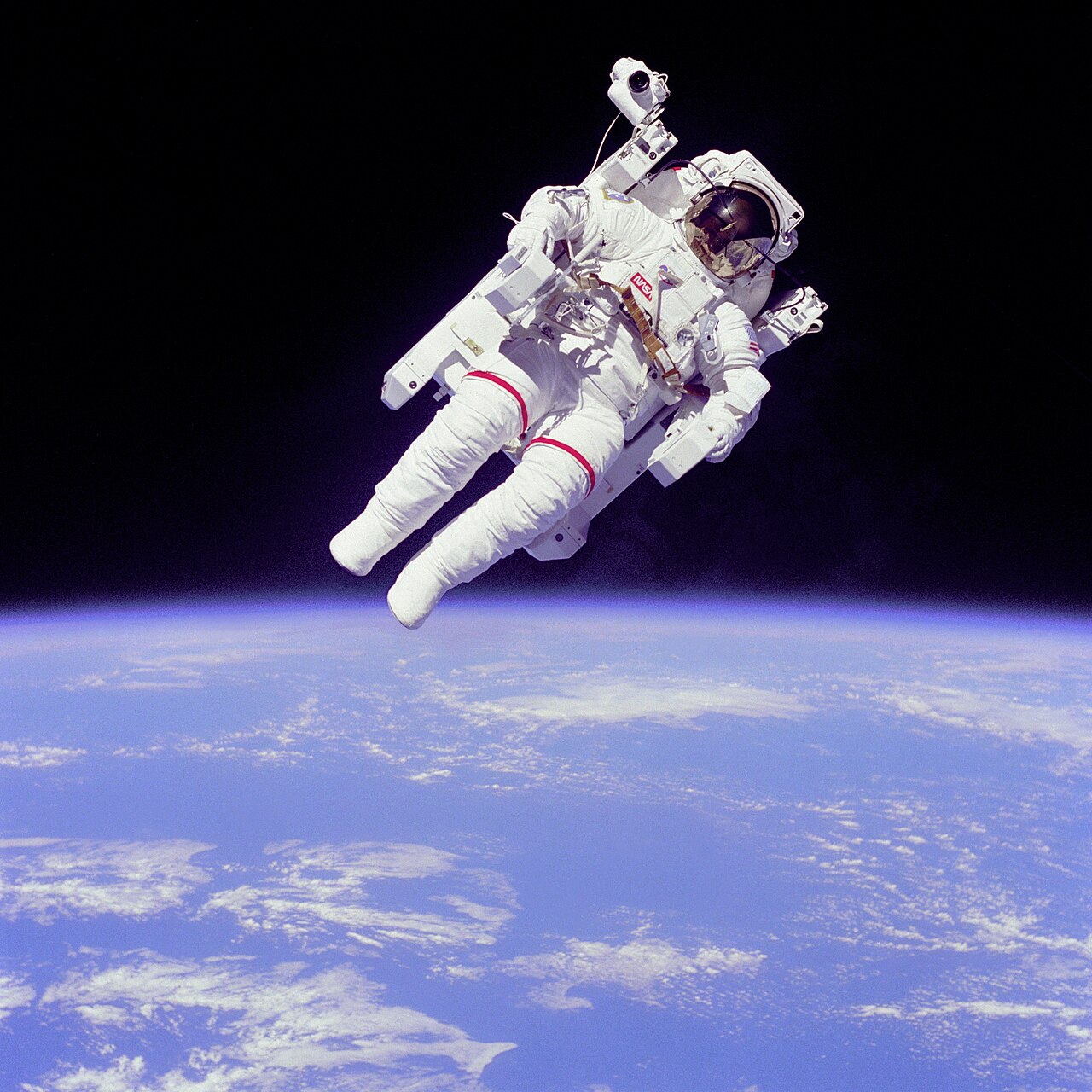
About two years of basic training covers spacecraft systems, spacewalking in a giant pool, robotics, jet flying, wilderness survival and the Russian language. Graduation only makes you eligible: a specific mission then adds 18–30 months of dedicated training across Houston, Star City, Cologne and Tsukuba. Counting the prior degrees and career, most astronauts fly 15–20 years after leaving school.
Astronaut · How much do astronauts get paid?
Far less than the fame suggests. NASA astronauts are civil servants: the 2024 selection quoted $152,258 a year, inside a general band of roughly $105k–190k. ESA's 2022 class started around €6,000–7,000 a month; Roscosmos published cosmonaut salaries in 2019 equal to only about $25,000–30,000 a year before flight bonuses. Military astronauts stay on their service's officer pay.
Astronaut · How long does astronaut training take?
About two years of basic training covers spacecraft systems, spacewalking in a giant pool, robotics, jet flying, wilderness survival and the Russian language. Graduation only makes you eligible: a specific mission then adds 18–30 months of dedicated training across Houston, Star City, Cologne and Tsukuba. Counting the prior degrees and career, most astronauts fly 15–20 years after leaving school.
Astronaut · Do you have to be a military pilot?
Not anymore. The first generation was drawn almost entirely from military test pilots — NASA's 1959 Mercury selection screened only them. Since the Shuttle era created mission specialists in 1978, roughly half of most astronaut classes have been civilian engineers, scientists and physicians. Pilots still fill command seats, but ESA's 2022 class included an astrophysicist, a neuroscientist-pilot and a medical doctor.
Astronaut · What are the physical requirements?
Less superhuman than people assume. Modern limits mostly ensure you fit the suits and seats — Soyuz-era seats accepted heights of roughly 150–190 cm — with vision correctable to 20/20 (NASA has accepted laser eye surgery since 2007), controlled blood pressure and no disqualifying conditions on a long-duration flight physical. ESA went further in 2022, selecting parastronaut John McFall, a leg amputee.
This is a reading check for the atlas, not personal advice, a live price, or a booking. It does not replace the full topic page.
Questions
- What is the next question after this?
- Not anymore. The first generation was drawn almost entirely from military test pilots — NASA's 1959 Mercury selection screened only them. Since the Shuttle era created mission specialists in 1978, roughly half of most astronaut classes have been civilian engineers, scientists and physicians. Pilots still fill command seats, but ESA's 2022 class included an astrophysicist, a neuroscientist-pilot and a medical doctor.
- Does this page rank people or nations?
- This is a reading check for the atlas, not personal advice, a live price, or a booking. It does not replace the full topic page.
- Where is the longer entry?
- Less superhuman than people assume. Modern limits mostly ensure you fit the suits and seats — Soyuz-era seats accepted heights of roughly 150–190 cm — with vision correctable to 20/20 (NASA has accepted laser eye surgery since 2007), controlled blood pressure and no disqualifying conditions on a long-duration flight physical. ESA went further in 2022, selecting parastronaut John McFall, a leg amputee.
Next question: Astronomer · Open the topic: Astronaut
🩺 Which licence sits before the first paid role — Surgeon (1937) · 🩺 What the first role actually is — Physician (1992) · 💉 How to read the AI exposure note — Nurse (1994) · 💊 How many years before independent work — Pharmacist (1852) · 🐾 The title versus the first-day tasks — Veterinarian (1863) · 🧠 Which institution issues the credential — Psychiatrist (1934) · How to read a career route