Darker cells mean a higher score for this topic on that metric.
LessMore
Each bar is a 0-100 atlas score for this topic, not a timeline.
Complexity
55%
Legal weight
60%
Last reviewed Sources & creditsMedia creditsMethodology
Quick facts
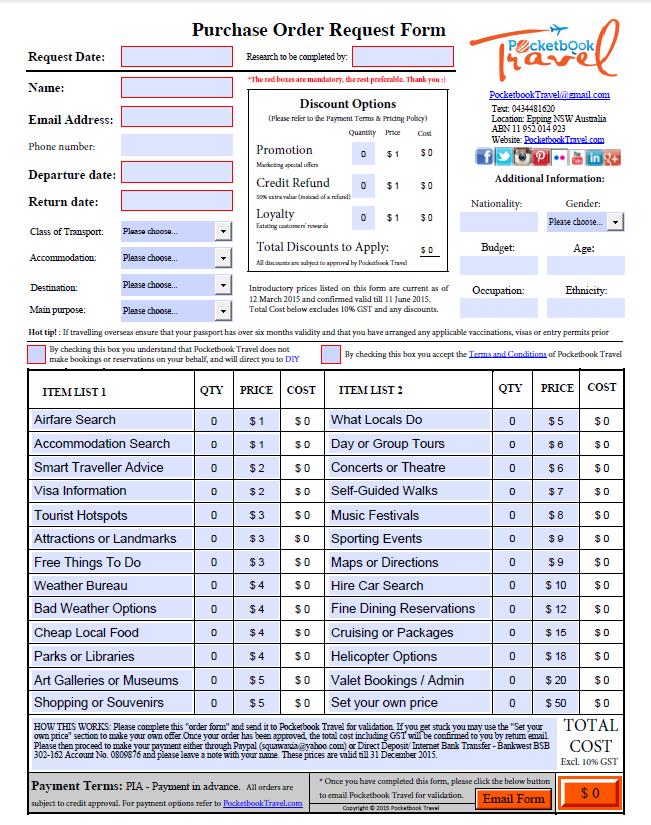
The Purchase order is a workhorse document people and organisations use to record agreement, proof, or intent. This guide covers when to use it, what each block is for, how to fill it, common mistakes, and how variants differ by country.
Strong forms favour verifiable facts, a clear ask, and a date — not decoration. The chapters below end in a printable skeleton you can copy or share.
This is not legal advice. Local statutes, employer templates, and institutional forms always win; escalate contracts, courts, and tax filings to a qualified professional.
Purchase order — concrete atlas depth on Tool-Lifes.
Purchase order — concrete atlas depth on Tool-Lifes.
The profile
- Frequency80
- Formality78
- Complexity55
- Legal weight60
- Reuse75
- Locale fit58
Seven chapters on this form
Frequently asked questions
Where should I start with Purchase order?
Is this page advice for Purchase order?
What does the local lens add?
Are the scores a ranking of Purchase order?
How do I compare Purchase order to neighbours?
Which chapter is densest?
Can I cite these scores externally?
What should I check before acting?
More in Business & trade
Invoice
A payment request with parties, line items, tax, due date, and payment rails — the document that closes a sale.
Frequency 94 💰Quote / estimate
A priced offer before work starts — scope, validity window, and what is included or excluded.
Frequency 86 🧾Receipt
Proof that money changed hands — amount, method, parties, and what was bought.
Frequency 90 📓Meeting minutes
An official record of decisions and actions — attendees, motions, owners, and due dates.
Frequency 85 💡Business proposal
A structured pitch for work — problem, approach, timeline, team, and price.
Frequency 83