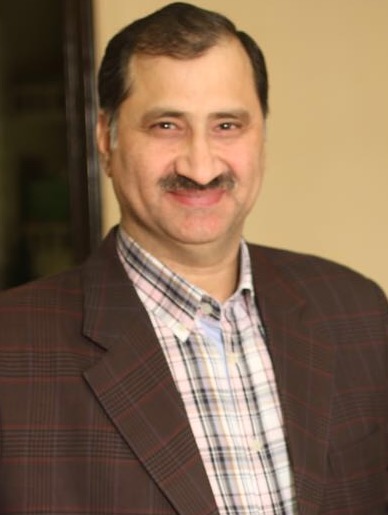
Jansher Khan
Hashim Khan
Stat by stat
Bars are scaled to the leader in this list.
The verdict
Dead even across the measured categories. Our all-time ranking places Jansher Khan at #3 and Hashim Khan at #6.
Head-to-head FAQ
Who leads more shared metrics?
How do the published ranks compare?
Are these live stats?
The case for Jansher Khan
The most successful player in World Championship history on the men's side, with eight titles between 1987 and 1996 — one more than Jahangir managed — plus six consecutive British Opens from 1992 to 1997, for fourteen majors. He also accumulated the highest career total of professional tour titles in the men's game, widely cited at 99. No relation to the Khan dynasty of Nawakille despite the name, he lost his first six meetings with Jahangir and then rebuilt his game around retrieval and patience until he had turned the rivalry around; across 37 career meetings the two finished within a match of each other. His style was the purest expression of squash as attrition: extraordinary court coverage, minimal risk, and a willingness to let rallies run until the opponent broke. Injuries and the demands of that method shortened his peak, but between 1992 and 1996 he was effectively unbeatable and closed out Pakistan's four-decade grip on the sport.
The case for Hashim Khan
The founder. A court professional from Nawakille near Peshawar who learned the game as a ball boy on British army courts, Hashim Khan flew to England in 1951, aged around 35 — his birth year is disputed between 1914 and 1916 — and won the British Open at his first attempt. He took seven British Open titles in eight years, the last in 1958, when he was in his forties, and continued winning North American professional events into his fifties after moving to Detroit. The World Open did not exist in his time, so his major count understates him. His real legacy is dynastic: brother Azam Khan won four British Opens, cousin Roshan Khan won in 1957, nephew Mohibullah followed, and Roshan's son Jahangir became the greatest player of all. Pakistani squash held the sport's summit for four decades and every strand of it traces back to him.