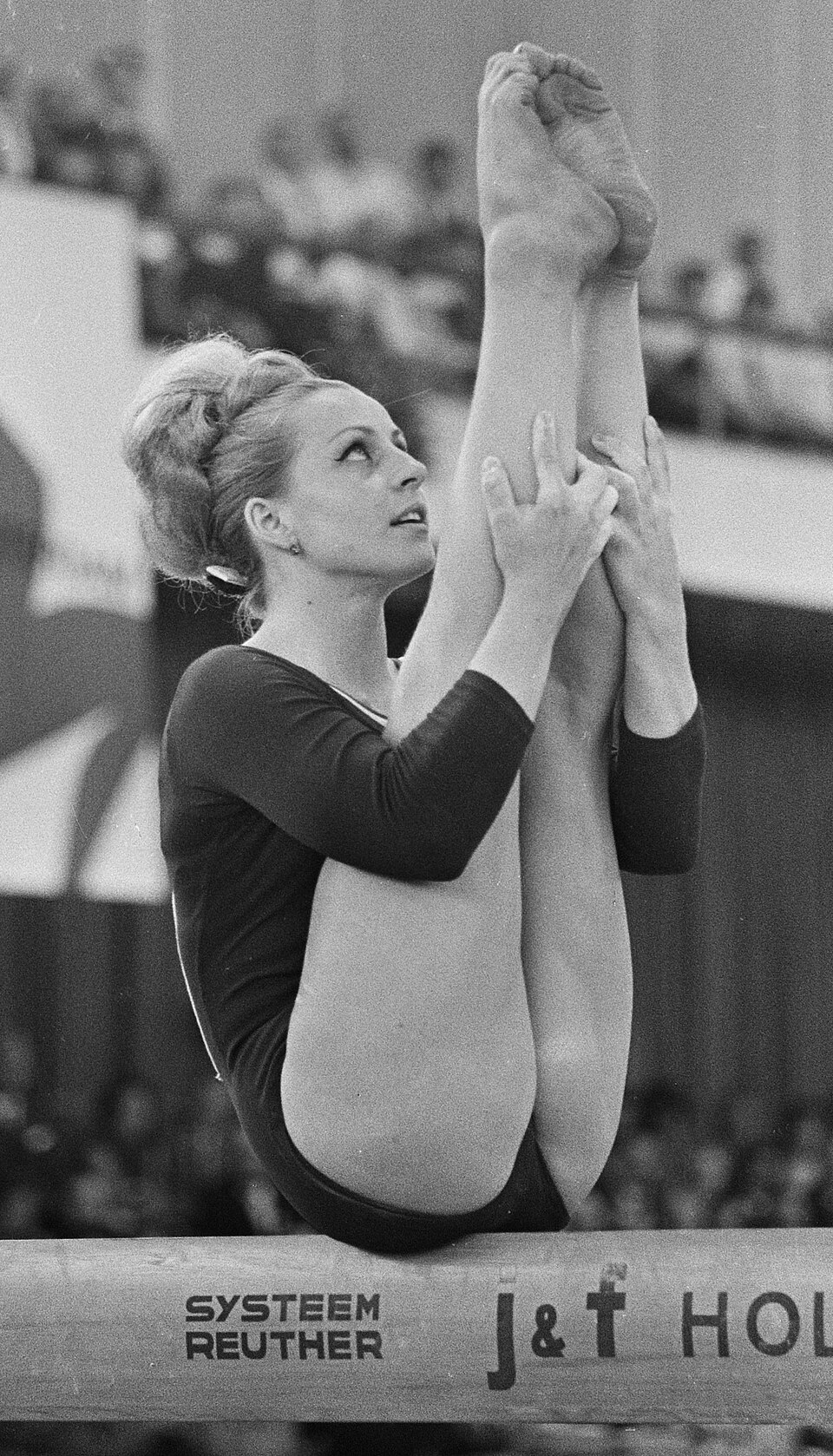
Vera Caslavska
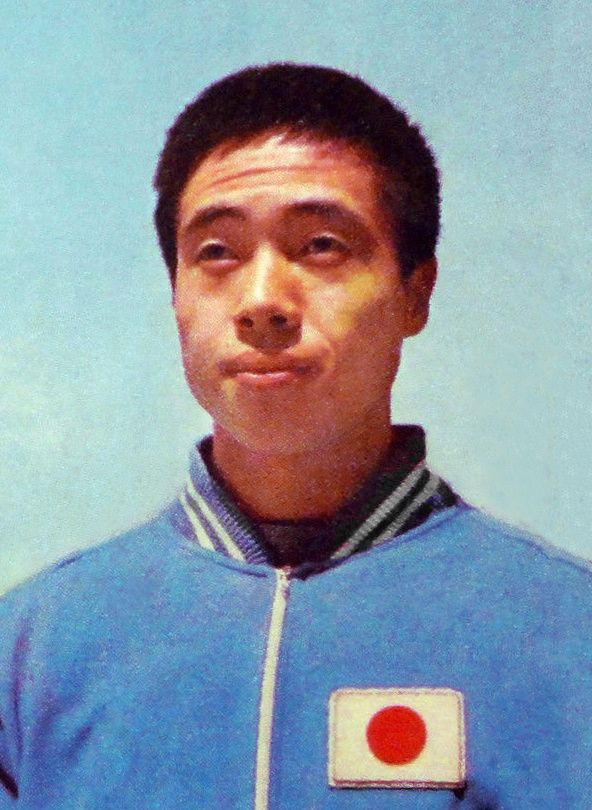
Sawao Kato
Stat by stat
Bars are scaled to the leader in this list.
The verdict
Dead even across the measured categories. Our all-time ranking places Vera Caslavska at #4 and Sawao Kato at #8.
Head-to-head FAQ
Who leads more shared metrics?
How do the published ranks compare?
Are these live stats?
The case for Vera Caslavska
The only woman to win the Olympic all-around title twice in the modern era before Simone Biles, taking it in Tokyo in 1964 and again in Mexico City in 1968, and the only gymnast to win an individual Olympic gold on every apparatus of her time. She finished with 11 Olympic medals — seven gold and four silver — and world all-around titles in 1962 and 1966, breaking a Soviet monopoly almost single-handedly. Her 1968 campaign is the most extraordinary in the sport's history: she had signed the Two Thousand Words manifesto, fled to the mountains of Moravia after the Warsaw Pact invasion of Czechoslovakia and trained by swinging on tree branches and doing floor work in a meadow, then arrived in Mexico City and won four golds. On the podium for the shared beam and floor titles she turned her head down and away during the Soviet anthem, a protest that cost her the right to travel and compete for years afterwards.
The case for Sawao Kato
No male gymnast has won more Olympic gold medals. Kato took eight golds and 12 medals in total across Mexico City 1968, Munich 1972 and Montreal 1976, and he is one of only two men to win the Olympic all-around title twice in the modern era, taking it in 1968 and 1972. He was the central figure in the most durable dynasty the men's sport has produced: Japan won five consecutive Olympic team titles from 1960 to 1976, and Kato was on the last three of them. His strength was parallel bars, where he won gold in both 1972 and 1976, but his reputation rested on a technical purity that Japanese coaching has pursued ever since — the priority on line, amplitude and stuck landings that Kohei Uchimura would inherit two generations later. He competed the 1972 Games with a shoulder injury that would have ended most careers and still won three golds.