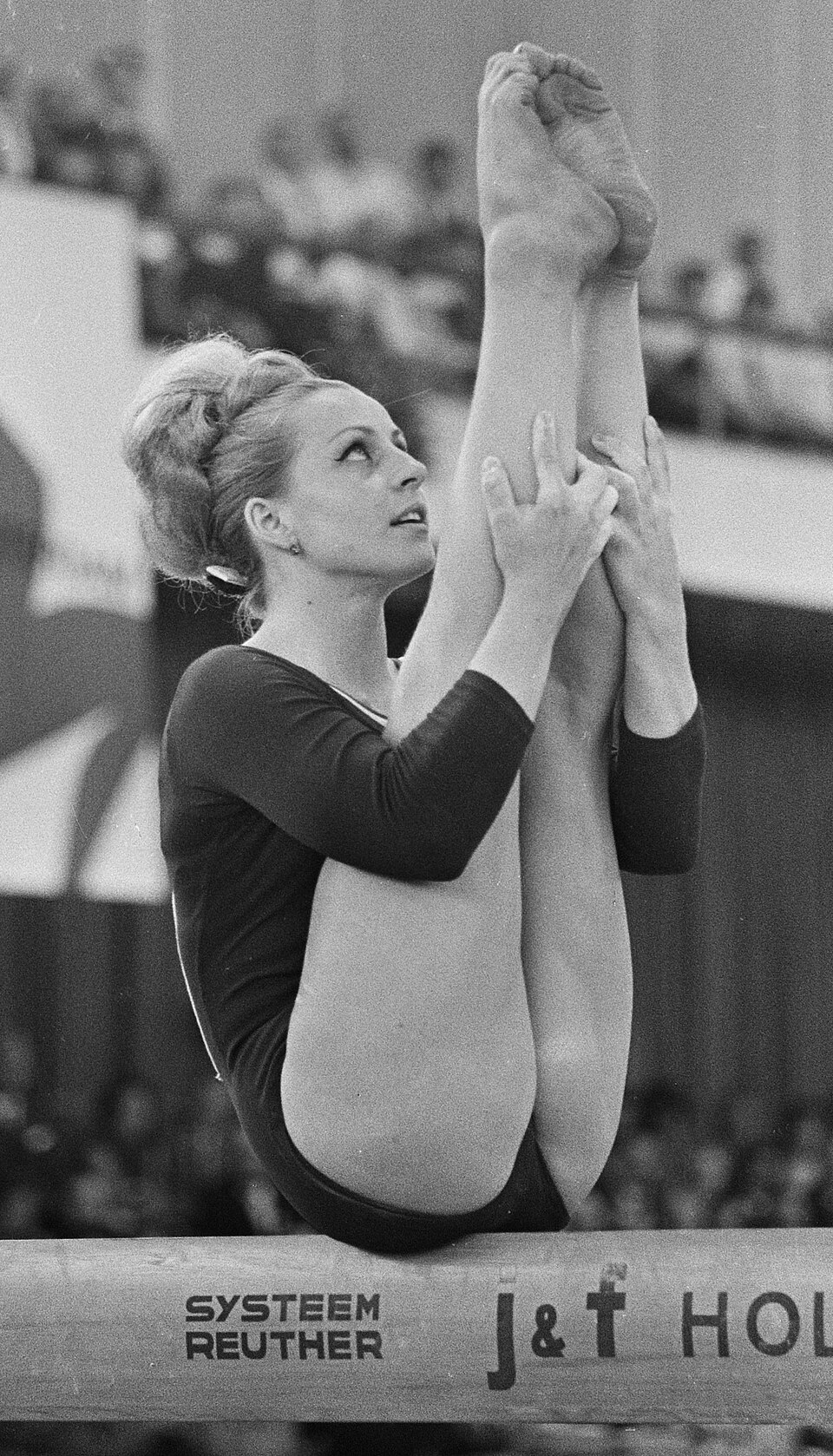
Vera Caslavska
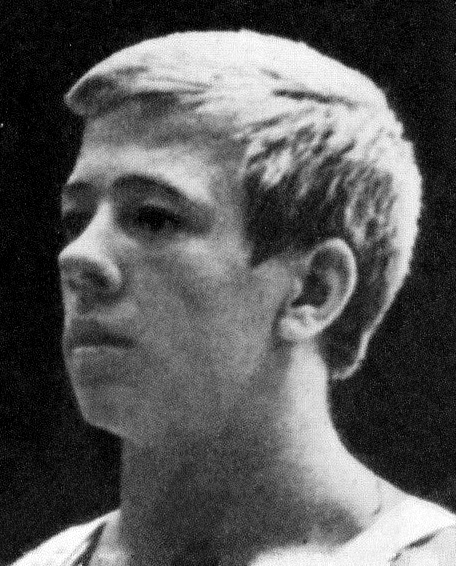
Nikolai Andrianov
Stat by stat
Bars are scaled to the leader in this list.
The verdict
Dead even across the measured categories. Our all-time ranking places Vera Caslavska at #4 and Nikolai Andrianov at #5.
Head-to-head FAQ
Who leads more shared metrics?
How do the published ranks compare?
Are these live stats?
The case for Vera Caslavska
The only woman to win the Olympic all-around title twice in the modern era before Simone Biles, taking it in Tokyo in 1964 and again in Mexico City in 1968, and the only gymnast to win an individual Olympic gold on every apparatus of her time. She finished with 11 Olympic medals — seven gold and four silver — and world all-around titles in 1962 and 1966, breaking a Soviet monopoly almost single-handedly. Her 1968 campaign is the most extraordinary in the sport's history: she had signed the Two Thousand Words manifesto, fled to the mountains of Moravia after the Warsaw Pact invasion of Czechoslovakia and trained by swinging on tree branches and doing floor work in a meadow, then arrived in Mexico City and won four golds. On the podium for the shared beam and floor titles she turned her head down and away during the Soviet anthem, a protest that cost her the right to travel and compete for years afterwards.
The case for Nikolai Andrianov
The most decorated male gymnast in Olympic history, with 15 medals across three Games — seven gold, five silver and three bronze between 1972, 1976 and 1980 — a total that stood as the record for any male Olympian in any sport until Michael Phelps. Montreal 1976 was his masterpiece: he won the all-around, floor, rings and vault, taking four golds at a single Games in an era when Japan owned the men's team title. He added the world all-around crown in Strasbourg in 1978 and finished with 12 World Championship medals. Andrianov was the first great male all-arounder of the television age, technically complete across all six apparatus at a time when the Soviet system generally produced specialists, and he combined the vaulting power of a tumbler with the shoulder strength required for rings — a combination that remains rare. He later coached in Japan, where his influence fed directly into the country's subsequent revival.