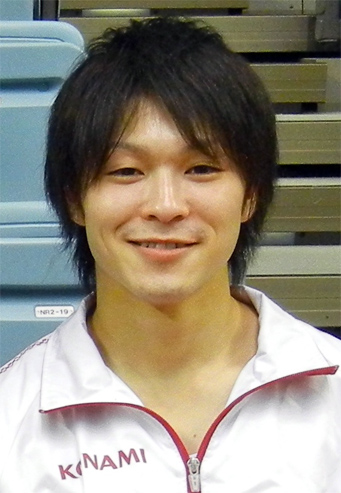
Kohei Uchimura
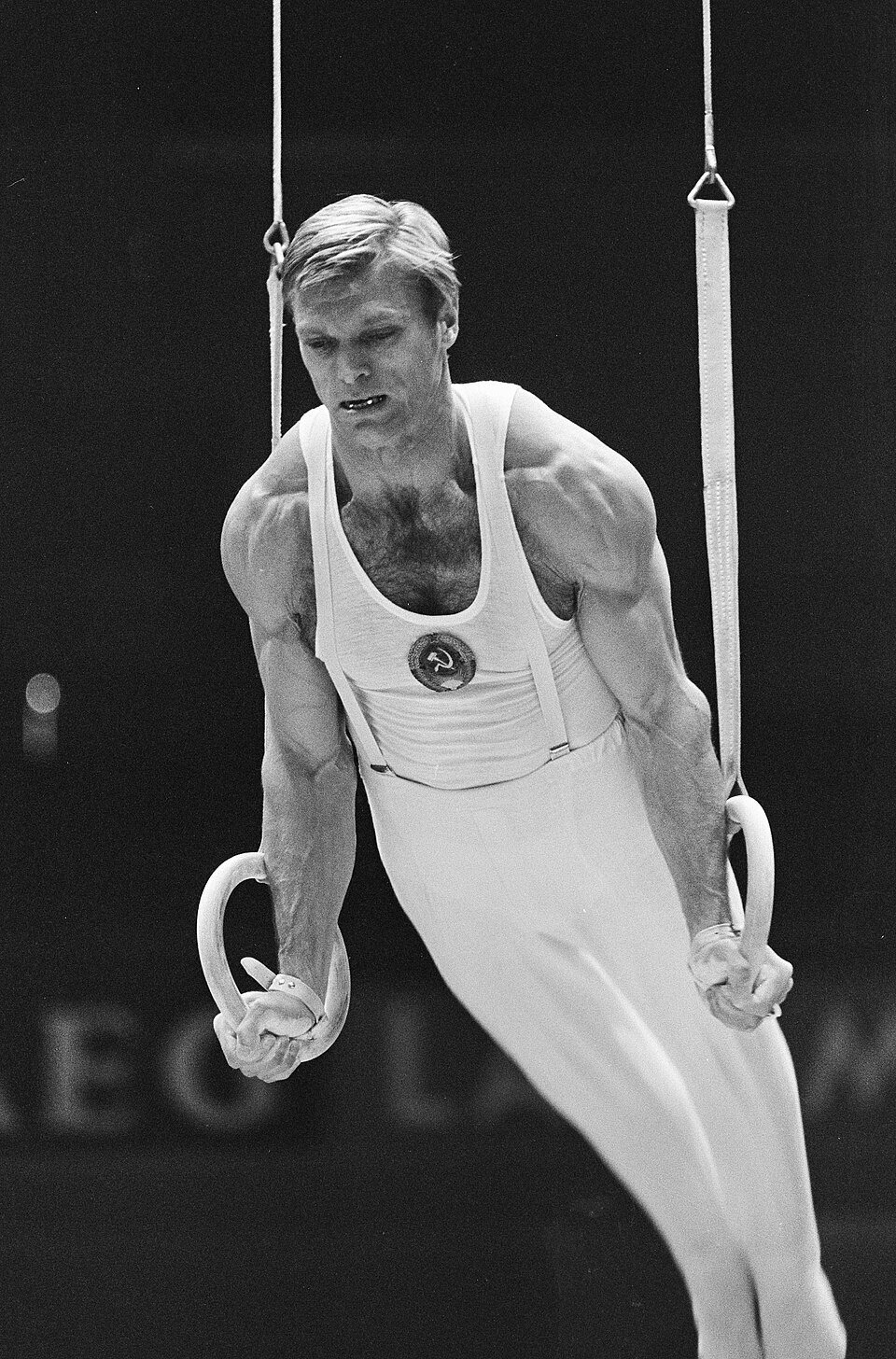
Boris Shakhlin
Stat by stat
Bars are scaled to the leader in this list.
The verdict
Dead even across the measured categories. Our all-time ranking places Kohei Uchimura at #3 and Boris Shakhlin at #9.
Head-to-head FAQ
Who leads more shared metrics?
How do the published ranks compare?
Are these live stats?
The case for Kohei Uchimura
King Kohei won every all-around competition he entered from 2009 to 2016 — six consecutive world titles from 2009 to 2015 and Olympic golds in London and Rio — the longest unbroken run of all-around dominance in the sport's history, on the six-apparatus men's program where a single weak event ends a campaign. He finished with seven Olympic medals, three of them gold, and 21 World Championship medals including ten titles, and he did it in the open-ended era against fields deliberately built to attack his difficulty. His signature was the opposite of the arms race: he carried competitive but not extreme D-scores and won on execution, routinely posting the highest execution marks in the field on high bar and floor. In Rio 2016 he anchored Japan's first men's team gold in 12 years and won the all-around by 0.099 after Oleg Verniaiev led going into the final rotation.
The case for Boris Shakhlin
Known as the Man of Iron for a competitive composure that never visibly broke, Shakhlin won 13 Olympic medals across 1956, 1960 and 1964 — seven gold, four silver and two bronze — the second-highest total by any male gymnast. Rome 1960 was his defining Games: he won the all-around, pommel horse, vault and parallel bars, four golds in a single Olympics, and he added the world all-around title in Moscow in 1958 to complete the set. He also collected ten World Championship medals in an era when the Soviet men's team was so deep that selection was harder than the competition itself. Shakhlin's specialism was the apparatus that punish nerve rather than power — pommel horse above all, where he won Olympic gold in 1960 and again in 1964 at the age of 32. His duel with Japan's rising generation defined men's gymnastics through the late 1950s and early 1960s.