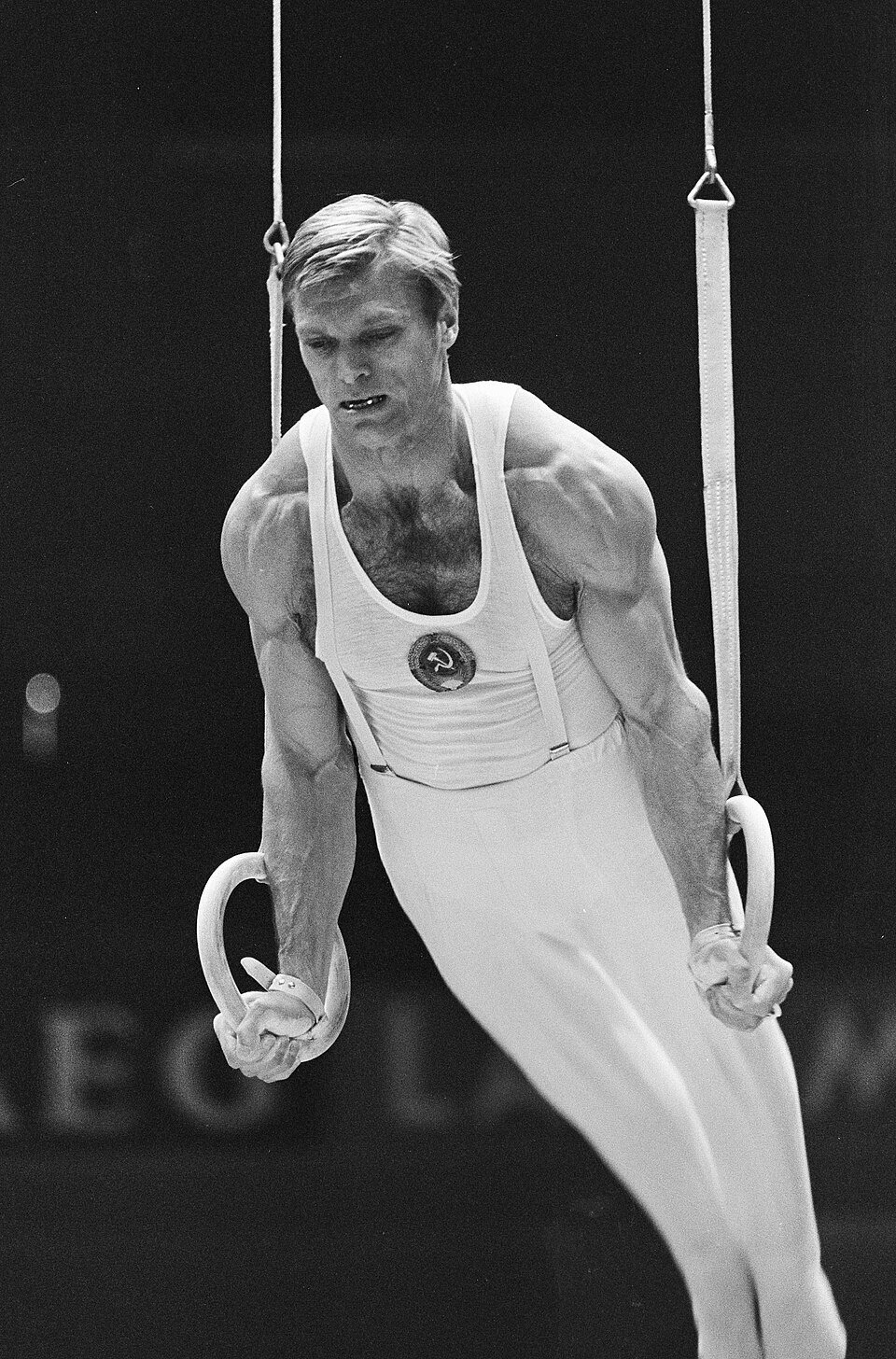
Boris Shakhlin
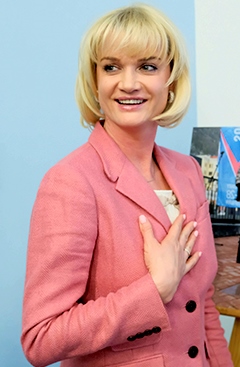
Svetlana Khorkina
Stat by stat
Bars are scaled to the leader in this list.
The verdict
Dead even across the measured categories. Our all-time ranking places Boris Shakhlin at #9 and Svetlana Khorkina at #10.
Head-to-head FAQ
Who leads more shared metrics?
How do the published ranks compare?
Are these live stats?
The case for Boris Shakhlin
Known as the Man of Iron for a competitive composure that never visibly broke, Shakhlin won 13 Olympic medals across 1956, 1960 and 1964 — seven gold, four silver and two bronze — the second-highest total by any male gymnast. Rome 1960 was his defining Games: he won the all-around, pommel horse, vault and parallel bars, four golds in a single Olympics, and he added the world all-around title in Moscow in 1958 to complete the set. He also collected ten World Championship medals in an era when the Soviet men's team was so deep that selection was harder than the competition itself. Shakhlin's specialism was the apparatus that punish nerve rather than power — pommel horse above all, where he won Olympic gold in 1960 and again in 1964 at the age of 32. His duel with Japan's rising generation defined men's gymnastics through the late 1950s and early 1960s.
The case for Svetlana Khorkina
The most successful uneven bars gymnast in history and the last great stylist of the 10.0 era. Khorkina won three world all-around titles — 1997, 2001 and 2003 — a record for a woman until Biles, and took 20 World Championship medals including nine golds. Her two Olympic titles both came on uneven bars, in Atlanta in 1996 and Sydney in 2000, and she finished with seven Olympic medals. At 1.65 metres she was far taller than the sport's template, which made her a liability on vault and beam but gave her uneven bars work an amplitude nobody could copy; several elements in the Code of Points carry her name. Her career also captured the era's controversies, from the miscalibrated vaulting horse that wrecked the 2000 Olympic all-around final to her outspoken and often bitter public criticism of the judging that denied her the one title she wanted most.