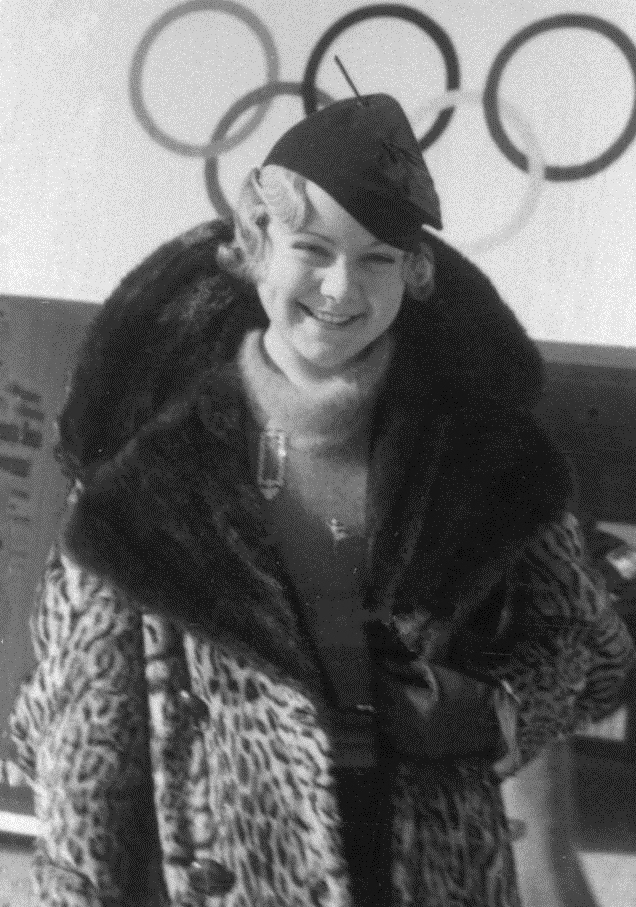
Sonja Henie
Karl Schäfer
Stat by stat
Bars are scaled to the leader in this list.
The verdict
Sonja Henie leads 3 of 4 categories. Our all-time ranking places Sonja Henie at #2 and Karl Schäfer at #7.
Head-to-head FAQ
Who leads more shared metrics?
How do the published ranks compare?
Are these live stats?
The case for Sonja Henie
The most dominant competitor the sport has produced and the woman who invented its commercial future. Henie won ten consecutive world titles from 1927 to 1936, six European championships, and Olympic gold at St. Moritz 1928, Lake Placid 1932 and Garmisch-Partenkirchen 1936, a total of three matched only by Gillis Grafström and Irina Rodnina. She had finished last at her first Olympics in 1924, aged eleven. Her influence ran well past results: she raised the skating skirt to mid-calf, wore white boots rather than black, and imported ballet training and full choreography into a discipline that had been an exercise in tracing figures on ice, changing what women's skating looked like within a decade. After Garmisch she turned professional, signed with 20th Century Fox and became one of the highest-paid film stars in Hollywood, while her touring ice revues created the template every ice show since has followed. Nobody has matched ten straight world titles in singles, and nobody has converted the sport into that scale of mainstream celebrity.
The case for Karl Schäfer
The most decorated men's skater of the 1930s and the technical bridge between compulsory figures and free skating. The Viennese won seven consecutive world titles from 1930 to 1936, eight consecutive European championships from 1929, and Olympic gold at Lake Placid 1932 and Garmisch-Partenkirchen 1936, a men's Olympic double matched since only by Dick Button and Yuzuru Hanyu. He was exceptional at both halves of a sport that then split its marks between geometry and performance: a meticulous tracer of figures who also pushed free skating forward, credited with the one-foot Axel and with refining spin positions that became standard vocabulary. He was a national-class swimmer as well, and after retiring he coached and choreographed across Europe and the United States. Schäfer competed in the last era when compulsory figures could decide a championship outright, and his ability to win both phases is why his record survived the sport's eventual decision to abolish figures altogether.