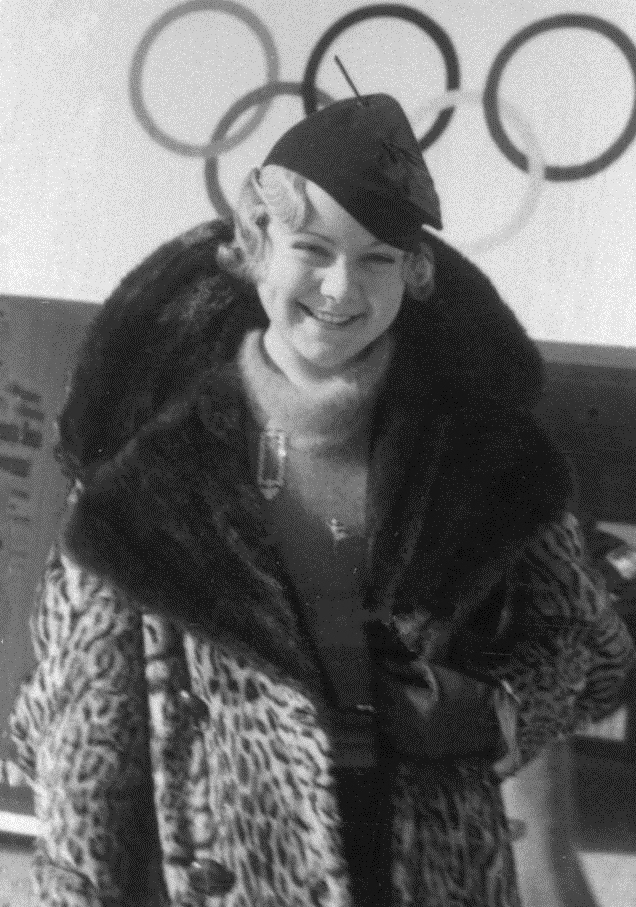
Sonja Henie
Evgeni Plushenko
Stat by stat
Bars are scaled to the leader in this list.
The verdict
Dead even across the measured categories. Our all-time ranking places Sonja Henie at #2 and Evgeni Plushenko at #12.
Head-to-head FAQ
Who leads more shared metrics?
How do the published ranks compare?
Are these live stats?
The case for Sonja Henie
The most dominant competitor the sport has produced and the woman who invented its commercial future. Henie won ten consecutive world titles from 1927 to 1936, six European championships, and Olympic gold at St. Moritz 1928, Lake Placid 1932 and Garmisch-Partenkirchen 1936, a total of three matched only by Gillis Grafström and Irina Rodnina. She had finished last at her first Olympics in 1924, aged eleven. Her influence ran well past results: she raised the skating skirt to mid-calf, wore white boots rather than black, and imported ballet training and full choreography into a discipline that had been an exercise in tracing figures on ice, changing what women's skating looked like within a decade. After Garmisch she turned professional, signed with 20th Century Fox and became one of the highest-paid film stars in Hollywood, while her touring ice revues created the template every ice show since has followed. Nobody has matched ten straight world titles in singles, and nobody has converted the sport into that scale of mainstream celebrity.
The case for Evgeni Plushenko
The last great champion of the 6.0 system and the first to master the one that replaced it. Plushenko won four Olympic medals across four Games: silver at Salt Lake City 2002, gold at Turin 2006, silver at Vancouver 2010 and team gold at Sochi 2014. He added three world titles, seven European championships, four Grand Prix Finals and ten Russian national titles, a haul no male skater of the modern era approaches. He was the first to land a quadruple toe loop, triple toe loop, triple loop combination, in 1999, pushing the era's technical ceiling while retaining the flexibility for a Biellmann spin that almost no man had attempted. His long rivalry with Alexei Yagudin, settled when Yagudin swept Salt Lake City with a free skate that drew perfect 6.0s, produced the most-watched men's competition in Russian skating history. A career shadowed by more than a dozen operations on his back and knees ended at Sochi, where he withdrew from the individual event minutes before he was due to skate.