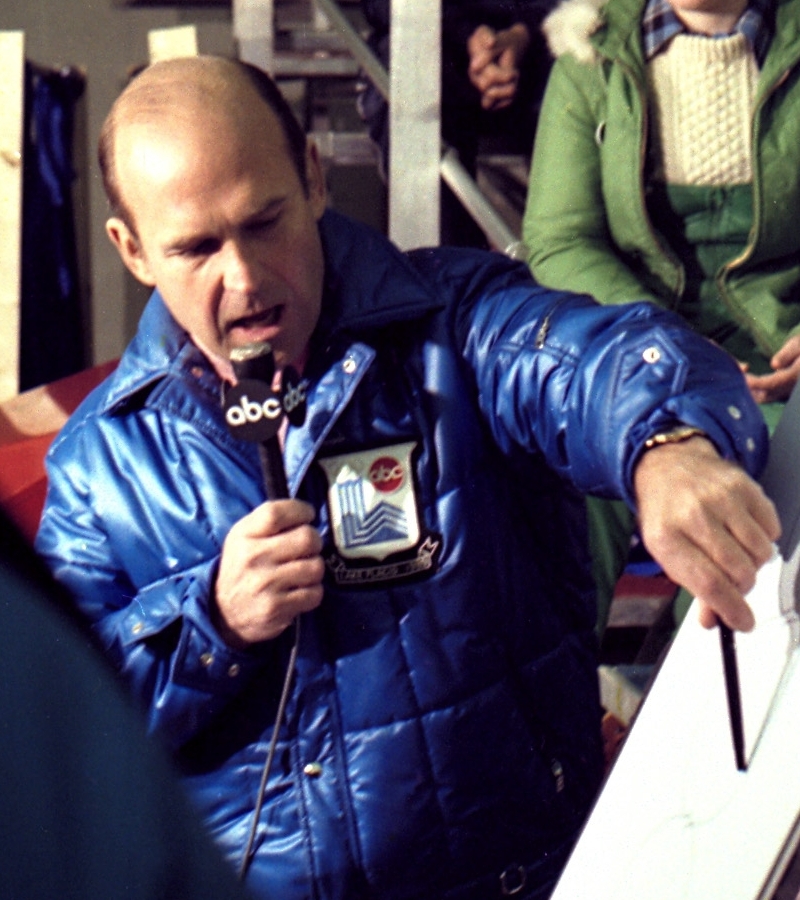
Dick Button
Karl Schäfer
Stat by stat
Bars are scaled to the leader in this list.
The verdict
Karl Schäfer leads 2 of 4 categories. Our all-time ranking places Dick Button at #5 and Karl Schäfer at #7.
Head-to-head FAQ
Who leads more shared metrics?
How do the published ranks compare?
Are these live stats?
The case for Dick Button
The man who turned figure skating from a drawing exercise into an athletic event. Button won two Olympic titles, at St. Moritz 1948 and Oslo 1952, five consecutive world championships from 1948 to 1952, seven straight United States titles, and the 1948 European Championship, the only non-European ever to win it before the ISU closed the event to outsiders. He landed the first double Axel in competition at the 1948 Olympics and the first triple jump of any kind, a triple loop, at Oslo in 1952, and invented the flying camel spin still known in some rinks as the Button camel. He retired at 22, took a Harvard law degree, and then spent nearly five decades as American television's voice of the sport, winning an Emmy and shaping how tens of millions of casual viewers understood what they were watching. No skater has combined technical invention, competitive dominance and long-term influence over the audience quite so completely.
The case for Karl Schäfer
The most decorated men's skater of the 1930s and the technical bridge between compulsory figures and free skating. The Viennese won seven consecutive world titles from 1930 to 1936, eight consecutive European championships from 1929, and Olympic gold at Lake Placid 1932 and Garmisch-Partenkirchen 1936, a men's Olympic double matched since only by Dick Button and Yuzuru Hanyu. He was exceptional at both halves of a sport that then split its marks between geometry and performance: a meticulous tracer of figures who also pushed free skating forward, credited with the one-foot Axel and with refining spin positions that became standard vocabulary. He was a national-class swimmer as well, and after retiring he coached and choreographed across Europe and the United States. Schäfer competed in the last era when compulsory figures could decide a championship outright, and his ability to win both phases is why his record survived the sport's eventual decision to abolish figures altogether.