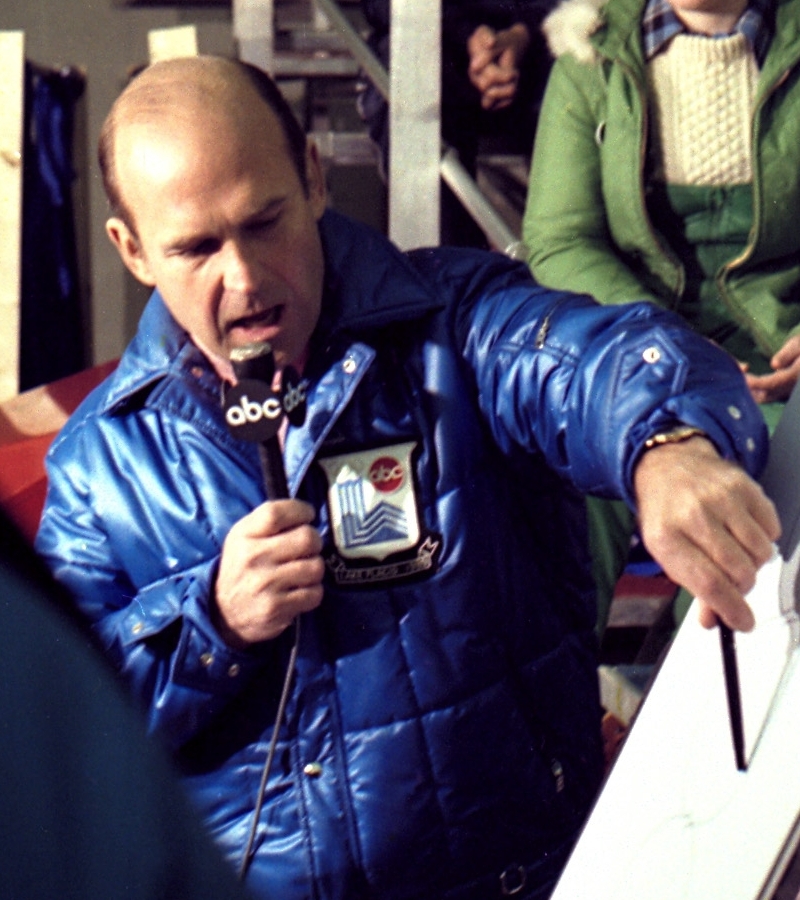
Dick Button
Jayne Torvill & Christopher Dean
Stat by stat
Bars are scaled to the leader in this list.
The verdict
Dick Button leads 2 of 4 categories. Our all-time ranking places Dick Button at #5 and Jayne Torvill & Christopher Dean at #8.
Head-to-head FAQ
Who leads more shared metrics?
How do the published ranks compare?
Are these live stats?
The case for Dick Button
The man who turned figure skating from a drawing exercise into an athletic event. Button won two Olympic titles, at St. Moritz 1948 and Oslo 1952, five consecutive world championships from 1948 to 1952, seven straight United States titles, and the 1948 European Championship, the only non-European ever to win it before the ISU closed the event to outsiders. He landed the first double Axel in competition at the 1948 Olympics and the first triple jump of any kind, a triple loop, at Oslo in 1952, and invented the flying camel spin still known in some rinks as the Button camel. He retired at 22, took a Harvard law degree, and then spent nearly five decades as American television's voice of the sport, winning an Emmy and shaping how tens of millions of casual viewers understood what they were watching. No skater has combined technical invention, competitive dominance and long-term influence over the audience quite so completely.
The case for Jayne Torvill & Christopher Dean
The most famous four minutes in the history of the sport. At Sarajevo in 1984 the Nottingham pair skated Ravel's Boléro and received nine perfect 6.0s for artistic impression, the only unanimous set of maximum marks ever awarded in an Olympic figure skating event, part of twelve 6.0s across the whole competition. The program was itself a rules exercise: the free dance limit was 4 minutes 10 seconds and the clock started when a blade moved, so they opened kneeling on the ice for the first 18 seconds to fit their 4:28 arrangement inside the rule. They won four consecutive world titles from 1981 to 1984 and four European championships, turned professional, then returned under reinstatement rules to take bronze at Lillehammer in 1994. Their influence on ice dance was structural rather than decorative: they replaced ballroom pastiche with narrative choreography and theatrical staging, and every free dance judged on composition since works in the vocabulary they built.