
Ingemar Stenmark
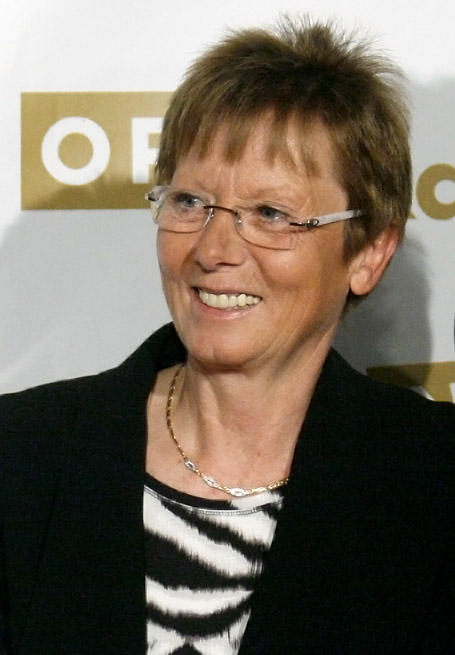
Annemarie Moser-Proll
Stat by stat
Bars are scaled to the leader in this list.
The verdict
Annemarie Moser-Proll leads 3 of 5 categories. Our all-time ranking places Ingemar Stenmark at #2 and Annemarie Moser-Proll at #5.
Head-to-head FAQ
Who leads more shared metrics?
How do the published ranks compare?
Are these live stats?
The case for Ingemar Stenmark
For 34 years the answer to the question of who had won most, and still the men's record-holder. The Swede took 86 World Cup victories — 46 in giant slalom, 40 in slalom — without ever seriously contesting a downhill, which meant he was surrendering an entire half of the points table and winning the overall title anyway, three years running from 1976 to 1978. In 1978-79 he won 13 races in a season. At Lake Placid in 1980 he won both technical golds, coming from well behind in the first run each time, and he added world titles in 1978 and a slalom-giant slalom double at Schladming in 1982. His style was the argument for economy: minimal upper-body movement, no visible effort, a line so precise that his runs look slow on film until the split times appear. He was also the last great champion of the straight ski, retiring in 1989 four years before the shaped ski arrived.
The case for Annemarie Moser-Proll
The most complete dominance any woman exercised over the World Cup before Shiffrin. Moser-Proll won five consecutive overall Crystal Globes from 1971 to 1975, retired at 25, came back and won a sixth in 1979 — still the women's record — with 62 race victories in a period when the calendar was far shorter than it is today. Between December 1972 and January 1973 she won eleven consecutive downhills, a streak in a single discipline no racer has matched. She took five world championship golds and, at Lake Placid in 1980 in her final season, the Olympic downhill title that had eluded her through two silver medals at Sapporo in 1972. Contemporaries described a racer who simply attacked terrain other women managed, and her win rate across the seasons she contested remains the highest of any woman in the sport's history.