At a glance
Blacksmith · taglineThe trade that made every other trade's tools — from Hittite iron and guild…
Blacksmith · The route in has barely changed since the Iron Age: stand next tThe route in has barely changed since the Iron Age: stand next to someone who…
Blacksmith · This page follows the trade from Hittite Anatolia through wootz This page follows the trade from Hittite Anatolia through wootz steel,…
Blacksmith · Do blacksmiths still exist, and what do they make?Yes — but almost none of them shoe horses or make nails. Modern blacksmiths…
The route in has barely changed since the Iron Age: stand next to someone who knows, and hit a great deal of hot metal. No licence is needed in most countries, though Germany runs a regulated apprenticeship and master exam, Japan licenses its swordsmiths through a five-year live-in apprenticeship, and Britain regulates the neighbouring trade of farriery by law.
Blacksmith · tagline
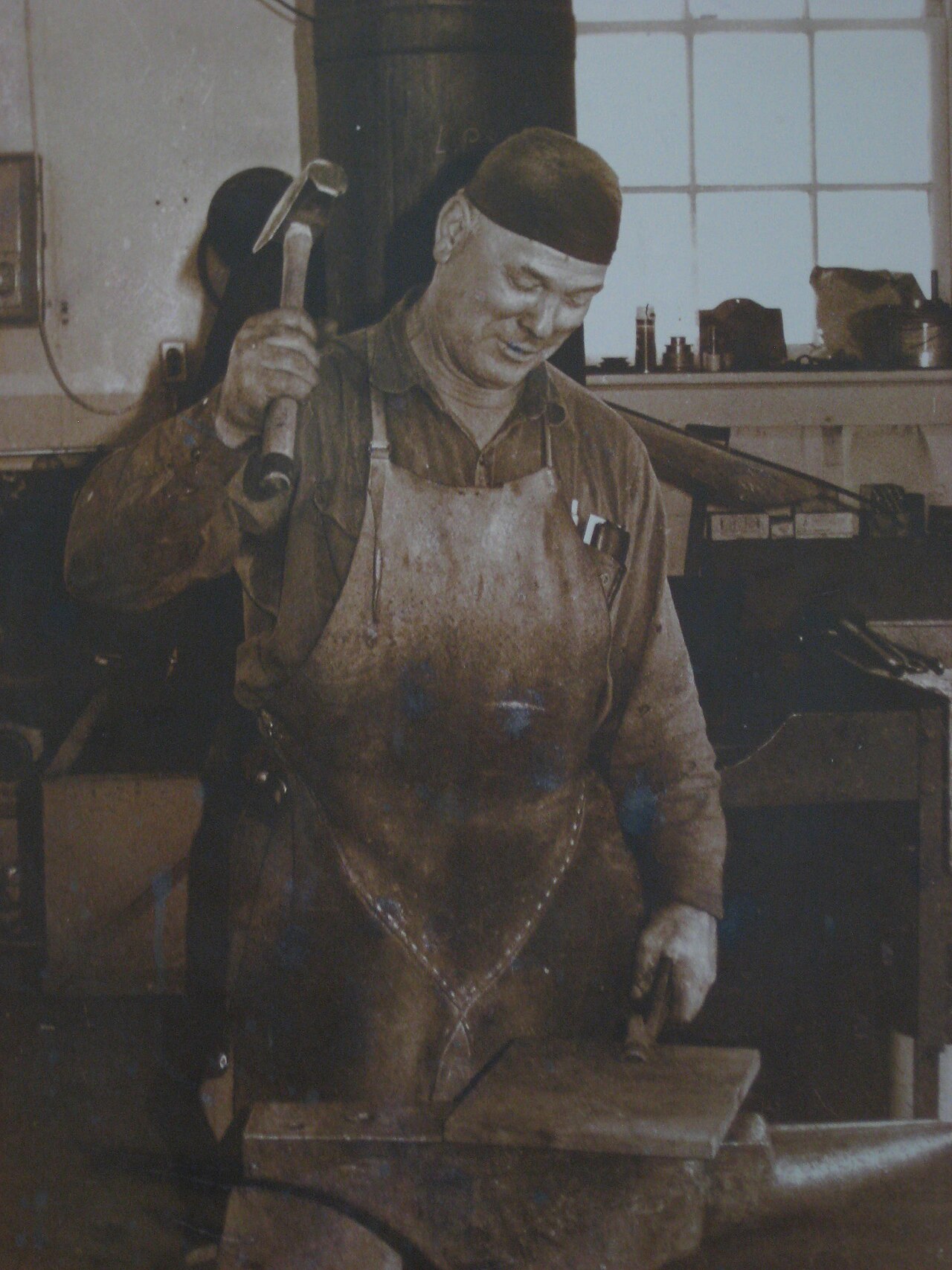
The trade that made every other trade's tools — from Hittite iron and guild forges to the artist-blacksmiths who brought the anvil back in the twenty-first century. The blacksmith works the "black metal" — iron, named for the dark oxide scale that forms on its surface in the fire, as opposed to the whitesmith's bright tin.
Blacksmith · The route in has barely changed since the Iron Age: stand next t
The route in has barely changed since the Iron Age: stand next to someone who knows, and hit a great deal of hot metal. No licence is needed in most countries, though Germany runs a regulated apprenticeship and master exam, Japan licenses its swordsmiths through a five-year live-in apprenticeship, and Britain regulates the neighbouring trade of farriery by law.
Blacksmith · This page follows the trade from Hittite Anatolia through wootz
This page follows the trade from Hittite Anatolia through wootz steel, Ulfberht swords and Masamune's Kamakura forge to the village smithy's collapse after 1908 and the artist-blacksmith revival that began in the 1970s.
Blacksmith · Do blacksmiths still exist, and what do they make?
Yes — but almost none of them shoe horses or make nails. Modern blacksmiths forge architectural work such as gates, railings, balustrades and staircases, one-off sculpture, custom knives and tools, film and theatre props, and like-for-like restorations of historic ironwork. Industry forges its parts by machine; the hand trade survives at the custom, artistic and heritage end of the market.
This is a reading check for the atlas, not personal advice, a live price, or a booking. It does not replace the full topic page.
Questions
- What is the next question after this?
- This page follows the trade from Hittite Anatolia through wootz steel, Ulfberht swords and Masamune's Kamakura forge to the village smithy's collapse after 1908 and the artist-blacksmith revival that began in the 1970s.
- Does this page rank people or nations?
- This is a reading check for the atlas, not personal advice, a live price, or a booking. It does not replace the full topic page.
- Where is the longer entry?
- Yes — but almost none of them shoe horses or make nails. Modern blacksmiths forge architectural work such as gates, railings, balustrades and staircases, one-off sculpture, custom knives and tools, film and theatre props, and like-for-like restorations of historic ironwork. Industry forges its parts by machine; the hand trade survives at the custom, artistic and heritage end of the market.
Next question: Carpenter · Open the topic: Blacksmith
🩺 Which licence sits before the first paid role — Surgeon (1937) · 🩺 What the first role actually is — Physician (1992) · 💉 How to read the AI exposure note — Nurse (1994) · 💊 How many years before independent work — Pharmacist (1852) · 🐾 The title versus the first-day tasks — Veterinarian (1863) · 🧠 Which institution issues the credential — Psychiatrist (1934) · How to read a career route