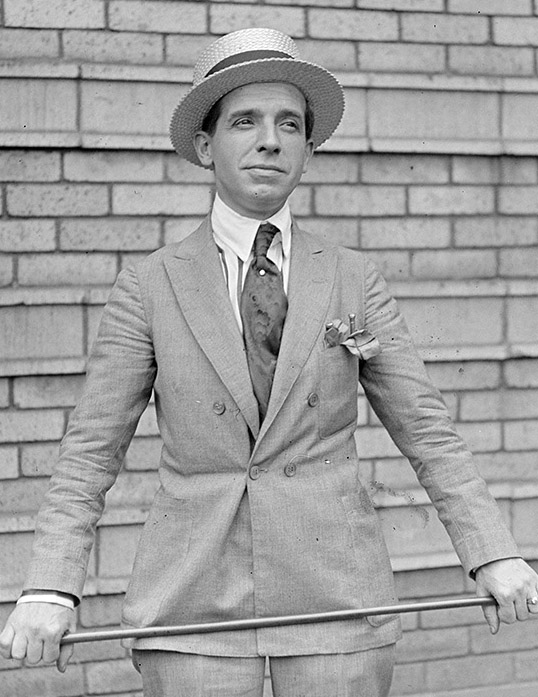
At a glance
Ponzi pleaded guilty to federal mail-fraud charges in November 1920 and received a five-year sentence, of which he served about three and a half years. Massachusetts then prosecuted larceny; after a 1922 mistrial, a 1925 conviction produced additional state time. Later chapters -- Florida land promotion, deportation, and death in Rio de Janeiro in 1949 -- belong to biography.
Atlas Verification Checklist
0 / 4 verifiedCheck each criteria to confirm findings against the atlas verdict.
Charles Ponzi · paras 1
Notes promising 50 percent in 45 days, later advertised at still higher rates, drew working- and middle-class depositors as well as larger tickets. Agents were paid to recruit. The Securities Exchange Company became a local sensation. As newspapers questioned the arithmetic, some investors redeemed and others doubled down. The run and the reporting arrived together. Authorities took books and stopped new intake.
Charles Ponzi · paras 1
Ponzi pleaded guilty to federal mail-fraud charges in November 1920 and received a five-year sentence, of which he served about three and a half years. Massachusetts then prosecuted larceny; after a 1922 mistrial, a 1925 conviction produced additional state time. Later chapters -- Florida land promotion, deportation, and death in Rio de Janeiro in 1949 -- belong to biography.
Charles Ponzi · paras 1
Courts and textbooks had described similar pyramids before 1920. The Boston case combined a simple public story (coupons), a vivid newspaper investigation, and a promoter who talked to the press. By mid-century 'Ponzi scheme' was standard in U.S. enforcement vocabulary. The 2008 Madoff case is often taught as the same legal idea at a different scale, not as a new species.
Charles Ponzi · lede
The Boston Post series, federal mail-fraud papers, and Massachusetts larceny dockets are the primary sources. They describe a 1920 promotional collapse, not a puzzle about whether the coupon story could have scaled.
This is a reading check for the atlas, not personal advice, a live price, or a booking. It does not replace the full topic page.
What is the next question after this?
Courts and textbooks had described similar pyramids before 1920. The Boston case combined a simple public story (coupons), a vivid newspaper investigation, and a promoter who talked to the press. By mid-century 'Ponzi scheme' was standard in U.S. enforcement vocabulary. The 2008 Madoff case is often taught as the same legal idea at a different scale, not as a new species.
Does this page rank people or nations?
This is a reading check for the atlas, not personal advice, a live price, or a booking. It does not replace the full topic page.
Where is the longer entry?
The Boston Post series, federal mail-fraud papers, and Massachusetts larceny dockets are the primary sources. They describe a 1920 promotional collapse, not a puzzle about whether the coupon story could have scaled.
Next question: Chernobyl disaster · Open the topic: Charles Ponzi